See more of our coverage in your search results.
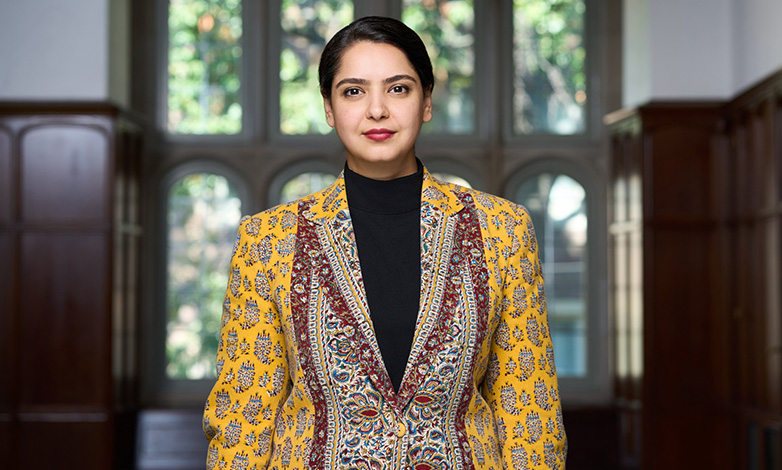
Mitra Naseh, an assistant professor at the WashU Brown School, will receive the Beacon Award for Recognition of Excellence in Community from the International Institute of St. Louis.
Naseh will be honored on Nov. 6 at the institute’s 2026 Ubuntu Gala, an annual fundraising event celebrating multiculturalism and supporting programs and services for immigrants and refugees in the St. Louis region. For more than a century, the International Institute of St. Louis (IISTL) has been one of the region’s leading organizations serving immigrants and refugees, functioning both as a refugee resettlement agency and as a broader immigrant-integration organization.
Naseh is the founding director of the Forced Migration Initiative at the Brown School, where her research examines the social and economic integration of forcibly displaced populations. The institute is a community partner of the initiative.
“When I joined WashU, I knew that meaningful research with refugee communities in St. Louis would not be possible without strong community partnerships, and the International Institute was one of the organizations I most hoped to work with,” Naseh said. “I know that building a partnership with an early-career faculty member requires trust, and I am deeply grateful to the International Institute for taking that chance on me and for the opportunities our partnership has created for my research team to learn from and work alongside refugee communities. I am truly humbled to receive this recognition from an organization that has been such an important partner in both our research and the broader community.”
In April, WashU’s Confluence Collaborative for Community Engagement honored Naseh and her community partners, including the International Institute of St. Louis, with the 2026 Danforth St. Louis Confluence Award for their research and community engagement.
Since joining WashU, Naseh has led community-engaged research projects in St. Louis examining poverty and economic integration, social connectedness, gender roles, and structural barriers and facilitators to accessing initial resettlement assistance and public benefits among newly resettled Afghans and other refugee communities, in partnership with several community organizations, including the International Institute of St. Louis.