See more of our coverage in your search results.
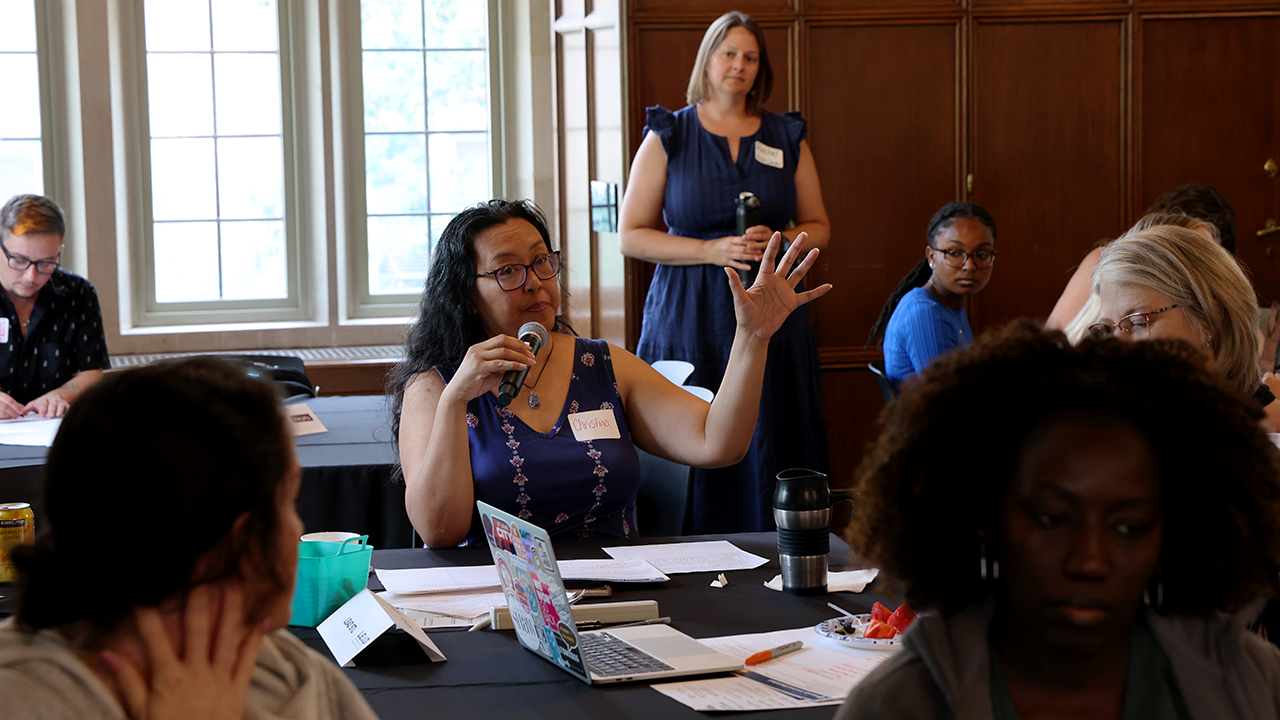
It’s a June morning in Brown Lounge at WashU’s Brown Hall, and the room is buzzing with conversation. Teams from seven St. Louis-area nonprofits are working through a fundamental question: How do you know whether your work is making a difference?
Coaches from the Evaluation Center at the Brown School move between tables, offering questions, suggestions, and encouragement. The exercise is part of the inaugural Brown School Evaluation Fellowship. The program helps small nonprofits build the skills to evaluate their programs and use what they learn to strengthen their work.
“It does not have to be perfect, y’all,” a coach reminds the group.
Building evaluation skills
For many small nonprofits, the challenge isn’t a lack of interest in measuring their work. It’s finding the time, money, and expertise to do it.
The Brown School Evaluation Fellowship was created to help bridge that gap, providing evaluation support to smaller community organizations at no cost. The fellowship is made possible through support of the late Dorothy R. Moog, who was committed to supporting professionals working with small nonprofit organizations in St. Louis.
Rather than simply producing an evaluation plan for each organization, the fellowship focused on building participants’ own evaluation skills and giving them a framework they can apply to programs, events and organizational initiatives long after the fellowship ends.
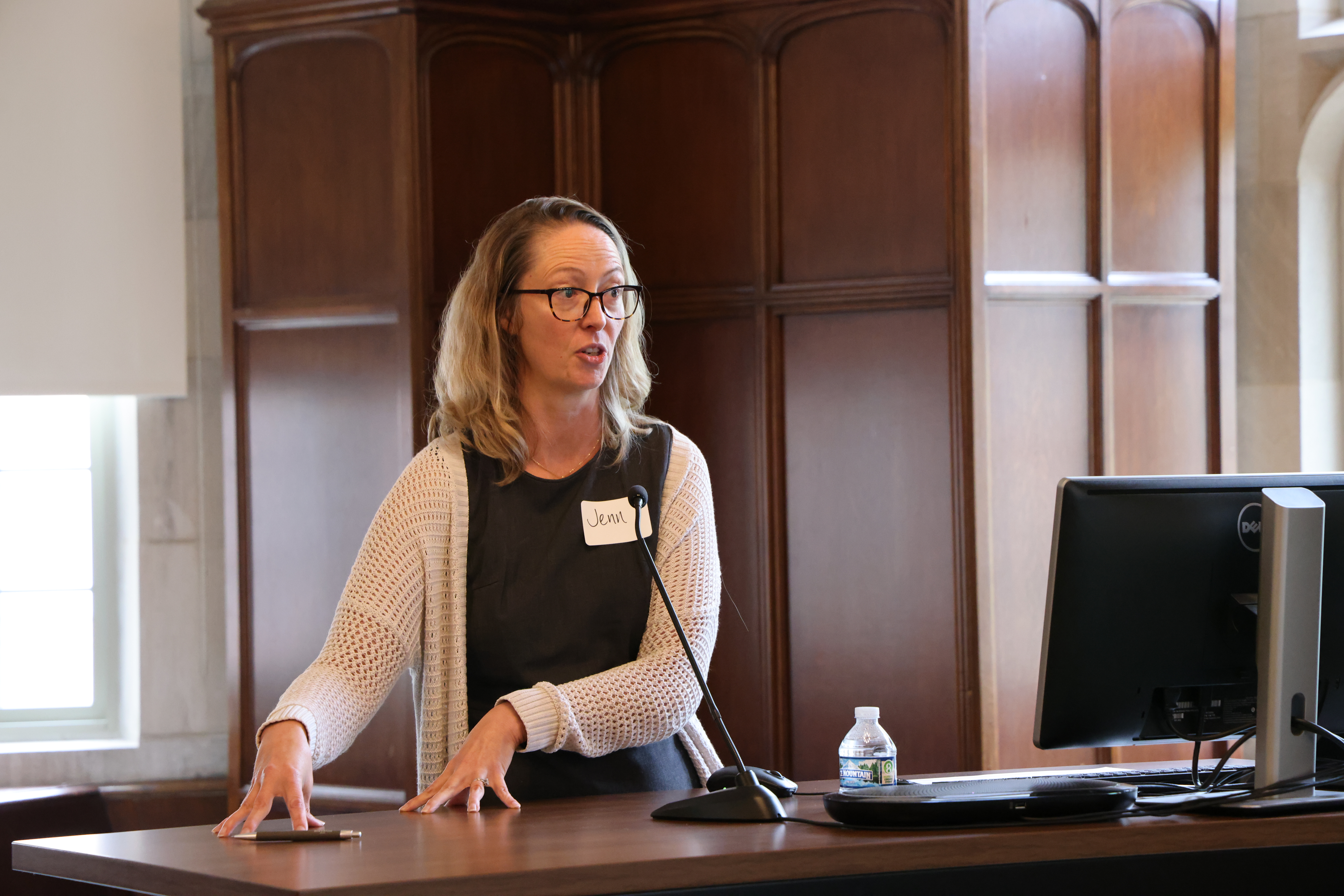
“Evaluation can provide a valuable boost to small nonprofits by illustrating impact, strengthening program design, and supporting continuous improvement. It doesn’t have to be expensive or complicated, but it is often set to the side when time or resources are tight,” said Jennifer Bellamy, director of the Evaluation Center and the Shanti K. Khinduka Distinguished Professor.
The inaugural cohort brought together seven St. Louis-area organizations working across areas including refugee services, behavioral health, housing, education and youth development: Archway Refugee Connections, Aspire Advocates for Behavioral Health, Beyond Housing, College Bound, LEAD STL, The Soulard School and Trans Housing Initiative St. Louis, or THISTL.
Over the summer, staff members from each nonprofit participated in four in-person sessions. Each organization was paired with an Evaluation Center coach and a Brown School Master of Social Work student. Nine students participated as part of their program evaluation course, gaining hands-on experience in applied, community-engaged evaluation.
Ashley Moore, an evaluation manager who served as a coach, worked alongside nonprofit leaders to translate broad questions about their programs into specific, measurable goals.
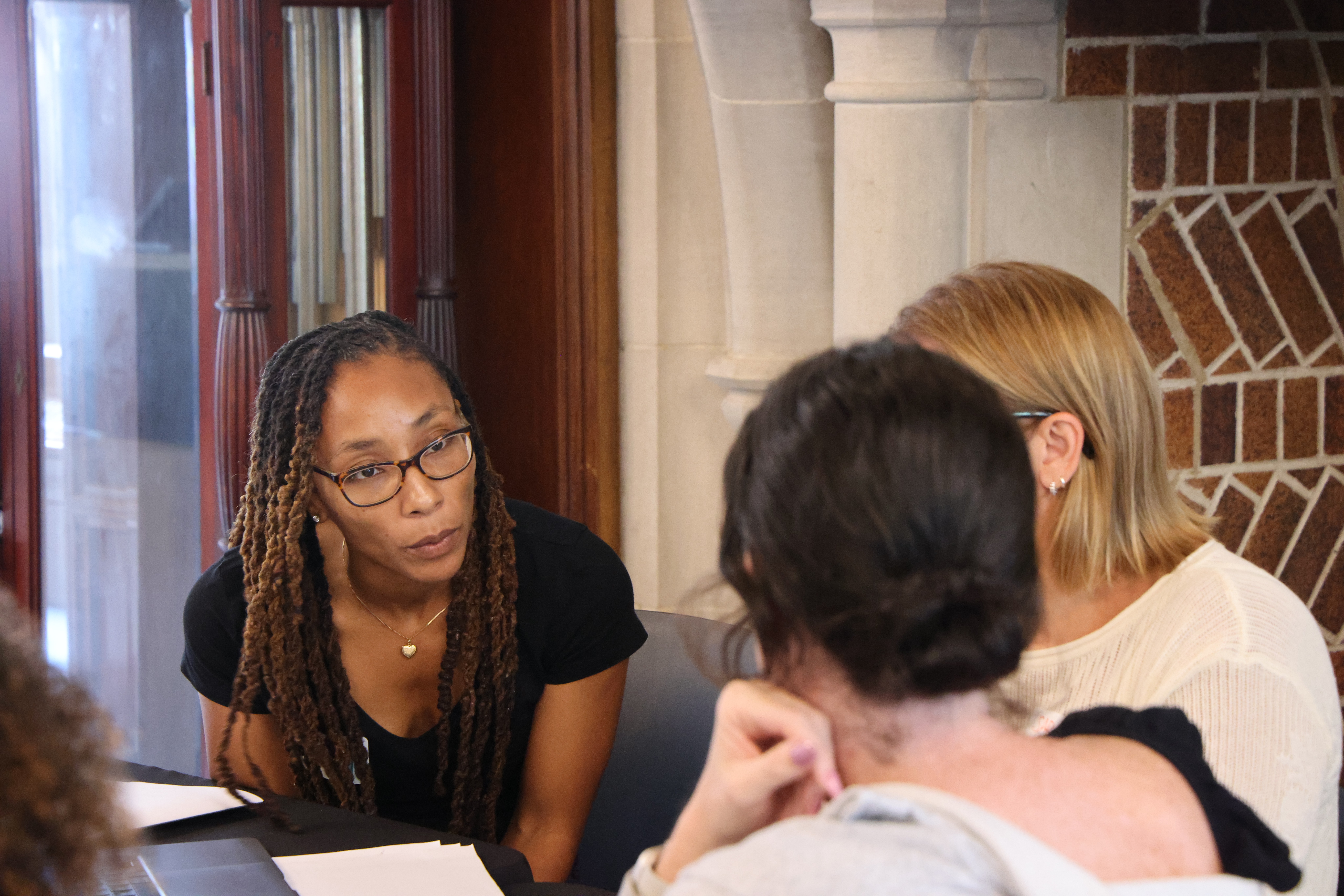
“Organizations developed an understanding not only of what belongs in an evaluation plan, but why each element matters, how the pieces work together, and how to determine what is most appropriate for their goals, resources, and context,” Moore said. “The approach helps organizations move beyond a one-size-fits-all model and develop strategies that are appropriately scoped and sustainable.”
For Moore, the fellowship also was an opportunity to make evaluation feel more practical and approachable for organizations that may not have dedicated evaluation staff.
“Ultimately, organizations left with a greater ability to think critically about evaluation, make intentional choices about how to measure their work, and use what they learn to inform future practice,” she said.
Turning data into action
For Alexandria Lenk, case manager coordinator at Archway Refugee Connections, the fellowship came at an important time.
Archway, which provides outreach and support for recent refugees and immigrants in the greater St. Louis area, launched its case management services in fall 2025. When Lenk began developing the program, she said she had little data to guide decisions.
“I now have a plan tailored specifically to this program that I can use both to gather the data that best represents our current outcomes and also to plan the best ways to use that data to improve our case management offerings over time,” Lenk said.
For Archway, which has three full-time staff members, the support also made the evaluation process more practical.
“If not for the support we received from the Evaluation Center, evaluating our case management program would have been much less feasible,” Lenk said. “Having an evaluation plan means that we can now back up our program with data and not just personal anecdotes.”
Lenk found the partnership with evaluation coach and PhD social work student Jenika Towana Scott particularly valuable. Scott’s experience working with a similar population helped the Archway team balance the realities of working with people in vulnerable situations with the need to approach outcome and data systematically.
“We were having a hard time finding the sweet spot between too narrow and too broad for our problem statement, but the social work student and evaluation coach were both able to ask the guiding questions we needed to come to a consensus on our own,” Lenk said.
Evaluation as an ongoing tool
Lenk said she was surprised by how accessible evaluation could be for a small nonprofit.
“Evaluation is something that any organization can do at any scale so long as they have a problem in mind and the drive to address it,” she said.
The fellowship also changed how she thinks about when evaluation should happen.
“One of the biggest things I took away is that evaluation doesn’t have to be something that happens after a program is finished,” Lenk said. “It can be built into the program from the beginning and used as an ongoing tool for learning and improvement.”
By the fourth and final session in late July, each organization had developed and presented an evaluation plan to the group. The Evaluation Center selected two projects to receive free implementation support: Archway Refugee Connections and Aspire Advocates for Behavioral Health, and the Evaluation Center is beginning work with both organizations.