See more of our coverage in your search results.
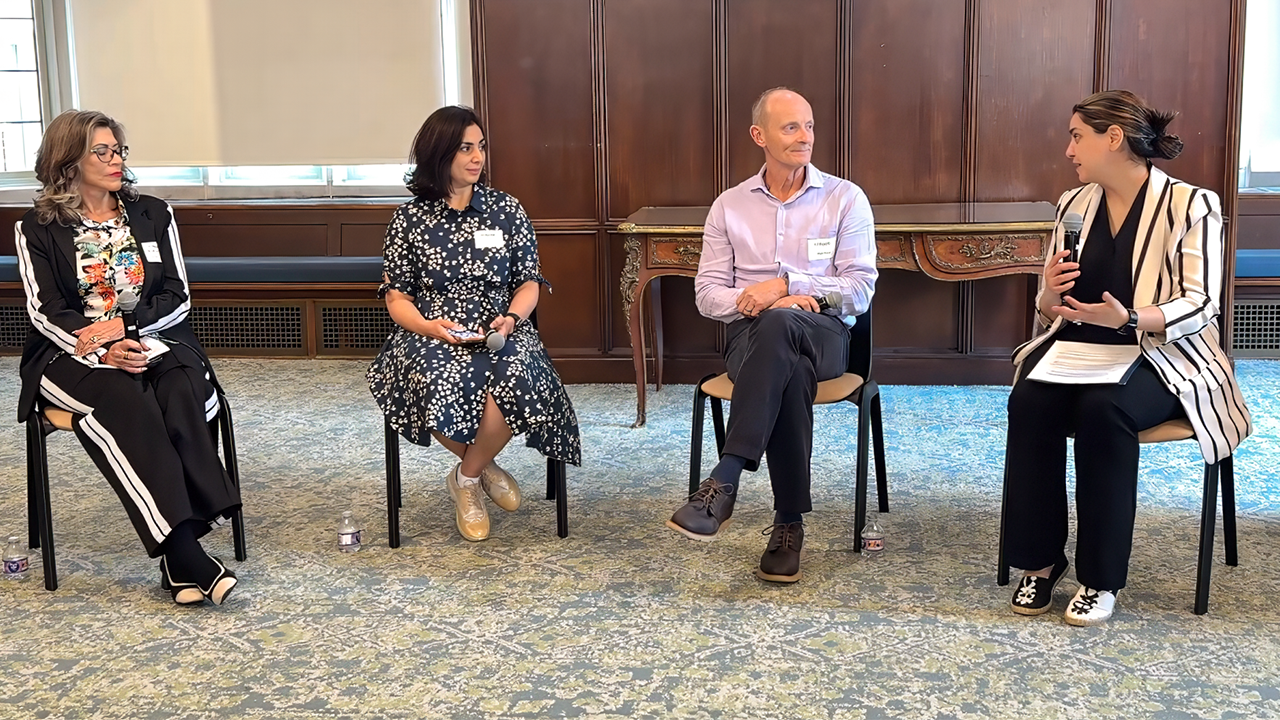
The Clark-Fox Policy Institute, Forced Migration Initiative and the Brown School Global Programs Office recently convened researchers and frontline practitioners working across the United States and internationally for “Borders, Vulnerability, and Protection: Rethinking Trafficking and Migration Policy,” a panel exploring the lived realities of migrants and trafficking survivors and the policy environments that influence their experiences.
Hosted as part of the Clark-Fox Policy Institute’s Senior Policy Fellows initiative, the event reflected the institute’s commitment to connecting research, lived experience and policy to advance more effective and evidence-informed solutions for children, families and communities.
The panel was led by Brown School faculty member and CFPI Senior Policy Fellow Mitra Naseh, assistant professor and founding director of the Forced Migration Initiative, and included social work scholar and researcher Miriam Potocky; Maryam Rafieifar, assistant professor of social work at the University of Texas-Austin; and Angus Thomas, founder and executive chairman of the Hope Education Project.
The speakers highlighted how immigration and border policies intended to deter migration can unintentionally increase vulnerability by pushing individuals into informal and dangerous migration pathways, limiting access to healthcare and support services, and deepening fear among mixed-status families and undocumented communities. Panelists also discussed the need to broaden conversations about trafficking beyond sex trafficking to include labor trafficking and exploitation within industries such as agriculture, domestic work, and hospitality.
Drawing from fieldwork and survivor interviews, panelists emphasized the complex intersections of poverty, displacement, gender, trauma, and exploitation. Thomas shared insights from survivor interviews conducted through the Hope Education Project and underscored the importance of long-term survivor support, including trauma-informed mental health services, community-based care, and sustained reintegration support to reduce the risk of re-exploitation.
“When a woman returns from, being sex trafficked, she returns with something we don’t hear anybody talking about, which is shame,” Thomas said. “And shame is a killer because it keeps a woman inside, in the dark of her room for the rest of her life because she’s too embarrassed to go outside, because her trauma has not been taken care of. What we need to do, first and foremost, is provide consistent long-term facilities, sisterhood and initiatives where people can come together and share their experience.”
A recurring theme throughout the discussion was the importance of collaboration among researchers, community organizations, service providers, and policymakers.
“We don’t speak the same language as law enforcement or international organizations like the United Nations,” Rafieifar said. “I think the most important thing is figuring out how we can speak the same language. This is our role as researchers — to help create a shared language that everybody can speak.”
Potocky also discussed the role of evidence-based practice in bridging research and service delivery, expressing optimism that the gap between research and practice has narrowed over the course of her career. She noted that many service providers she now works with are increasingly eager to engage with evidence-based practices because they want to better understand what works and see meaningful results for the communities they serve. Potocky also emphasized the important role organizations such as the International Rescue Committee play as “knowledge brokers,” helping translate and share research findings in ways that are accessible and actionable for frontline practitioners.
Panelists stressed that effective responses require stronger partnerships across sectors, more translational and practice-oriented research, and greater investment in evaluating what interventions work, for whom and under what conditions.
Future Senior Policy Fellows events will continue exploring how research can be translated into more responsive policy and practice across issues, including food policy innovation and guaranteed basic income.