Lilly Murphy always knew she wanted to help make positive change in her hometown of St. Louis. After several false starts, she found her path and enrolled at the Brown School. In May 2023, she earned her master’s degree in social work.
Initially, Murphy contemplated following in her parents’ footsteps and becoming a teacher. She earned a degree in psychology. She spent time working at the Magic House, a local children’s museum. Yet, her sense of uncertainty persisted. Finally, she discovered her true calling after embarking on an AmeriCorps VISTA position with the St. Louis Vacancy Collaborative, an organization that works to reduce the negative impact of vacant property in the city of St. Louis.
“I’ve always had a deep-seated desire to remain in St. Louis and make a meaningful impact on a systemic level,” she said. This realization prompted her to seek further education to maximize her contributions to the field.
According to her, the Brown School emerged as the natural choice. “The people doing the work I aspired to do came from the Brown School,” she explained.
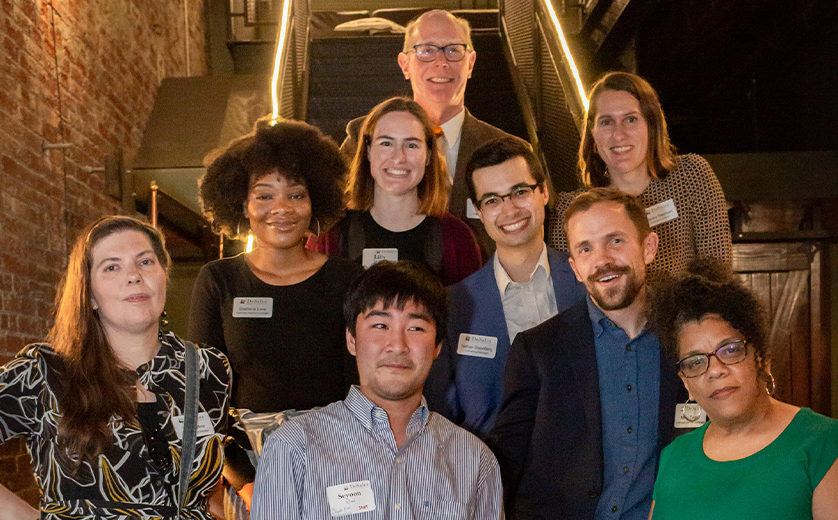
Setting the Brown School apart is the unique opportunity for students to select their practicum sites. Murphy started her practicum experience at DeSales Community Development in June of 2022, equally drawn to its work to strengthen St. Louis neighborhoods and for the chance to witness the leadership transition from Tom Pickel, DeSales’s Executive Director of 35 years, to Becky Reinhart. Established in 1976, DeSales is one of the largest providers of affordable housing in the City of St. Louis. Its efforts involve housing development, property management, service coordination, and neighborhood improvement.
During her practicum at DeSales, Murphy focused on preparing federal grant applications for affordable housing projects. Reflecting on her experience, she noted the day-to-day involved tasks, though not glamourous, were authentic reflections of real-world scenarios.
“I gained insights into things that might seem simple or trivial on the surface, but are crucial aspects of the application process,” she explained.
Murphy’s practicum experience at DeSales transitioned into a permanent role when she was hired as the fundraising and communications manager. In this capacity, she oversees donor relations, fundraising events, grant writing, newsletters, and social media.
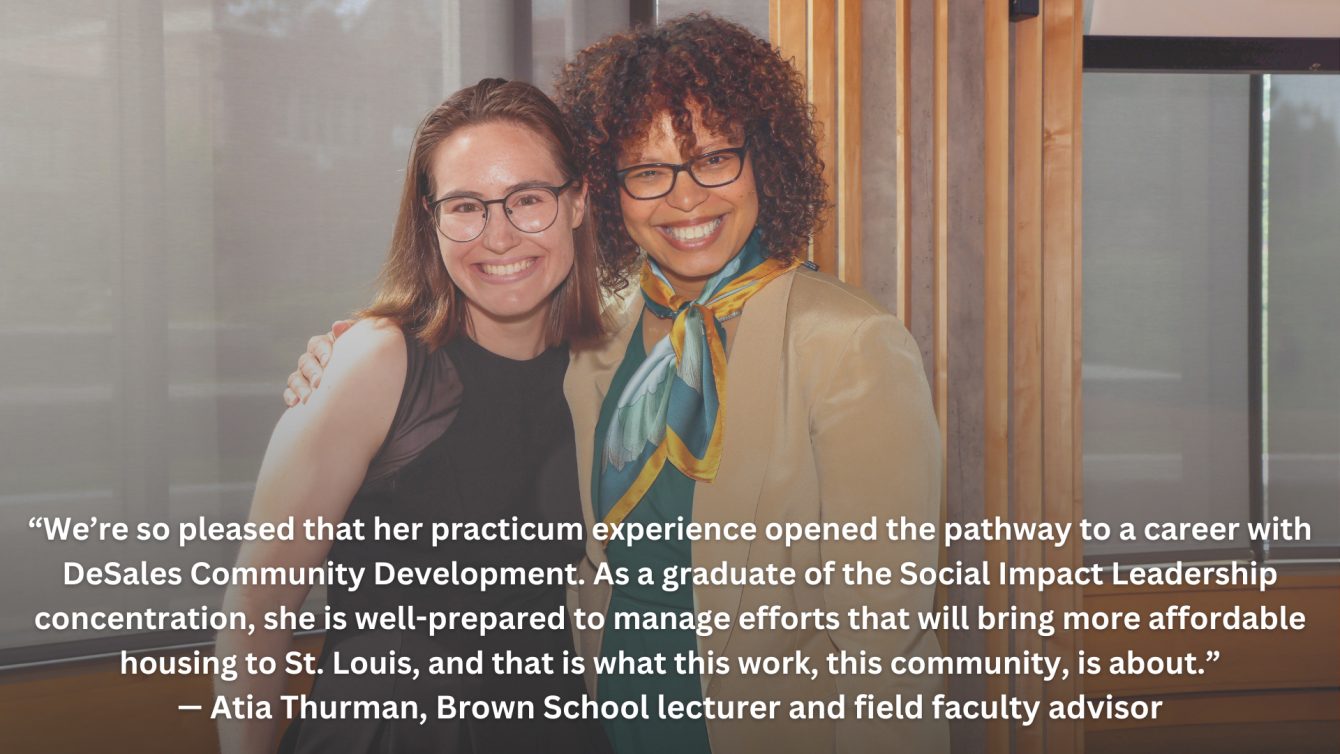
“My aim at DeSales is to simplify complex matters and highlight the humanity within them – finding the common ground that resonates with everyone,” she said. “Ultimately, our work is about providing folks with a stable place to live. This is integral to the mental, physical, and financial well-being of individuals, but also to the social and economic prospects of entire neighborhoods.”
“The scale at which DeSales operates is incredible,” Murphy marveled.
In the past year alone, DeSales facilitated access to $2.1 million in rental assistance for residents and played a pivotal role in preserving a 152-unit affordable housing development near Lafayette Square.
A team at the Brown School is reviving and refreshing an online resource to determine how conducive a neighborhood or community is for walking, biking, and other physical activities. The instrument, the Built Environment Assessment Training (BEAT) program, is one of the first projects of the new People, Health & Place unit of the Prevention Research Center and is intended for training neighborhood organizations, non-profits, students and public health researchers on how to measure elements such as sidewalk quality and safe streets that contribute to healthy activities.
“There is a need for public health practice to improve training, especially in low-income communities and minority communities,” said Rodrigo Reis, professor at the Brown School and a leader of the effort. Originally developed nearly two decades ago at the University of Pennsylvania, BEAT was temporarily paused when the software used for its on-line platform was discontinued. New technology is now available that the Brown School team plans to include as the resources advance in the years ahead.
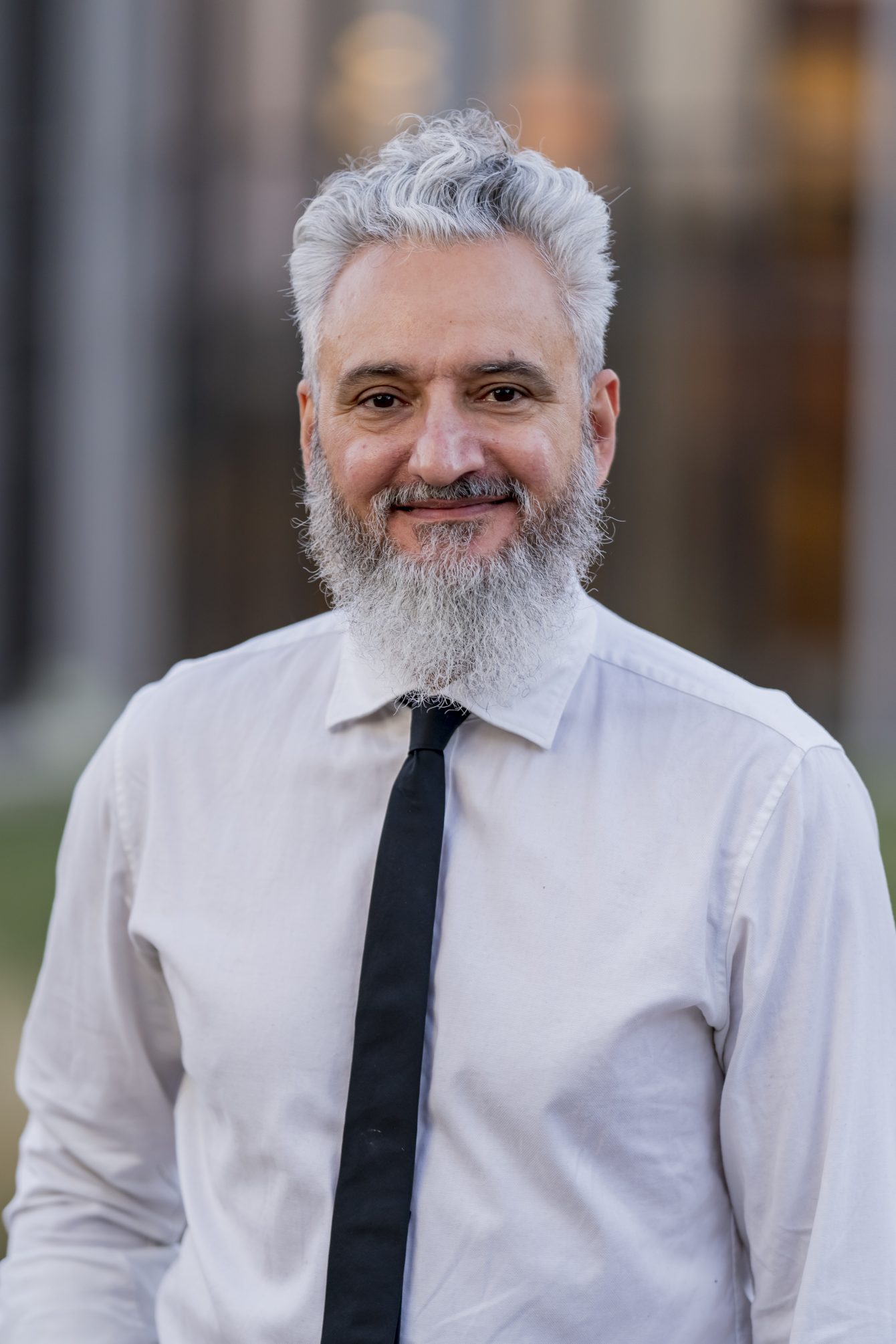
“The tools are different but the needs are still the same,” said Reis, who chairs the Urban Design specialization in the Masters in Public Health program. “There is a growing need for training in more cutting-edge technology,” he said, such as advanced versions of Google maps, artificial intelligence, and computational visioning. “We want to increase capacity building for research and practice, particularly in low- and middle-income countries.” Reis noted that the effort fits well with Washington University’s strategic focus on environmental research and justice.
Reis was a young researcher and part of the first BEAT training institute some 15 years ago. “It didn’t require a lot of technology, but it was very time-consuming,” he recalled.
Aine O’Connor, Research Manager for the People, Health & Place unit, said the new BEAT’s first phase focuses on training in the basic pencil-and-paper observation and recording of neighborhood information by users. “We can train people to observe the built environment,” she said. “You’re out there looking at street level, filling out checklists. That’s really a part of the experience because you have to put yourself in the shoes of someone who’s walking on the sidewalk, or looking for a grocery.” Those methods are especially useful for lower-income communities with limited access to the latest technology.
“We’re excited for everyone to be able to use this,” she added. “We see the audience as researchers working in the built environment and public health, but also user-friendly for neighborhood organizations to assess the qualities of their environments.” The results, she said, could be submitted to policymakers to help make neighborhoods healthier.
BEAT will continue to release content and upgrade its offerings. In its next phase it will be more interactive, with the ability add content to customize the tools and information, such assessments to measure the healthy-food environment in neighborhood stores and restaurants. In Phase 3, the team hopes to expand to offer training tailored for different neighborhoods around the world.
This free introductory course is designed to instruct researchers, students, planners, and health practitioners on ways to observe, plan, and evaluate changes to the built environment for health and well-being. Modules of the course offer tools and tricks for assessing streets, parks, trails, and neighborhood landscapes for physical activity.
A senior advisor to the project is Karen Glanz, George A. Weiss University Professor at the University of Pennsylvania, who led the team that created the original resource. The online trainings became popular with public-health instructors and students. But in 2022, Adobe discontinued the “Adobe Flash” platform, and the training course needed to be re-worked. Soon after, she heard from Reis, who wanted to take the training forward at Washington University.
“It’s great that this can continue,” she said. “I’ve always had a long commitment to trying to continue things that people find useful. It addresses a public health problem we haven’t solved: People without access to healthy food and physical activity.” In one Iowa county, she said, the food environment assessment tool (called NEMS) was used to assess the food environment and created a report it gave to restaurant owners, suggesting healthier food offerings. “Quite a few owners did it,” she said.
O’Connor said creating a new platform and transferring the trove of data from Penn onto it was challenging. There was no grant funding yet, so the effort relied on staff time to inventory Penn materials and get the project moving. They narrowed their initial phases to find the tools and content with the most evidence base and practical use. Then there was the task of transferring 4,687 digital files with information, photos, and other elements.
“It was definitely challenge,” she said, “But we were methodical and got it done.”
Drew Crenshaw, a first-year Public Health Sciences doctoral student at the Brown School, has been selected into the inaugural class of the AI Advancements and Convergence in Computational, Environmental and Social Sciences (AI-ACCESS) National Research Traineeship (NRT). The National Science Foundation-funded fellowship trains students working in the intersection of artificial intelligence, environmental science, and social sciences.
As part of the two-year fellowship, Crenshaw will conduct transdisciplinary research investigating climate change, sustainable development, and the built environment on individual and community health using data sciences. AI-ACCESS participants receive a yearly stipend, financial support to attend national conferences, mentoring and professional development support, and workshop and internship opportunities. The goal of the program is to build a cohort of new investigators, with the skills to capitalize on the enormous potential of the convergence of AI and environmental social sciences.
Brown School Associate Professor Patrick Fowler leads the program’s social sciences track. Additional Brown School faculty involved in the program include Professors Lora Iannotti, Rodrigo Reis, and Professor of Practice Joe Steensma.
Crenshaw earned his Bachelor of Science in Public Health and Master of Public Health with a concentration in Environmental Health from the University of Alabama at Birmingham (UAB). Most recently, he worked as the Program Manager for the UAB Center for the Study of Community Health, where he implemented research activities for their core project, Community Health through Engagement and Environmental Renewal, as well as other projects that focused on community health in urban settings.
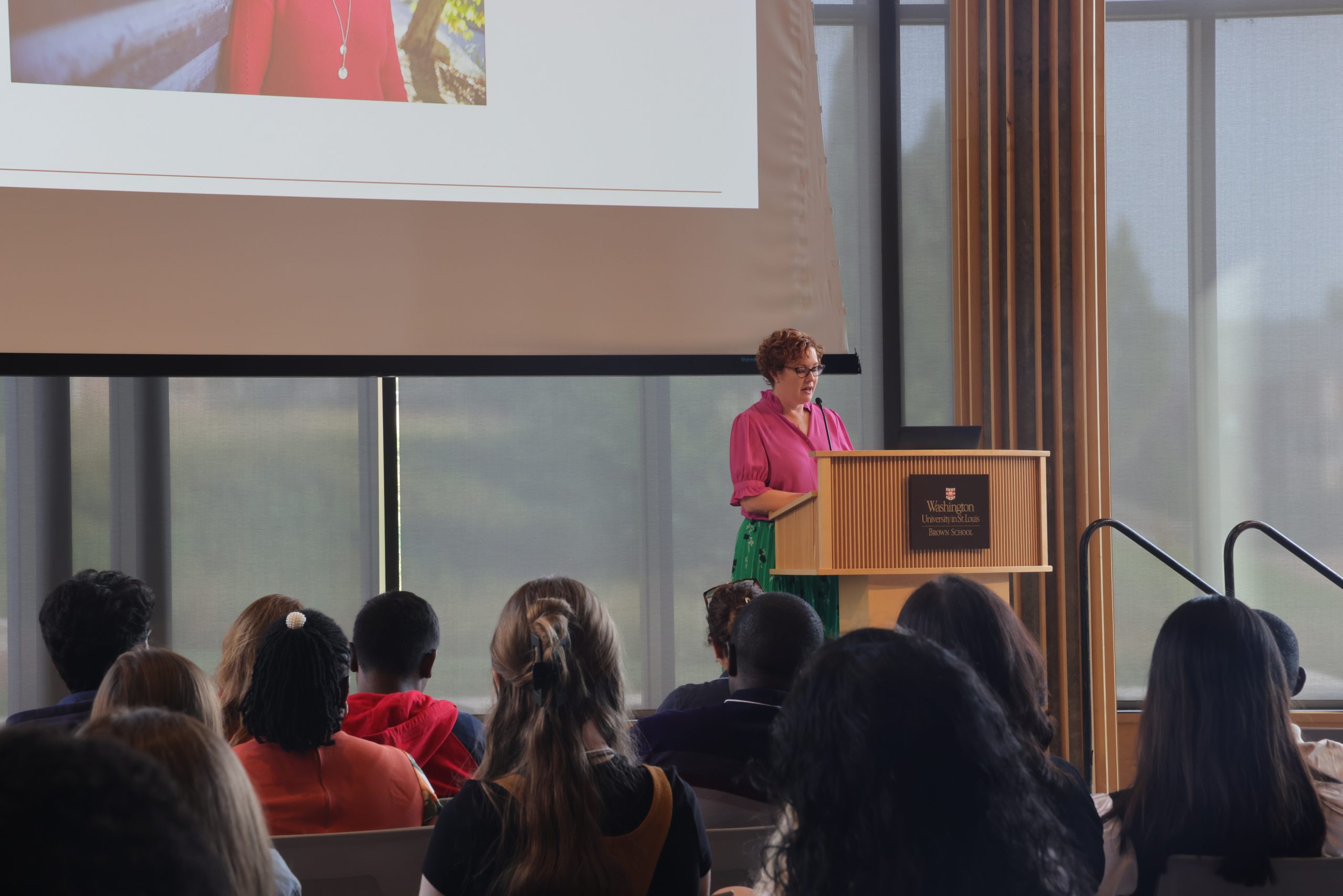
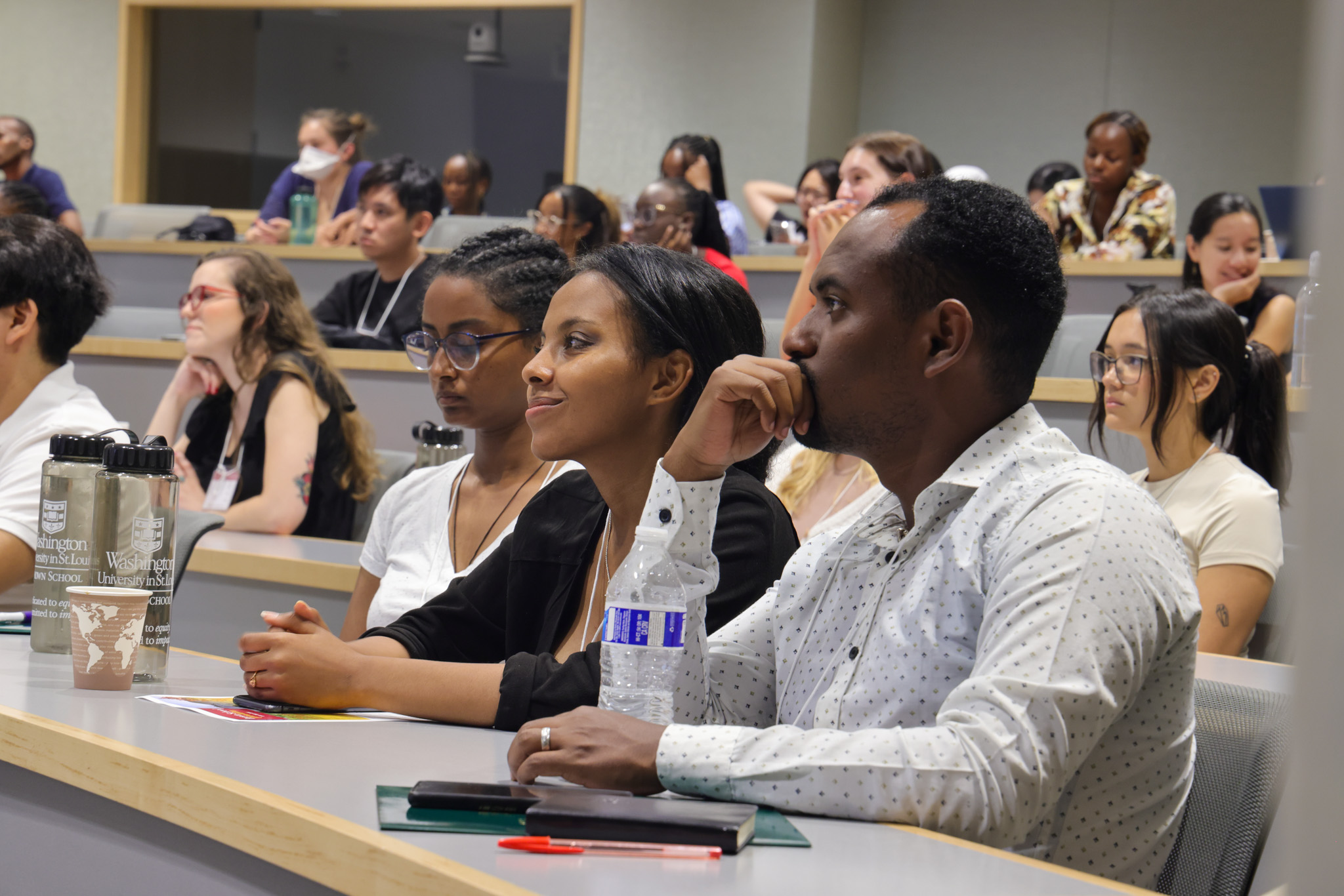
In a world marked by family separations, natural disasters, gun violence, and war, Brown School Dean Dorian Traube emphasized to incoming students the vital role of social workers, public health professionals, and public policy experts in addressing society’s most pressing challenges.
In every one of these events, our professions are essential for resolution and reconciliation, Traube told students at the Brown School’s New Student Orientation event on Aug. 23 in Hillman Hall’s Clark-Fox Forum. “People are waiting for us … to provide lifesaving support and solutions,” she said.
While acknowledging that the road ahead might seem daunting and the journey tiring, Traube made a solemn promise to the new students: “I promise you, someone out there is waiting for you because they need your help.”
Diverse Journeys, Shared Purpose
The paths that led these students to the Brown School vary widely, a shared purpose unites them – the desire to positively impact individuals and communities.
George Putney, a resident of St. Louis, is pursuing an MSW with the aim of aiding formerly incarcerated individuals, drawing from his own experiences. “I went from a professional career to being incarcerated,” he shared. “There is a lack of resources for all of those people and that’s why the recidivism rate is so high. In my own small way, I hope to reduce that recidivism.” Following his incarceration, Putney worked with the Washington University Prison Education Project, forging his path to the Brown School.
Sejal Rajamani, originally from Bloomington, Indiana, took an unexpected turn. After graduating from WashU in May with a degree in environmental biology, she realized all her extracurriculars involved social justice and working with people, not science. She is now pursuing an MSW, envisioning a career that merges her environmental background with social work and environmental policy, combatting issues like environmental racism. “I made the connection that what I wanted to do with my life was advocate for change and impact people’s lives directly as opposed to being in a lab or working with science,” she said.
Ebun Opata, hailing from London, is enrolled in the 3-2 MSW program and aspires to become the kind of role model she was fortunate enough to have. “I had a high school counselor who had a big impact on my life,” she said. “I am interested in pursuing a career similar to that, so that I can help children in high schools who may be coming from underprivileged backgrounds and need a role model in their lives.”
Olivia Frolichstein from San Antonio, Texas, chose the Brown School for her MPH program due to its Mental and Behavioral Health Specialization. “That was a big pull because not many places have that.” She is on a mission to reduce the stigma surrounding mental health.
Shannon Chiu of Sunnyvale, California, and Sarah Fracasso Francis, originally from St. Louis, are both enrolled in the MD/MPH dual degree program, which they consider the perfect combination to address community and population health needs. “I feel like I get to do the best of both worlds,” Fracasso Francis remarked.
Caroline Dellheim, raised outside of Boston, always knew that she wanted to assist children and families through systems advocacy. She believes a dual MSW/MSP degree will provide her with a more comprehensive perspective – exposure to direct service work and also the bigger picture for systemic structural change.
Kendra Henry, a Buder Scholar from Gallup, New Mexico, and a member of the Navajo Nation initially pursued a nursing degree to help her community. Drawn by the Brown School’s American Indian and Alaska Native Concentration, she is pursuing an MSW with the goal of working as a clinical social worker in Native American communities, providing behavioral health and substance abuse services.
The Brown School’s New Student Orientation spanned several days beginning on August 21. It offered incoming students a deeper understanding of their degree programs, concentration and specialization information sessions, and crucial meetings with their academic advisors.
The Brown School is proud to introduce our newest cohort of doctoral students. These 19 outstanding scholars have far-ranging interests that include global aging, child abuse and neglect, reproductive health, gender issues, youth mental health, sustainable development, and dissemination and implementation science. Among these distinguished individuals, nine are pursuing a PhD in public health sciences and 10 are pursuing a PhD in social work.
New Students in Social Work
Rashida Namirembe (she/her) recently worked with the Brown School’s International Center for Child Health and Development (ICHAD) as a study coordinator. Prior to joining ICHAD, Namirembe worked as a social worker with Uganda Youth Development, (UYDEL) an NGO that conducts health awareness campaigns, advocation and providing psychosocial support to sexually exploited adolescents and children involved in drug abuse and child labor.
Jihye Lee (she/hers) earned her MSW and BA in social work at Chung-Ang University in Seoul, South Korea. Her research focuses on child welfare policies in challenging socioeconomic contexts characterized by poverty, inequality, and underemployment, with a specific emphasis on immigrant populations. Jihye’s primary goal is to investigate the root causes of poverty and inequality related to child maltreatment and develop effective interventions to break this harmful cycle.
Shuya Yin (she/her) earned her MSW from the Brown School in 2021 and worked at an NGO as a senior training specialist. She has been involved in a range of settings in various cultural contexts and professional settings in which mental health services are delivered to children and families affected by trauma. She hopes to support mental health and preventive interventions for vulnerable children, youth and families.
Cheng Aaron Li (he/him), from Hainan, China, earned his MSW from the University of Michigan and MA in Communications from Korea University, and worked as a Licensed Medical Social Worker in Singapore. Aaron is dedicated to addressing aging and health inequalities in disadvantaged communities. His research interests lie at the intersections of aging, communications, health, and social policy.
Minjoo Lee (she/her) earned her Bachelor of Economics and MA in Social Welfare from Ewha Womans University, South Korea. Most recently, she served as an investigator and case manager at a Child Protective Services agency in Seoul. She is invested in contributing positively to the lives of CPS-involved children and families through her research on the dynamics of child maltreatment and child protection systems.
Hilary Thibodeau (she/her) received her MSW from the University of Maine. Hilary has been working in policy research and program evaluation related to homelessness and poverty prevention in Denver, Colorado. Hilary’s background in direct services with families informs her interest in the intersection of substance use, mental health, and human service systems for marginalized groups.
Melody Rachel Konadu Frempong (she/her) earned an MSW from the Brown School after completing a Joint MA degree in Public Policy at the Central European University and Institut Barcelona d’Estudis Internacionals. She has worked with humanitarian and social service organizations in West Africa, Europe, and the United States. Melody has been published in reputable peer-reviewed journals such as Global Social Welfare. Her research interests encompass Adolescent/Youth Mental health, Substance Use, and Gender-related issues.
Kayla Zebrowski (she/hers) earned her Master of Social Work from the University of Nebraska at Omaha in 2019. She completed postgraduate and advanced postgraduate fellowships with the Center for OCD and Anxiety-Related Disorder at Saint Louis Behavioral Medicine Institute (SLBMI), an affiliate of Saint Louis University Health Sciences Center, where she earned her LCSW. Most recently, Kayla was a therapist and member of the SLBMI Research Taskforce researching dissemination & implementation of Exposure & Response Prevention and telehealth satisfaction.
Peter Siriprakorn (he/they) most recently worked at various startups and EdTech, and as a jack-of-all-trades in NYC’s film and broadcast media industry. He is primarily interested in mobilizing collaboration between researchers and communities to find ways to mitigate the downstream effects of Adverse Childhood Experiences, with a particular focus on scaling trauma resolution as a pathway to addressing substance use/addiction. He has an MPH from George Washington University, an MA in Philosophy and Culture from The University of Chicago, and is a predoctoral Fellow in the Transdisciplinary Training in Addictions Research (TransSTAR) T32 Program.
Portia Nartey (she/her) holds a Bachelor of Social Work from the University of Ghana, a Master’s in Social Work, and a Master’s in Social Policy from the Brown School. Currently, she’s a Study Coordinator with the International Center for Child Health and Development (ICHAD) at the Brown School, where she coordinates two NIH-funded studies in Uganda and Ghana. Her research interests include economic empowerment, adolescent girls and women’s well-being, and gender norms.
New Students in Public Health Sciences
Drew Crenshaw (he/him) grew up in Birmingham, Alabama, where he earned his Bachelor of Science in Public Health and Master of Public Health with a concentration in Environmental Health from the University of Alabama at Birmingham (UAB). Most recently, he worked as the Program Manager for the UAB Center for the Study of Community Health, where he implemented research activities for their core project, Community Health through Engagement and Environmental Renewal, as well as other projects that focused on community health in urban settings. His research interests include climate change, sustainable development, and the built environment on individual and community health.
Helen Etya’ale (she/her) is a public health professional from Cameroon and Switzerland. She holds a BS in Biochemistry from Calvin College and an MPH from Emory University, Rollins School of Public Health. Most recently, she worked with a global civil society organization advocating for access to treatment and health services. Her research interests include exploring how health service delivery can be made more people-centered and engage recipients of care and communities as active players in their own health, with a focus on resource-limited settings.
Jemima Adepehin (she/hers) holds a background in Food Science and Technology from the Federal University of Technology Akure, Nigeria. She has valuable experience as a program officer with two non-governmental organizations, where she coordinated nutritional, emotional, academic, health, and economic support for orphans and vulnerable children. She is particularly driven to address public issues related to maternal-child health and infant malnutrition through interdisciplinary research and health policy.
Judith Mwobobia (she/hers) is a passionate health journalist from Nairobi Kenya specializing in health communication. With a background in Microbiology and a Master’s degree in Global Health from Duke University, she is dedicated to improving the health and well-being of marginalized populations. Judith’s work focuses on developing strategies that bridge the gap between communities and vital health information, promoting inclusivity and equity in healthcare.
Sarah Stolker (she/hers) is originally from St. Louis and received her MS in Physical Therapy from Duke University in 1998. Working at the Hospital of the University of Pennsylvania, Sarah discovered a passion for cancer rehabilitation. After relocating back to St. Louis, Sarah has continued to work in cancer rehabilitation, both clinically at a Cancer Center and teaching certification courses to fellow clinicians. She has conducted research, contributed to book chapters, and presented at national meetings on lymphedema.
Izzy Howerton (she/her) focuses on investigating systems-level facilitators and barriers to LGBTQ+ health — particularly as it relates to intimate partner violence and gender norms. Izzy earned an MPH from the Brown School in 2020. Most recently, Izzy has worked as an epidemiologist, improving the health and well-being of people experiencing homelessness in Los Angeles County. As a PhD student and Olin-Chancellor’s Fellow, Izzy hopes to leverage theories from dissemination and implementation science and quantitative/qualitative methodologies to better understand the multilevel factors influencing physical and mental health for women and the LGBTQ+ communities.
Milena Franco Silva (she/hers) is an architect and urbanist from Curitiba, Brazil. She completed her Master’s in Urban Management at the Pontifical Catholic University of Paraná (PUCPR). Throughout her academic career, she realized that urban design and public health are essentially connected, which means that poor urban planning decisions can cause unequal spatial configurations and increase social and health disparities.
Tewodros (Ted) W. Liyew (he/him) is a medical doctor and public health specialist with demonstrated experience in humanitarian response and health systems strengthening. Most recently he worked in Jhpiego Ethiopia, a Johns Hopkins University affiliate, as a humanitarian assistance team lead and surgical care quality advisor and served as a program director for emergency and relief in a local NGO in Ethiopia. His research interest lies at the intersection of conflict-induced humanitarian crises, the triple nexus, health systems strengthening, and health policy. He loves traveling, hiking, writing stories, and reading books.
Ri’enna Boyd (she/her), from Minneapolis, Minnesota, completed her BS degree in Biology at Loyola University in Chicago before pursuing an MPH in Maternal and Child Health at Saint Louis University. Ri’enna’s research interests converge at the intersection of racial health, reproductive justice, alternative forms of care, and intervention research, all approached through a community-led and -centered lens to improve the health of Black women, children, and families. Ri’enna recently became a Culturally-Congruent Community Doula in her commitment to combating Black maternal and infant mortality.
Brown School students Kate Gershwin and Will Hutson have been named This is Public Health (TIPH) ambassadors for 2023-2024 by the Association of Schools and Programs of Public Health (ASPPH).
Gershwin and Hutson, both second-year Master of Public Health students, join a select group of 82 graduate students chosen to represent 47 ASPPH member schools worldwide. This year’s cohort sets a record in size and diversity.
ASPPH established the ambassador program in 2017. TIPH student ambassadors are nominated by their respective institutions. During their tenure, student ambassadors help raise awareness about public health education and career opportunities through virtual events, TIPH social media takeovers, and contributions to various projects and presentations.
“I feel honored to represent the Brown School and excited to spread information about public health to a broader audience,” Gershwin said. “As an ambassador, I hope to utilize the TIPH social media channels to educate people about antimicrobial resistance and stewardship, particularly how antimicrobial stewardship can advance global health equity.”
Additionally, Gershwin hopes to collaborate with WashU’s Habif Health and Wellness Center to promote health and well-being on campus.
In nominating Gershwin, Ragini Maddipati, Assistant Dean for Academic Programs, described her as engaging, creative, and kind and said, “Kate has incredible public health leadership potential.”
Hutson, who has a keen interest in substance use epidemiology and harm reduction, is looking forward to networking with like-minded students. “I’m eager to get to know students from across the country, share our interests in different public health topics, and motivate more people to pursue public health,” he said.
Angela Hobson, Associate Dean for Public Health, who put forward Hutson’s nomination, lauded him as a highly engaged student who is “an active advocate for public health at Wash U and beyond.” She noted his involvement in multiple national health organizations.
Gershwin and Hutson will serve as TIPH ambassadors until June 2024.