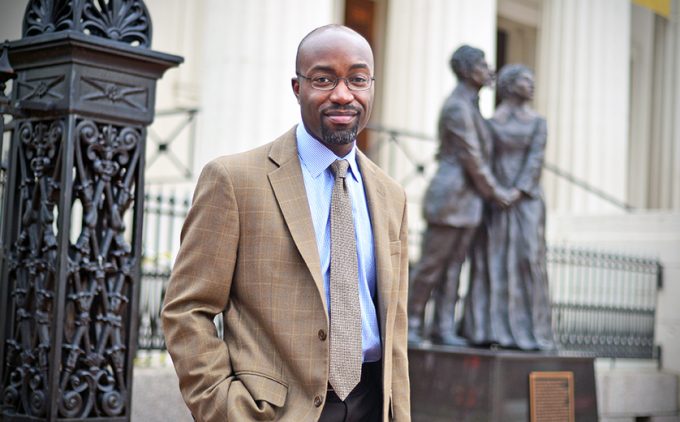
The Brown School’s Jason Purnell will lead a response team of over 40 St. Louis area nonprofits, social service agencies and governments to deal with the coronavirus pandemic.
The COVID-19 Regional Response team aims to help people navigate resources and get help with needs including employment, food, housing, child care and legal aid.
Purnell is an associate professor whose research focuses on how socioeconomic and cultural factors influence health behaviors and outcomes. He is the director of Health Equity Works, a Brown School initiative committed to translating research into community action to advance health equity in St. Louis.
“Our region’s most vulnerable populations are historically underserved and this pandemic requires us to provide care and services in ways that no individual agency can accomplish on its own,” Purnell said. “An equitable response to this pandemic requires that we focus our attention on those at greatest risk of contracting this virus and those whose lives were lived in risk before this crisis.”
Mary McKay, Neidorff Family and Centene Corporation Dean of the Brown School, said Purnell’s leadership of the response team was welcome news for St. Louis.
“Jason Purnell is the ideal leader for this effort to address the needs of our community at risk and deliver help to those who need it most,” said McKay. “Serving the St. Louis region is a top priority of the Brown School, and this effort is one of many our faculty are making to respond to this crisis.”
While it is clear that COVID-19 does not discriminate based on factors such as an individual’s race and economic status, we do know that it is disproportionately impacting those who are least likely to have the resources to fight it.
And recently, COVID-19 data from the City of St. Louis confirms it. In a map listing positive COVID-19 cases by zip code, we see a greater concentration of cases in low-income and highly segregated zip codes in the City of St. Louis. Sadly, that data is not surprising.
Low-income individuals are more likely to experience detrimental health and financial outcomes, and even more so for African American populations. COVID-19 has the potential to be particularly devastating in St. Louis, as St. Louis was ranked as having the sixth highest rate of minority residential segregation among the 50 largest metros in the United States.
Policymakers should keep the following in mind as COVID-19 continues to unfold in the city.
1. The data clearly shows that this disease discriminates by income and race.
In cities like St. Louis, the zip code in which you live is a main predictor for future health outcomes.
Looking at the entire metro area, we anticipate that COVID-19 will affect some neighborhoods more than others. Even without a COVID-19 outbreak, we know babies in The Ville are six times as likely to have a low birth weight and twice as likely to die before their first birthday compared to babies in Clayton. And adults don’t fare much better. People living in the Ville are much more likely to be diagnosed with asthma, obesity, and diabetes—risk factors for COVID-19.
What makes the initial statistics about COVID-19 infections by zip code so alarming is that households without insurance or transportation are likely to go untreated and untested for the disease, so the real number of cases might be even higher than reported.
2. The disease discriminates because of the working conditions and living density of the poor.
Low-income individuals in St. Louis may live in crowded areas, utilize laundromats, rely on public transportation, and are less likely to afford getting grocery deliveries. These realities of day-to-day life increase their exposure to COVID-19 infection. Additionally, Brookings Institute research tells us low-income households are less likely to hold jobs that enable remote work while others may quit to care for children.
Research from Social Policy Institute highlights how frontline workers, such as those in home health agencies or warehouses, may lack personal protective equipment and face increased risks of contracting COVID-19. They also may not receive generous employee benefits, such as health insurance coverage, vacation time and retirement savings contributions from their employer.
3. Policy changes can ease the situation.
Disaggregated by zip code, these COVID-19 cases repeat a story we see too often in St. Louis—low-income communities of color are left with the greatest health and economic burden. Policymakers should look closely at not only this data, but the underlying social indicators exacerbating the strain on these households and community. This includes ensuring there is adequate testing in segregated zip codes and taking positive actions to benefit low wage workers.
We don’t need a map to tell us that policymakers, health officials, corporations, and St. Louis residents themselves must continue to break down economic barriers to create partnerships and solutions that support the most vulnerable in our city – those who were already facing a disproportionate social, financial, and health burden prior to COVID-19 entering their lives.
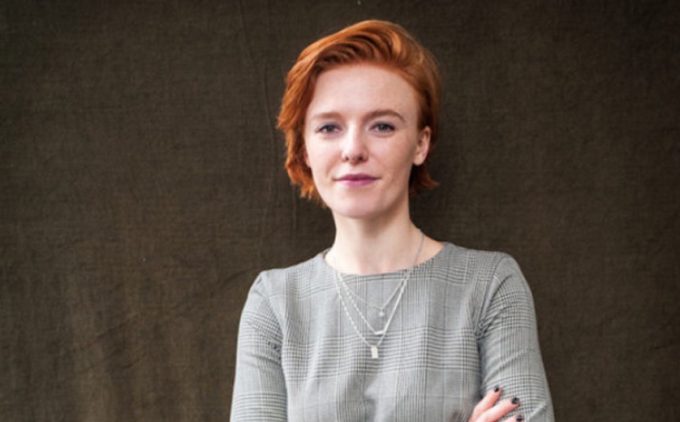
Michal Grinstein-Weiss is the Brown School’s Shanti K. Khinduka Distinguished Professor and director of Washington University’s Social Policy Institute. Brinda Gupta, is the Social Policy Institute Program Manager. This article appeared as an op-ed in the St. Louis Post-Dispatch on Friday, April 10, 2020.
A more in-depth version of this piece is available on the Social Policy Institute’s website.
Idled by the coronavirus, many public-service professionals are taking advantage of a new initiative from the Brown School faculty and staff: “Open Classroom,” a series of free, live webinars that are broadly applicable to the fields of social work, public health and social policy.
Offered mostly on Tuesdays and Thursdays at 12:30 p.m. via Zoom, the sessions are led live by faculty, but also recorded for later viewing. Upcoming topics include School-Based Mental Health, Translating Research for Policy, and Epidemiology 101. The school is also offering a free list of on-demand resources offering expert advice and training on COVID-19, responses to the pandemic, and related topics.
The idea was born when Brown School community partners notified Dean Mary McKay that staff were unable to do their core duties due to the virus and were looking for productive ways to use their time, such as professional development. Working with Janet Gillow, director of professional development programs, McKay asked for faculty volunteers to lead the webinars.
“Response to the Dean’s request in March was overwhelming,” Gillow said. “Our faculty really know how to show up. Within a day, I had 10 faculty volunteers and had arranged a five-week series that began the following week.”
Within the first week of registrations, more than 1000 RSVPS were received; by May, more than 5,000. The team now has access to a dedicated webinar license, which permits up to 500 participants in each class. Gillow also has the option to send overflow to the Brown School YouTube channel. The sessions are now scheduled well into the summer.
McKay, the Neidorff Family and Centene Corporation Dean, was struck by the demand for the webinars.
“The Brown School is humbled by the dedication of social workers, public health professionals, social policy specialists, health care providers and other service professionals in these challenging times,” she said. “The most vulnerable among us are experiencing further increases to their levels of need, stress and uncertainty. We’re pleased to open our doors virtually to the community of helpers to share information, resources and solidarity. We think that more than ever before, good information and thoughtful connection are vital to our well-being and ability to carry on our professional missions.”
Gillow added that the RSVPs have been in great part from those who work with community partners and agencies in St. Louis, but also from alumni, field instructors, students, prospective students, university staff and faculty, as well as graduate students from other institutions.
“We want to welcome all who want to join our Open Classroomand participate in the Brown School virtual family,” she said.
Learn more about the webinars and view the list of on-demand resources.
Suggestions for webinar topics or free resources may be emailed to profdev@brownschool.washu.edu.
Over the past three weeks, I’ve been obsessively checking my inbox and refreshing my Canvas messages, waiting as my professors, supervisors and Brown School faculty have gradually shared information about the adaptations to our new learning environment. I’ve been coordinating significant changes to 10 classes while transitioning two jobs and one practicum to a remote schedule. The logistics of it all are overwhelming.
After a week of virtual learning, I’ve had to adapt to a go-with-the-flow mindset. I came into the week with strong opinions about who had made the “right” and “wrong” choices. Going into the second week, it’s pretty clear that there is no one right way to handle this crisis. All of my professors have planned shorter classes, and a few have moved to pre-recorded video lectures. They have largely acknowledged that students have other things going on right now and adapted their classes accordingly. The best any of us can do is recognize that there won’t be a semblance of business-as-usual. We need external support to ensure staying physically and mentally healthy can be our top priority at this time.
I’m lucky to be in an academic position where I can use the new pass/fail option for my classes. I’ve been wavering between taking pass/fail and taking letter grades. I’ve found myself thinking that taking the pass/fail option is taking the easy way out. If there were ever a time to take the easy way out, this would be it. Avoiding that harsh voice and giving ourselves some lenience around academics right now is going to be essential to making it through this epidemic.
Focusing has been hard—I have an anxiety disorder, and that means that concentrating on schoolwork can be hard even when there isn’t a global pandemic going on. I am definitely dealing with information overload around COVID-19. Like many of my peers, I live far away from my family and friends. It has been hard to focus on assignments that have limited application outside of the classroom. Schoolwork is hardly relevant when I am worried that peers, family, and friends will fall ill, or that we will be laid off, or that we won’t find a job after graduation.
As someone who hates Skype/FaceTime/Zoom as a mode of communication, I was not looking forward to switching to 15+ person Zoom calls for a classroom environment. It seemed nearly impossible to participate in class discussions in this new format, and I was particularly worried about the 15-minute, two-person Zoom presentation I had to give in a Transdisciplinary Problem Solving class this week. The most surprising thing this week was how much easier it is to give a virtual presentation than an in-person presentation. I couldn’t see if people were paying attention or looking bored. The nerves I would normally have in this scenario went away completely. It’s a very thin silver lining, but it’s there, nonetheless.
I thought I would need increased flexibility, prerecorded lectures, and alternative assignments. And I have needed that flexibility, but I’ve found myself also really needing structure. Working exclusively from home gives me the chance to walk my dog five times a day, but it also means that I can really easily put tasks off indefinitely. I’m finding myself rushing to meet a deadline I’ve known about for weeks. I’m remembering how important a to-do list is, especially for allowing myself the time to prioritize tasks that normally don’t feel productive enough to engage in, like finishing a needlepoint I started in 2017 or mindlessly playing the Sims. I’ve spent a lot of the last three weeks reconsidering what is going to be important for me during this quarantine, and I’m taking that into the coming weeks. I’m hoping that doing so will help me weather this uncertain time.
Lands, from Denver, is an MSW/MPH student in her second year at the Brown School.
Many countries reacted slowly and inadequately to the spread of COVID-19. Some critics have said this is due to initial reports of the disease, which indicated that it mainly affected older populations. Some, including the Texas lieutenant governor on Fox News, have even suggested that older Americans should be willing to sacrifice their health or lives for the good of the economy and the good of others.
“Older adults are not some kind of expendable commodity,” said Nancy Morrow-Howell, the Betty Bofinger Brown Distinguished Professor of Social Policy at the Brown School at Washington University in St. Louis and an international leader in gerontology.
While it is true that older adults have been disproportionately affected by the coronavirus, a number of younger patients have become ill or died as a result of COVID-19. According to the Centers for Disease Control and Prevention, young adults under the age of 44 comprise 20% of COVID-19 hospitalizations in the United States.
“I feel saddened when I hear it suggested that this disease ‘only’ impacts old people,” said Morrow-Howell, director of the university’s Friedman Center for Aging. “The older population is very heterogeneous and most people over the age of 65 are fit and functional — engaged individuals who contribute greatly to their families and to society.”
She said it’s important to prevent “otherizing” older people during this epidemic and to avoid age stereotypes.“We are seeing that it is not age per se, but the fact that older age is associated with a number of risk factors that complicate the disease, including chronic health conditions, compromised immune systems and living in residential facilities,” Morrow-Howell said. “Chronological age is not an indicator in and of itself. It has more to do with overall health.”
“I think it’s vital that we connect individual action, like social distancing and washing hands, to the common good,” Morrow-Howell said. “We also need to be descriptive about the risks, beyond old age. There are lots of people at increased ‘risk:’ children out of school who don’t have regular meals; restaurant workers without a paycheck; health care professionals on the front lines; people living alone who are experiencing isolation and anxiety; people with underlying health conditions. What can we do to ensure that all of us are as safe and well as we can be?”
Looking ahead to an eventual recovery from the virus, there are a number of issues that will need to be monitored in the older population, she said. We will have to deal with:
- Set-backs to efforts to confront the image of old age as a state of frailty, vulnerability, primarily in need of compassion.
- Impacts of economic shutdown on employment and reemployment of older workers who face age discrimination in the work setting.
- Effects of stock market decline to retirement savings.
- Erosion of usual care and community services in time of crisis.
- Longer-term effects of social isolation.
- Lasting health problems/morbidity following COVID-19 illness.
“We need to remember that all of us are in this together — old and young alike,” Morrow-Howell said. “We need to come out of this with more intergenerational solidarity.”
For more information on how older adults are impacted by coronavirus bias, view Morrow-Howell’s Open Classroom webinar The Coronavirus: What Age Has to Do with it, and read an article on ageism and coronavirus published on the Harvey A. Friedman Center for Aging website.
As the coronavirus spreads across the United States, larger cities, like New York and Seattle, are dealing with increasing numbers of infections and deaths daily.
However, less populated rural areas are not immune from the disease, say two public health experts at Washington University in St. Louis and controlling it in rural America presents a unique set of challenges.
“On the positive side, social distancing is easier in rural settings due to low population density,” said Ross Brownson, the Steven H. and Susan U. Lipstein Distinguished Professor at the Brown School and a leading expert on chronic disease prevention.
“Lower proximity to international airports likely reduces risk from travel-related transmission and there are outdoor spaces for individuals to walk and spend time in nature,” he said.
On the challenging side, rural populations are at higher risk due to their sociodemographics and health, Brownson said.
“Rural Americans are older on average, with more chronic conditions like heart disease, diabetes, obesity,” he said.
“In addition, the digital divide is greater, with less access to high-speed internet that generally will become more important when people are spending time ‘safe at home,’” he said. “And in general, people in rural areas experience more issues with access to quality medical care and good health insurance.”
Rural communities have faced slow economic growth in recent years, and are now losing more jobs as the layoffs resulting from the COVID-19 pandemic are hitting rural areas again. In addition, rural communities have higher numbers of residents without health insurance and access to quality health insurance from employers than their urban counterparts, said Tim McBride, the Bernard Becker Professor at the Brown School and a noted health economist.
“In general, while rural people often have decent access to primary care, there is often less access to specialists and a lower supply of hospitals,” McBride said.
“Recent closures of rural hospitals and nursing homes across the country will create challenges as rural people need access to hospitals near them,” he said. “Rural people, who generally have lower incomes and higher poverty rates, may face higher out-of-pocket costs for prevention and treatment of COVID-19, given that the health insurance they tend to hold requires higher copayments.”
In addition, Brownson said, rural residents have greater travel distances to health care and live in areas where it is probably less likely for local government to impose social distancing and other control measures.