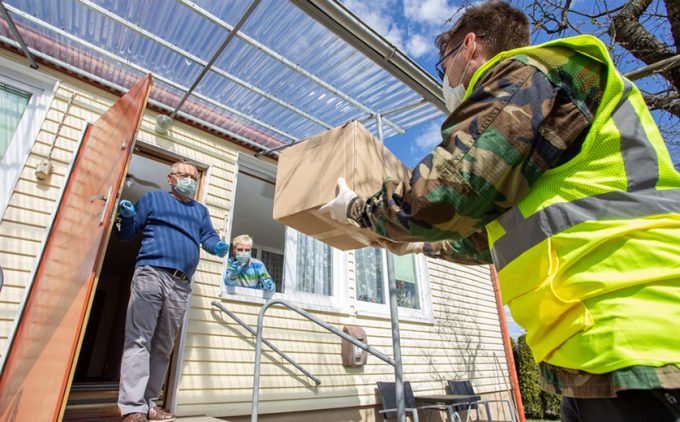
The global pandemic has severely impacted every American, but maybe none more than older people. COVID-19 has placed a high-intensity spotlight on the deleterious effects of deep-seated ageism, sexism and racism on older Americans, suggests a new paper from the Harvey A. Friedman Center for Aging at Washington University in St. Louis.

“While the virus leads to worse health outcomes for older people, the pandemic presents a number of challenges to older adults beyond dealing with the virus itself,” said Nancy Morrow-Howell, the Betty Bofinger Brown Distinguished Professor of Social Policy at the Brown School and director of the Friedman Center.

Those challenges include lasting economic setbacks, health and well-being effects and highlighted ageism, racism and classism.

Morrow-Howell is corresponding author of the paper “Recovering from the COVID-19 Pandemic: A Focus on Older Adults,” in press in the Journal of Aging and Social Policy.

In the paper, Morrow-Howell and her co-authors Natalie Galucia and Emma Swinford, both of the Friedman Center, identify several specific challenges facing older Americans:

“The challenges we are facing can be expected, and in fact, none of them are new,” Morrow-Howell said. “Our state and regional agencies on aging, private and non-profit agencies, advocacy organizations and universities have been grappling with these issues in one form or another for years. But now, it seems our efforts to improve policies and programs for longer, healthier lives might be more productive as we communicate to consumers, public officials and everyday citizens who may be more aware of what isn’t working, what is at stake and what might be improved.

“Further, we can hope that the spotlight thrown on the inequalities experienced by disadvantaged people during this crisis will bring stronger commitment to working toward social justice and health equity.”

The paper does identify a number of opportunities for older adults as a result of the pandemic:

“Although it is not clear what our lives will look like over the next few months, we can anticipate both challenges and opportunities emerging as a result of this pandemic,” Morrow-Howell said.

“My hope is that by articulating these challenges and opportunities, we might move more quickly to minimize the negative outcomes of the spread of COVID-19 and maximize positive changes that might be possible,” she continued. “I hope that all of us — researchers, educators, practitioners, advocates, providers, government bureaucrats and elected officials — will redouble our efforts to improve our aging society in ways that benefit people across the life course.”

Brown School alumni are working on the frontlines of the COVID-19 pandemic, and also working to meet the new social needs that our current crisis is producing. We’re so proud of the important work that they’re doing to help their communities during the pandemic, and are honored to share their stories in their own words. If you’re a Brown School alum we’d love to hear from you and share your story

Gwen Callaway, MPH ’15: “I work for the San Joaquin County, Calif. Health Department and have been reassigned from my position as a health educator in a children’s health program to that of public information officers & risk communication branch director. We try to walk the line between communicating the very real risk COVID-19 poses without inciting panic. I’m proud to be doing my part in combating misinformation and helping our department communicate to our partners and the public.”

Corinne Char, MSW ’17, works in an emergency department in St. Louis,  providing care to patients with psychiatric concerns: “Sometimes it has been really overwhelming and frightening in a way I haven’t seen before. I was exposed to an asymptomatic patient a week ago, hours before they spiked a fever and tested positive. Everyone is stressed in the ED now and outpatient referral options are dwindling. I am very lucky to feel supported by many of my coworkers and the hospital in general. PPE is in short supply, so when I’m at the grocery store and see someone in an N95 mask (usually wearing it wrong) I want to cry. Hospitals can’t get enough, and now we’re asked to reuse surgical masks for three shifts.”

Kristi Collins, MSW ’97: I am currently working at SSM Hospice in Lake St. Louis, Mo. This wasn’t the career path I would’ve ever imagined taking when I graduated with my MSW.  However, when I went on my first patient visit I fell in love.  I finally found what I was meant to do. This is a job that doesn’t stop because of COVID-19.  I am still making visits and supporting the patients and families.  They still deserve quality of life even during a pandemic.  We are the only support for some families and I will make sure they still get the best care. We have home patients as well as patients in skilled nursing facilities.  Many facilities are limiting who can come inside.  This is heartbreaking and causing complicated bereavement issues.

Natalie Curry Ray, MSW ’06: “I was appointed BSW coordinator in the School of Social Work at Missouri State University in June 2019. I have been working with our faculty and administrative team in recent weeks to move all of our seated BSW courses to distance learning through online and web-conferencing modalities to support our students who are sheltering safely at home during the COVID-19 crisis.”

Hannah Dismer, MSW/MPH 18, serves as education and research coordinator at Hope Clinic for Women in Granite City, Ill.: “Abortion providers have always worked with less resources and more opposition than other healthcare providers, and we are keenly aware of the reality that the services we provide are highly contested and under immense scrutiny from opposition. We have been working tirelessly to keep our doors open and implement new COVID-specific safety precautions for patients and staff.”

Ben Glosenger, MPH ’14: “Working as a health educator at the Grant County Health District  in Moses Lake, Wash., I have been activated as part of our emergency response team on the operations side, conducting case investigations, contacting close contacts to inform of isolation/quarantine, and recording information for input into our state disease reporting system.”

Laura Kessel, MSW ’09: “I have the honor of serving as the director of Telehealth Services at SIU Medicine. SIU Medicine’s service region is the 66 southernmost counties in Illinois (covering Central and Southern Illinois). The SIU Medicine Office of Telehealth Services has been working fast and furiously over the past two weeks to get the majority of our healthcare service lines online providing telehealth services to patients at home during this COVID-19 public health emergency.”

Samantha Rockler, MSW ’15, is a hospital social worker with Johns Hopkins in Washington, D.C.: “I primarily work with oncology patients who are extremely vulnerable during this crisis. I believe that social workers will play a key role in this crisis supporting staff, patients, and families in extremely difficult circumstances.”

Dessa Shuckerow, MSW/MPW ’13, who lives in the St. Louis area, recently started group called MapleGOOD with neighbors, and was astounded by the response: “Two days later we were a story on Channel 4 news and had an article in St Louis Magazine as an example of neighbors helping neighbors.  We’ve reached out to hundreds of households in Maplewood and Richmond Heights, Mo., offering grocery and medicine delivery, for those who can and cannot afford them. We now have new projects starting every day: Arming Warriors supports health care workers, Social Distance Support is a mental health initiative, Hygiene Heroes provides free sanitary and hygiene items, and MapleGOOD Masks is making masks for health care workers and community members. Over 600 people are involved in the initiative both providing and receiving support.”

Emily Stuart, MSW ’10: “I am the director of Family Development and Program Evaluation at LifeWise STL in St . Louis, and work with three other alumni colleagues:  Felecia Noguera (bilingual youth therapist), Sarah Caldera Wimmer (manager of Mental Health Integration), and Samantha Ferguson Knight (director of Senior Programming).  We remain open during the pandemic: welcoming the children of guardians with essential jobs;  working remotely to contact our student scholars (ages 5-22) and drop off essentials like food and computers;  staying in constant contact with senior adult clients and dropping off bags of food and household supplies; providing curbside pickup of food/household supplies ; and conducting virtual group and individual therapy with all clients.”

Muniru Sumbeida, MSW/MPH ’12: “I am deployed to the Emergency Operations Center located at the Washinton, D.C. Department of Health as part of the response to COVID-19. I work a 4-day on and 4-day off 12-hour shift schedule, supporting the development of various planning products, including the weekly Coordination and Support Plan that captures key activities of the day and the weekly objectives and activities for the COVID-19 response, and then shares that information with the Mayor’s cabinet, department directors, and emergency management leaders. I feel honored to be part of this team of committed and passionate public servants. It’s challenging, but the Brown School certainly prepared me for this role.”

Megan Vitale, MSW ’98: “I am an associate vice president for youth behavioral health at COMTREA (pronounced COM-TREE), a community mental health agency in Jefferson County, Mo.  Our community support specialists who go into the community to work with youth who have severe emotional disturbances.  Whether it is in the home, school, juvenile office and court hearings, or children’s division, we find ourselves trying to work with young people in all aspects of their lives.  I also oversee our emergency room enhancement program — created by mental health providers in the St. Louis area and tied together by behavioral health network — to link youth in hospitals for mental health needs to outpatient services in their area.”

Kimberly Rand Zimmerman, MSW ’96, offers personal guidance on financial capability and asset building with Dragonfly Financial Solution in Boston, Mass. “I have shifted the focus of my professional blog to assist nonprofit practitioners in adjusting the lens through which they view personal finance in the time of the coronavirus.  I’ve also developed a virtual class called “Money Matters in Tough Times” geared toward financially vulnerable consumers that is offered in conjunction with nonprofit sponsors.

Sumbeida Muniru, MSW/ MPH ’12: “I work 4-day on, 4-day off, 12-hour shifts supporting the development of various planning products, including the weekly Coordination and Support Plan that captures key activities of the objectives and activities for the COVID-19 response. These are distributed to the Mayor’s cabinet, department directors, and emergency management leaders for situational awareness and action.  As challenging as the task is ahead of us with regards to the COVID-19 response, I feel honored to be part of the team of committed and passionate public servants dedicated to protecting the residents of the nation’s capital. The Brown School certainly prepared me for this role.”

Caroline Dias, MSW/MPW ’13, who has been living in Maputo, Mozambique for the last six years, and recently joined the team at the USAID that is implementing a monitoring and evaluation project in the country: “Our team is working with the Ministry of Health on the COVID-19 resource allocation and planning meeting.  We are supporting the US mission in the COVID response.  I am also responsible for 2 studies related to COVID to support the US mission here and the Mozambique Ministry of Health. First, I’m working on a study on how COVID isolation measures are impacting vulnerable populations, to inform USAID and their partners’ response.  I am also presenting a concept note to support a study on knowledge, attitudes and practices about COVID prevention to USAID. Additionally, I am involved in 2 COVID technical working groups at the Ministry of Health.”

Abigail Chihak, MSW/MPH ’18, lives in West Des Moines: “I’ve been lucky enough to join the Dallas County [Iowa] Health Department team since graduation. We are now working to make sure COVID case investigations are completed and correct information is disseminated to the public.”

Alynn McManus, MSW ’84, is part of a group of practitioners who is providing pro-bono, evidence-based EMDR therapy in the Greater St. Louis region in the midst of the COVID-19 pandemic: “Serving our community in the St. Louis area since early 2014, our mission is to develop and maintain a network of licensed clinicians who provide early EMDR interventions as part of the frontline trauma response and recovery in the Greater St. Louis Area. Since 1995, at the time of a terrorist bombing in Oklahoma City, Trauma Recovery, EMDR Humanitarian Assistance Programs has brought mental health clinicians with evidence-based therapy to the scene of disasters, providing pro bono care to thousands. The Trauma Recovery Network grew out of this tradition and now helps hundreds of skilled therapist/volunteers to serve communities affected by disasters worldwide.”

This article will be updated as more alumni share their stories.

Originally published at the Institute for Public Health website and reposted with permission.

Melissa Chapnick

RD, MS, MPH Research Manager – E3 Nutrition Lab

Haiti is among the most recent countries hit by COVID-19. The Haitian government moved swiftly to respond to the emerging pandemic, closing the border with the Dominican Republic and halting all incoming international flights. These travel restrictions may have delayed the arrival of coronavirus, but significantly burden Haiti’s already strained economy. 

This is yet another blow to a country which experienced significant political unrest during the past two years. Without strong healthcare systems or a stable economic foundation, like other low-resource settings, Haiti is likely to bear a disproportionate burden of damage due to the outbreak.

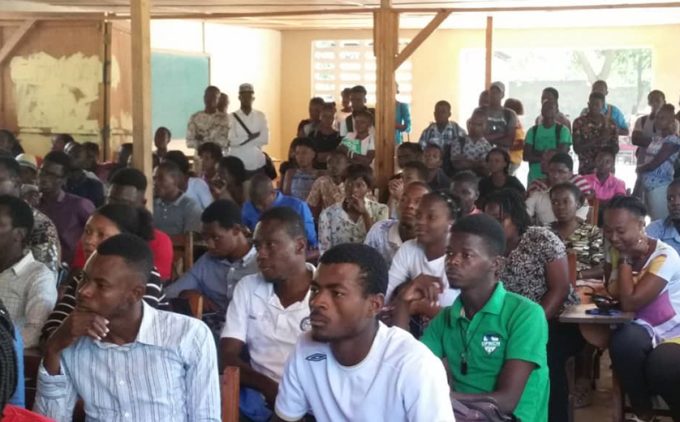
In 2017, Université Publique du Nord au Cap Haïtien (UPNCH) collaborated with Washington University in St. Louis to launch the first undergraduate degree program for public health in the country.  Students from this program stepped forward to initiate efforts to respond to the COVID-19 pandemic. Understanding the importance of prevention, their efforts focus on timely communication of accurate information about the virus and prevention strategies.  Even before Haiti identified its first case, students worked together with the UPNCH administration, the local Washington University research coordinator and the Ministry of Health to organize a panel presentation with experts from public health, medicine, and nutrition.

The work continues as this dynamic team mobilizes to address COVID-19 prevention and treatment in a variety of ways. They developed informational radio, and mobile announcements for 11 areas in and around Cap Haïtien, Haiti’s second largest city. The informational radio announcement, currently set to air eight times per day, addresses basic information about identifying symptoms and the importance of prevention strategies like social distancing. Students distribute posters generated by the United States Centers for Disease Control in Haitian Creole, as well as WhatsApp communication from the World Health Organization.  They also prepare to volunteer with the Ministry of Public Health and Population. In the coming days, the team will work with experts at Washington University to derive homemade solutions for hand sanitizers and masks for use in both the healthcare system and by the public.

UPNCH public health program has three cohorts and over 100 students enrolled in 2020. Students come from across the country to attend the program, and recently they formed Haiti’s first student association for public health. Students in their third year are now entering practicum placements within the Ministry of Public Health and Population, as well as local non-governmental organizations.

Under the leadership of  Lora Iannotti, Brown School associate professor and Institute Faculty Scolar, and Sherlie Jean-Louis Dulience in Haiti, several faculty, students, and staff from Washington University have designed and co-instructed public health courses with Haitian counterparts. Research collaborations have also emerged in public health nutrition, environmental sustainability, air quality and engineering, enteric disease, child development, and radiology.

Covid-19 first impacted middle- and upper income countries with more extensive infrastructure, population mobility, and urban density.  As it threatens low-income countries, the devastation could be monumental. These public health students in Haiti have stepped forward to an enormous challenge and in doing so, set an inspirational example for many around the world.

To learn more about this project, contact Lora Iannotti and visit the E3 Nutrition Lab website.

Acknowledgements: Sherlie Jean Louis Dulience, Lora Iannotti, Delide Joseph, Lourdena Antenor, Henry Claude Saintelmond, Jean Ednor, Ailze Julonet, Michael Galvin.

Madison Lands is a second-year MSW/MPH student from Denver. We invited her to share some of her perspective on studying in these fields during the pandemic: 

Looking back at my first 18 months at the Brown School, in light of our current situation, I now feel embarrassed remembering a few moments of my naiveté. 

When I first took epidemiology, I was largely indifferent to the parts about tracking diseases, instead thinking about how it could be applied to issues in the reproductive health field. John Snow’s approach to pinpointing sources of cholera in 19th-century London felt very distant from my career interests, which include structural supports for family planning, access to contraception and pregnancy-related mortality. I misunderstood the potential for a contemporary global pandemic. 

Back in January, my Eliminating Health Disparities class reviewed disease theory and treatment modalities throughout history. We talked about the ethical considerations of isolating Typhoid Mary. I can’t speak for my classmates, but four months ago, I couldn’t imagine prescribing isolation as a reasonable treatment for disease.

And here we are, socially isolated and in the middle of a pandemic. I was clearly very wrong.  

If I’m going to be honest, being a public health student right now is incredibly frustrating. Suddenly, everyone with a platform is an epidemiologist. Philanthropist and tech founders’ opinions are being elevated to the level of those from scientists who have dedicated their lives to the study of diseases and how they spread. We’re getting very mixed messages and not always questioning the motivations of those who spread them. I understand that a pandemic requires transdisciplinary problem solving, but I would have assumed (or hoped) that in the face of a public health crisis, public health practitioners would be leading the charge. 

At the same time, in addition to being a public health student, I am also getting a dual-degree in social work. That perspective has given me the chance to examine the many ways that social determinants of health impact COVID outcomes. My class on health disparities has included some important discussion to the ways that race, gender, and socio-economic status are impacting treatment and outcomes. My class on sex education methods has given us the space to think about how we can adapt community health education to comply with social distancing. My applied linear modeling class is teaching me the basics of the tools to run the statistical models that inform epidemiological models. 

Having the space to learn from this pandemic before I go into the field is hopefully giving me tools for the next time something like this occurs. I’ve been able to learn a lot from my classmates and friends who are pushing leaders and decision makers to incorporate social determinants into their pandemic response. 

Brown School students have been doing incredible response work: listing the ways that COVID-19 will disproportionately impact Black St. Louisans, to organizing WashU & Brown School Mutual Aid projects, creating and sharing online trainings, and data projects that examine media bias in reporting on COVID-19. The list goes on.

My own COVID practicum experience has shown me the importance of public health practitioners and social workers in this pandemic. 

I’m a patient educator and counselor at a Southern Illinois abortion clinic. Across the country, state leaders have been trying to deem abortion a non-essential service to shut down clinics, but Illinois has made no such efforts. My team has moved to telehealth counseling appointments, and I’m calling patients in advance of their appointments to provide information and a space to discuss feelings. It can be hard to encourage patients to open up when we’re in the same room, but counseling on a phone call has been a new challenge for me. 

I think back to my first semester social work classes for best practices. We’re seeing patients who have to travel longer distances to access essential healthcare, which can lead to heightened emotional needs. Providing care during this pandemic has been a constantly evolving challenge, but at the very least, I have been able to see my coworkers and peers contribute really incredible work to ending this pandemic.

A new report from the Brown School’s Clark-Fox Policy Institute focuses on the impact  high-quality early childhood care and education can have on children, families and communities. It’s an issue whose importance has been brought home dramatically by the COVID-19 pandemic.

The report, Launching Lifelong Success: Ensuring St. Louis’ Kids are Ready by Five, highlights the evidence for early childhood care and education (ECE) as an effective policy investment that can reduce inequities in social support and help the most vulnerable in our communities. The report proposes three evidence-based policy recommendations:

“Research demonstrates that investment in high-quality early childhood care and education yields significant long-term returns,” said Gary Parker, Associate Dean for External Affairs and the Director of the Clark-Fox Policy Institute. “An investment in our kids is an investment in the future of the region. Children and the adults who care for them deserve every opportunity to thrive in St. Louis.”

Parker said the report is especially timely given the effects of the pandemic.

“The rise of COVID-19 has exposed glaring inequities in our social support infrastructures, and our most vulnerable populations are experiencing the greatest hardship,” he said. “Now more than ever we are aware of the inequitable resources available to working families, and limited access to quality childcare is one of the greatest obstacles.”

The report notes that high-quality ECE can lead to better education outcomes, such as high school graduation; better health, including lower rates of chronic disease and substance abuse; and higher employment rates later in life. Those outcomes are particularly important in St. Louis, which has low intergenerational mobility and wide disparities, as white children are 38% more likely than black children to be enrolled in pre-kindergarten programs.

“All children deserve a strong start in life,” said Atia Thurman, Associate Director of the Clark-Fox Policy Institute. “We need to prioritize quality ECE as a means to promote family well-being, economic prosperity and racial equity in our region.”

The Clark-Fox Policy Institute will be hosting a virtual panel discussion Wednesday, April 22 at 10 am: Early Childhood Education and COVID-19: The Immediate and Long-Term Impacts. Register here.

Child abuse and neglect hotlines around the country are reporting declines in calls over the past few weeks. While normally this would be welcome news, it does not bode well during COVID-19 stay-at-home orders, says an expert on child abuse and neglect at Washington University in St. Louis.

“Normally, a decrease in calls about alleged child abuse and neglect or maltreatment would be a welcome start to child abuse prevention month, but the context of current declines is worrisome,” said Melissa Jonson-Reid, the Ralph and Muriel Pumphrey Professor of Social Work Research at the Brown School.

“Both theory and data suggest that stress and poverty are powerful contributors to child abuse and neglect,” she said. “Unfortunately, the COVID-19 crisis is increasing both psychological stress and economic strain. The very few studies we have on the impact of disasters on rates of child maltreatment suggest that there may be a link.”

While recent reports raise the possibility that the declines might be due to school closures, Jonson-Reid thinks more is going on.

“The typical drop we see due to schools closing in summer is too small to explain the reported drops of 30% to 70% across various states,” she said. “During stay-at-home orders, children go unseen by a host of possible reporters.

“It is imperative that we do everything we can to be aware of the well-being of children in our communities. Social distancing need not prevent phone calls or emails to neighbors and family, help with groceries for those who cannot get out, and providing clear messages to families about where to get resources for parenting and meeting basic needs.”

In addition to the many regional efforts, she said, Prevent Child Abuse America has a number of tips and resources related to COVID-19 for parents, children, service providers and the community on their website.

After social distancing ends, it is likely we will experience a large surge in reports across the country as children return to daycares, visit relatives, see their doctors, attend schools and so on.

“It is critically important that sufficient funding be provided to states to assure we have preventative services in child welfare and other family support agencies that will be needed to support the preservation of families and address child safety,” Jonson-Reid said.

“Even before this crisis, the economic case for preventing child maltreatment was made clear,” she said. “After we have addressed the immediate needs of our families, we should use this as a catalyst to bring together science and practice to build an effective system designed to alleviate both the material and psychosocial needs that get in the way of positive parenting and child well-being.”

For more, visit the university’s Center for Innovation in Child Maltreatment Policy, Research and Training.