See more of our coverage in your search results.
Add Brown School News on Google (opens in a new tab)For some incoming Master of Social Work students at the WashU Brown School, choosing where to enroll was about more than academics and career opportunities. New financial support for practicum experiences and living expenses also factor into their decisions.
Beginning this fall, the Brown School will fully fund practicum experiences for MSW students, along with additional support for living expenses. The funding is provided through the school’s Practicum Support Award. For some students, the support helped distinguish the Brown School from other graduate programs they were considering.
“Practicum placements are an essential part of MSW education, but they can create significant financial challenges for students, particularly when they have to balance unpaid practicum placements with employment and other responsibilities,” said Dorian Traube, the Neidorff Family and Centene Corporation Dean of the Brown School. “By helping remove those financial barriers, we can allow our students to focus on becoming the best social workers possible without worrying about lost income or added debt.”
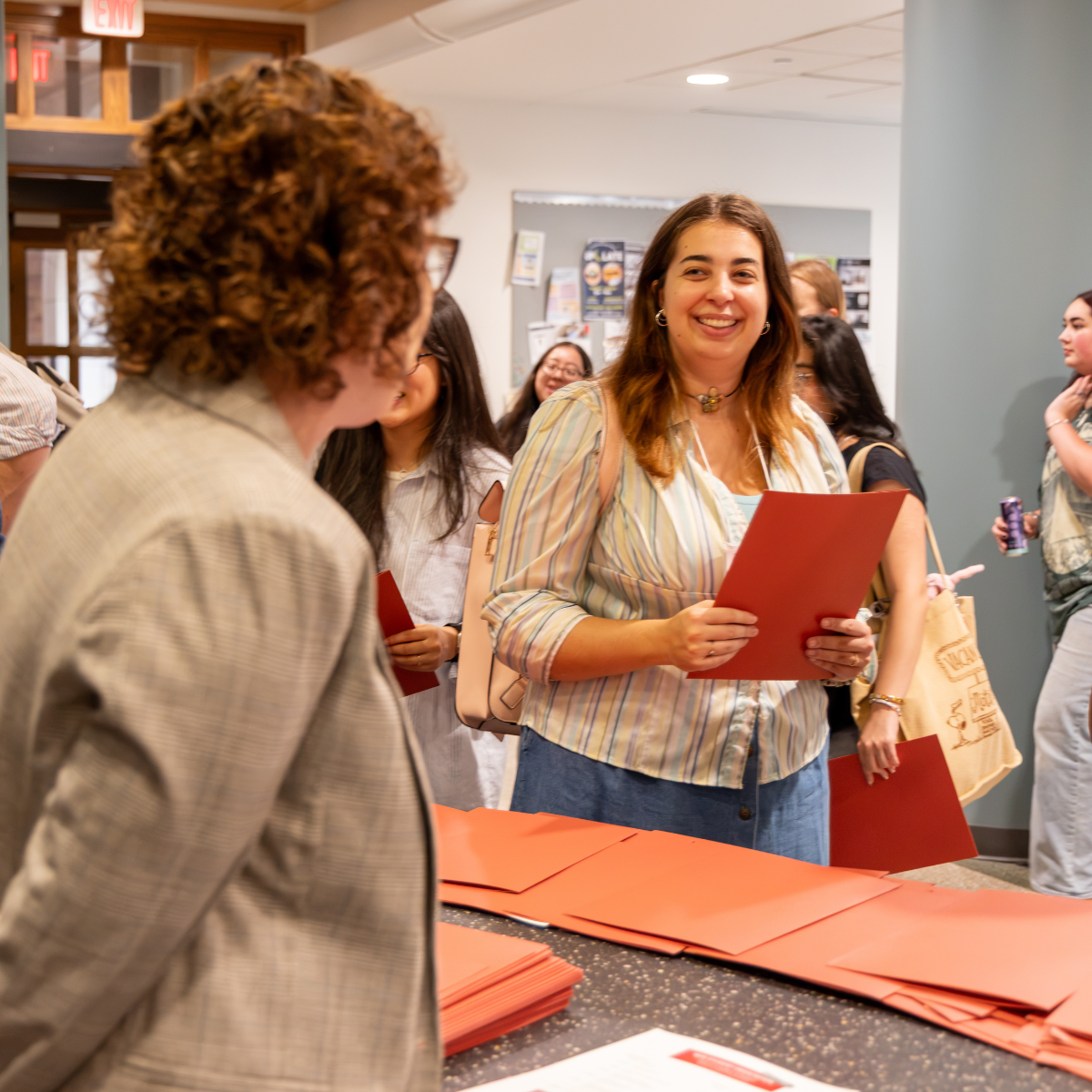
For Felix Preston of Florida, the new financial support was a major factor as he weighed the Brown School against another program.
“100%,” Preston said. “I was trying to decide between here or Ann Arbor, and it came down to price.”
A faculty member at Florida State University, where Preston earned his undergraduate degree, recommended the Brown School. Conversations with Brown School faculty before he enrolled further reinforced his decision.
“I was able to talk to some of the Brown School faculty here before making the decision, and that just absolutely had me sold,” Preston said.
For Roman Doust, who is balancing graduate school with work, financial support was similarly important.
“I’m a working student, so it’s important to get paid for the work that I do,” Doust said. “And so WashU clearly cares about the well-being of their students.”
Doust said his visit to campus during Admitted Students Week also shaped his decision. He was particularly impressed by the connections he made with faculty and others at the school.
“I realized it was just a really personal school with a lot of personal experience,” he said. “These people who reviewed your applications actually remembered who you were from your applications and talked to you about your applications.”
For Sadie Strelow, choosing the Brown School was also a way to return to St. Louis, where she grew up. After attending college in California, she said she missed her hometown and wanted a career that would allow her to give back to the community.
“There’s really no city like St. Louis,” Strelow said. “And I’ve always known that my job would be fulfilling and my life would be fulfilling if I was able to give back and help out as much as I could.”
She said the Brown School offered her a combination of academic opportunities, community and a chance to work in the city she calls home. The new financial support added another reason to choose the school.
“The Brown School is such a great school, has such a great community, and it gives us the opportunity to give back to the city that I love so much,” she said. “So there really was no other option in my mind. Yes, I applied to other schools, but especially with the stipend for practicum and the living stipend, it would be ridiculous not to come here.”
Students also cite academics, faculty and community
While financial support was a key factor for some students, academics, faculty and the Brown School community also shaped their decisions.
DeVante Pearson, a St. Louis native and veteran, chose the Brown School to pursue his interests in mental health and social justice. He hopes to work at the intersection of mental health, children and families, and violence prevention — issues he said are closely connected to what he saw growing up in St. Louis.
“I wanted to be a part of something amazing,” Pearson said. “I wanted to join the best team around, and that is the best team around.”
For Ania Gaskin of Michigan, the Brown School’s range of concentrations initially caught her attention. She was particularly interested in macro social work while also looking for opportunities to incorporate micro-level practice.
Conversations with faculty helped Gaskin envision herself at the school.
“I reached out to a lot of the faculty, and they were very welcoming,” she said. “They were understanding and they gave me a lot of insight and information and just the feeling of I already belong and that I matter is what really drew me to apply and get into WashU.”