See more of our coverage in your search results.
St. Louis is not adequately prepared for increasingly frequent and severe climate-related disasters, according to a new student-led report from the Brown School at Washington University in St. Louis. The report calls for more inclusive, coordinated and community-driven emergency planning.
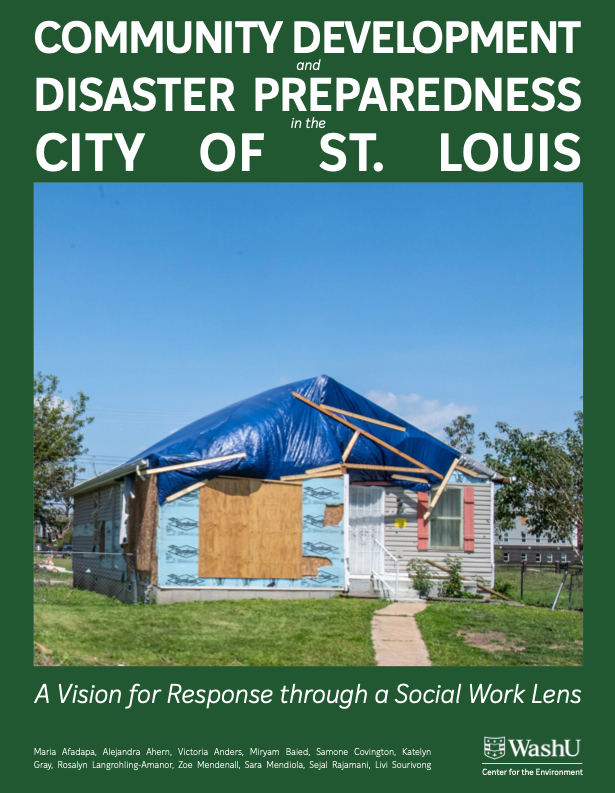
The report, “Community Development and Disaster Preparedness in the City of St. Louis: A Vision for Response with a Social Work Lens,” was written by graduate students in social work, public health and social policy as part of the Brown School’s spring 2025 Community Development course. It was published by WashU’s Center for the Environment.
Guided by Molly Metzger, a teaching professor at the Brown School, and teaching assistant Rachel Hurtado, the project incorporated input from local agencies, community leaders and disaster response experts. The students cited growing risks from flooding, extreme heat, tornadoes and earthquakes and argued that current systems do not sufficiently protect vulnerable residents, including unhoused people, older adults, individuals with disabilities and non-English speakers.
“Disasters are not just natural; they are social. Preparedness must go beyond infrastructure to include equity, relationships and collective care,” the report states. “Research consistently shows that socially connected communities recover more effectively from disasters.”
The report identifies major gaps in St. Louis’ preparedness, including fragmented coordination among agencies, outdated emergency plans, limited engagement with grassroots organizations, underinvestment in neighborhood social networks and funding constraints.
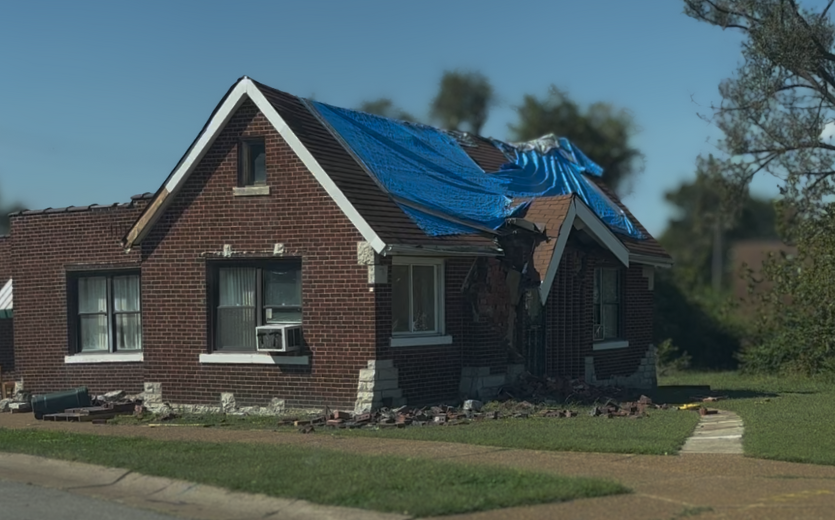
Much of the report was drafted before a powerful EF3 tornado struck the St. Louis region on May 16, 2025, killing five people, damaging or destroying more than 10,000 buildings and causing an estimated $1.6 billion in property damage. The storm carved a nearly 23-mile path through the city.
In the weeks following the tornado, students revised the report to incorporate lessons from the response and recovery. They added resources that proved critical and refined recommendations based on what unfolded on the ground.
The tornado exposed many of the gaps and vulnerabilities identified in the report, the authors said. Mutual aid groups and community organizations, including Action St. Louis and For the Culture STL, mobilized quickly to provide shelter, food and emergency repairs, often filling gaps left by strained government systems. At the same time, failures in official response highlighted systemic problems. City emergency sirens failed to sound during the storm due to human error and unclear protocols, underscoring the consequences of fragmented coordination and underinvestment in preparedness infrastructure.
To address those shortcomings, the authors propose a four-pillar framework — preparedness, engagement, collaboration and representation — aimed at building a more resilient, equitable and connected St. Louis. Key recommendations include integrating social workers into disaster planning boards and response teams, strengthening collaboration between city agencies and grassroots organizations, expanding multilingual and accessible public communications, and investing in neighborhood-level response networks.
“Writing this report, we sought to elevate the importance of social work, community connection, and equitable preparedness in St. Louis,” said Victoria Anders, one of the student authors. “To witness, just as we finished our research, a catastrophic tornado blow through a large swath of the region, particularly in some of the lowest income areas of North St. Louis—exposing the very gaps, strengths, and resilience we described—was both heartbreaking and galvanizing. The disaster made clear that our recommendations are not abstract ideals, but urgent necessities.”
Authors and Brown School affiliations: Maria Afadapa (PhD, Public Health Sciences student), Alejandra Ahern (MSW student), Victoria Anders (MPH, MSP ‘25), Miryam Baied (MSW, MPH ‘25), Samone Covington (MSW student), Katelyn Gray (MSW ‘25), Rosalyn Langrohling-Amanor (JD, MSW ‘25), Zoe Mendenall (MSW ‘25), Sara Mendiola (MSW, MSP ‘25), Sejal Rajamani (MSW ‘25), Livi Sourivong (MSW ‘25)