See more of our coverage in your search results.
When she was 12 years old, long before she knew the term “social worker” or imagined starting a nonprofit, WashU Brown School alumna Aleeza Granote, MSW ’04, made a phone call that would set the course for her life’s work.
A television announcement in her hometown of Plymouth, Minnesota, seeking nursing home volunteers caught her attention. She wrote down the number, called and asked whether the facility would accept someone her age.
“I said, ‘Well, I’m 12,'” Granote recalled. “I remember a pause. Then she said, ‘Yeah, we’ve never had someone that young, but sure we’ll take you.’ I was so excited.”
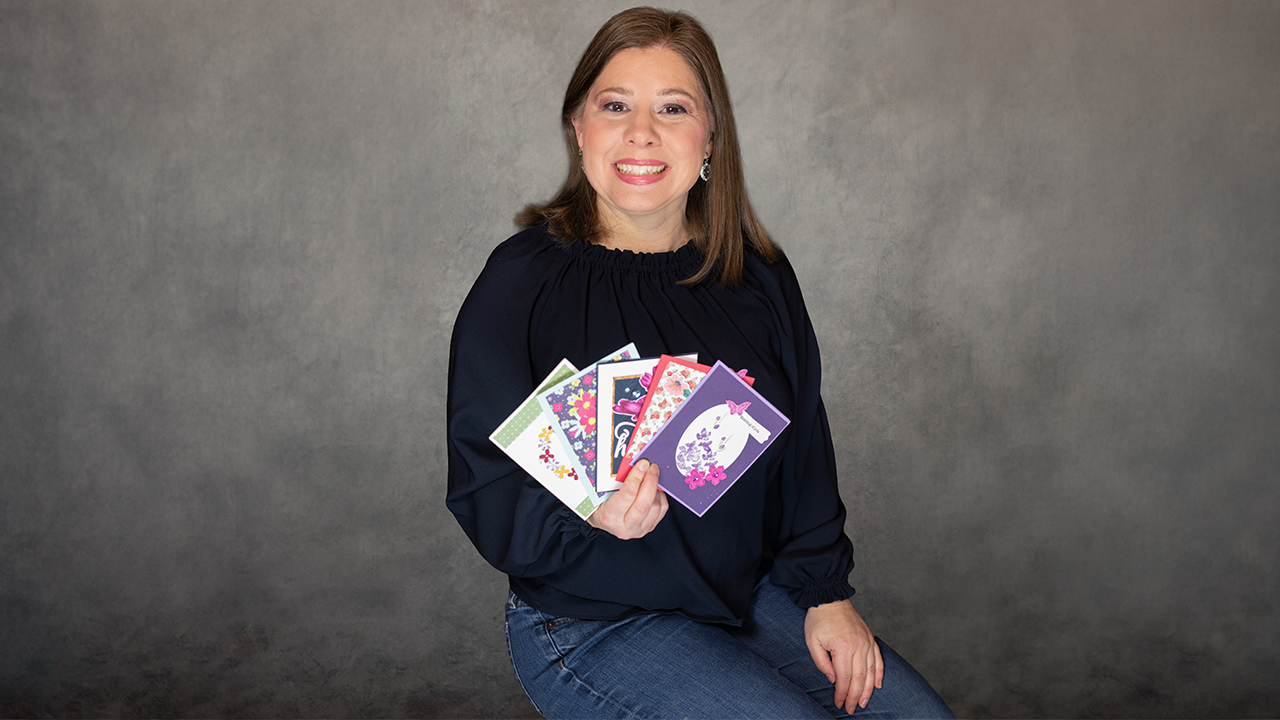
That first volunteer experience in an Alzheimer’s unit sparked a lifelong commitment to serving older adults and families navigating difficult moments. Today, Granote is an ambulatory care social worker at Mercy Hospital St. Louis and founder and executive director of Card Care Connection, a nonprofit that has collected more than 95,000 handmade cards for people with cancer across the United States.
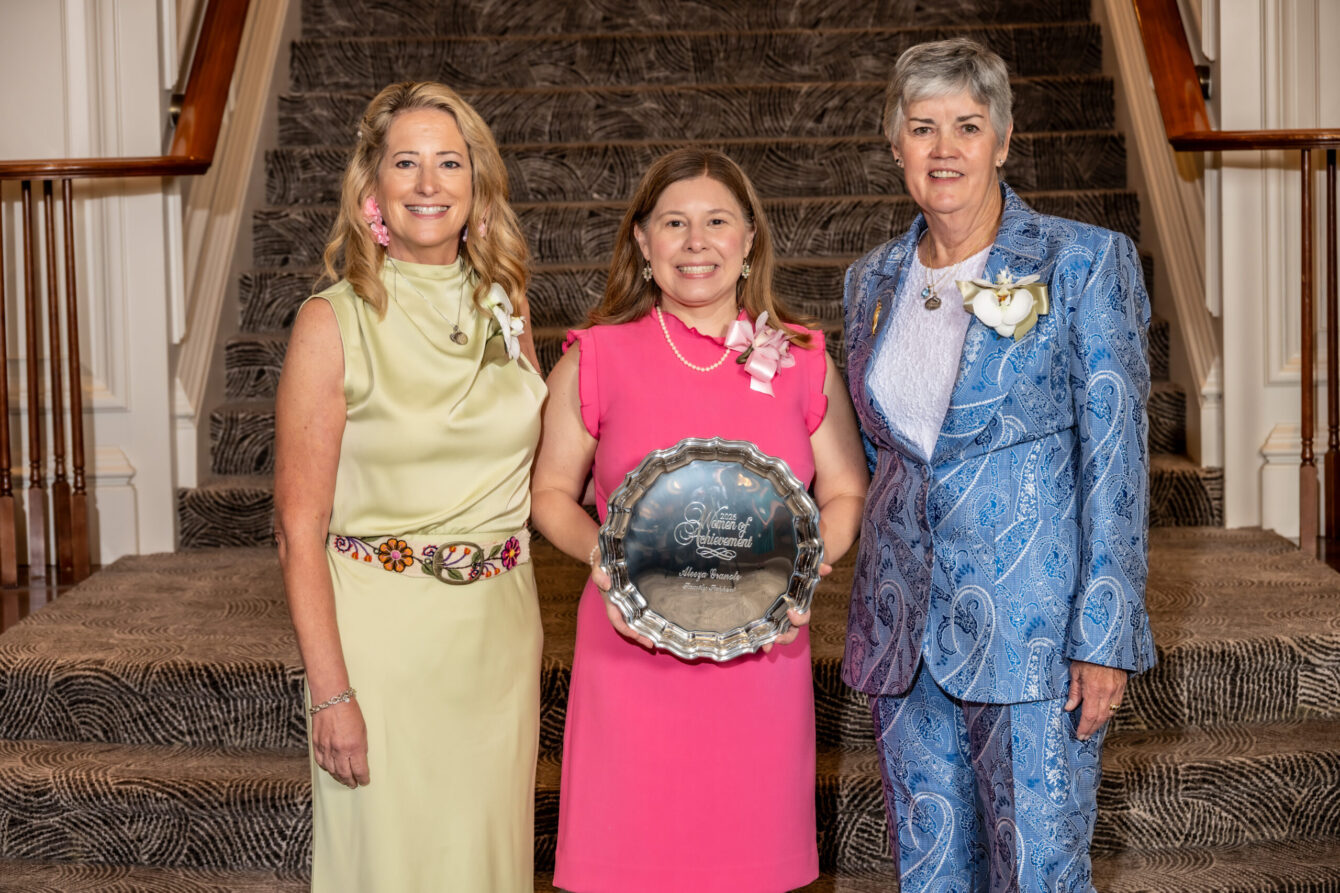
Granote recently received a 2026 St. Louis Women of Achievement Award in the Family Support category. The award recognizes women whose volunteer service and leadership have made a lasting impact on the community.
Despite the honor, Granote said she was stunned.
“I still feel it was a mistake,” she said with a laugh. “I was at the ceremony, and I kept looking behind me to see if someone was going to tap me and say, ‘Excuse me, we got mixed up.'”
Finding purpose through social work
The recognition also gave Granote an opportunity to reflect on the path that led her to this work — and the role the Brown School played along the way.
“I really credit WashU for giving me such a good foundation,” she said. “I’m so grateful because that experience at WashU was so impactful. There were so many opportunities.”
Granote’s path to social work began unexpectedly. As an undergraduate at Bradley University, she planned to become a teacher, like her mother. But an introductory social work course changed everything.
“I had never heard the words ‘social work’ until I got to college,” she said. “I kind of fell in love with my teacher’s stories. She would talk about what social work was, and it just resonated with me.”
After graduation, Granote spent a year serving with AmeriCorps at two inner-city high schools before enrolling at the Brown School, the only graduate program to which she applied.
At the Brown School, she concentrated on management and gerontology while completing internships in health care settings, including BJC HealthCare, SSM Health Cardinal Glennon Children’s Hospital. Home Helpers and Crown Center for Senior Living.
Her training combined an understanding of aging and healthcare with management skills that would later help her build and lead her own nonprofit.
A simple idea becomes a national nonprofit
After earning her master’s degree, Granote began working as an oncology social worker, where she witnessed the isolation many patients experienced during cancer treatment. Some lacked reliable transportation. Others had no nearby family or support network.
“It was kind of like a light bulb moment,” she recalled. “I started asking myself, ‘What can I do?’ I thought it would be nice to send them uplifting cards.”
What began as a goal of collecting 50 handmade cards eventually became Card Care Connection, which Granote founded in 2010.
“I knew nothing about card making. I knew nothing about running a nonprofit,” she said. “But I thought, ‘I can do this.'”
She spent years learning how to establish a nonprofit, recruit volunteers, identify cancer recipients and build relationships with card makers across the country. Over time, that small idea grew into a national network of support.
Today, the organization mails handmade cards created by volunteers nationwide. About 400 card makers create the cards, while a carefully selected group of seven volunteer writers — including her neighbors and even her mother — personalize messages for recipients.
“As a social worker, I understand how important confidentiality is,” Granote said. “We’re very careful about who we choose as card writers because they’re entrusted with sensitive information about the patients we serve.”
Eligibility for a card is intentionally broad.
“If you live in the United States and you have cancer, you qualify,” she said.
The power of a handwritten note
For Granote, the power of Card Care Connection lies in something simple: a handwritten message reminding patients they are not alone. In an increasingly digital world, she believes those personal notes carry unique emotional weight.
“People will email me and say, ‘Thank you. You have no idea what this meant to me. I don’t get many cards in the mail, so this is special,'” she said. “I think a handwritten note of encouragement is really touching. It’s comforting to people.”
For someone going through cancer treatment, a small gesture can provide a meaningful reminder that others are thinking about them, Granote said. She believes that personal connection is what makes a handwritten card so powerful.
The nonprofit has expanded beyond handwritten cards. It now provides seasonal care packages and offers outings for families affected by cancer, helping them create positive memories through experiences such as trips to the circus, Grant’s Farm and Disney on Ice.