See more of our coverage in your search results.
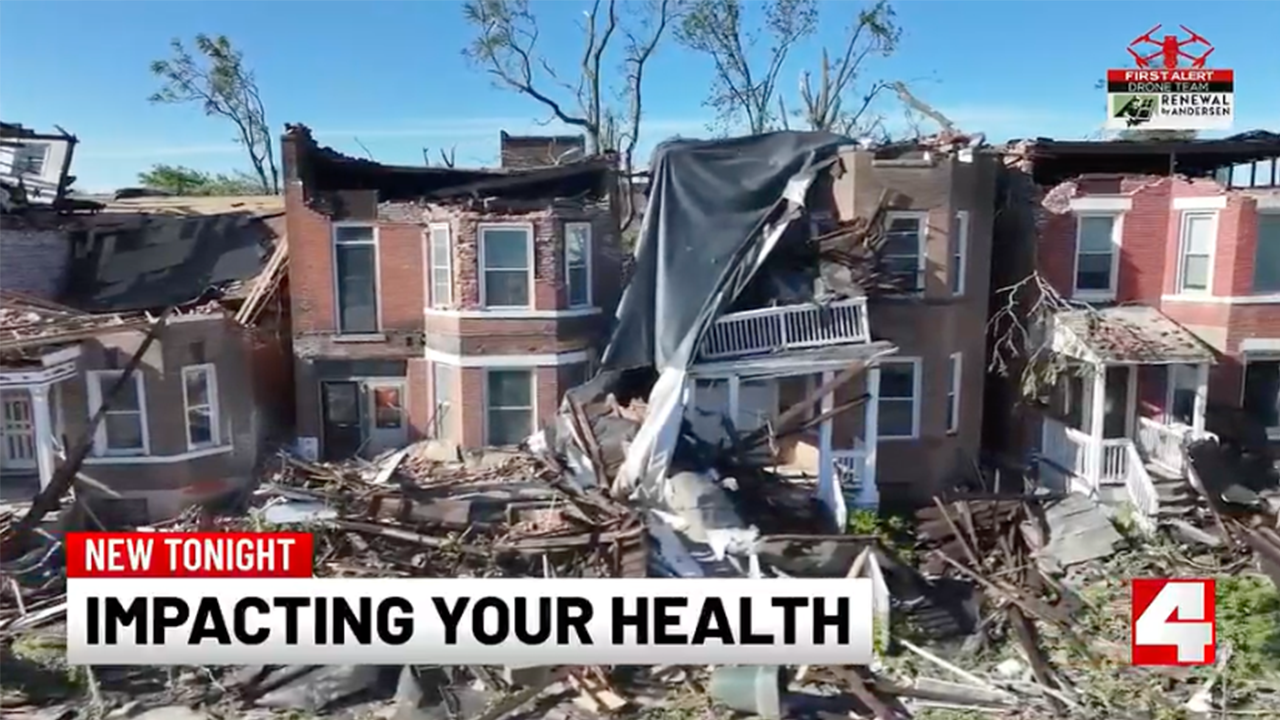
As the city of St. Louis nears a year since a tornado changed the lives of many, a local university and community organizations are working to understand some of the environmental impacts of the twister.
Washington University researchers are studying soil samples from neighborhoods in St. Louis’ tornado-impacted areas, searching for lead contamination that may have spread when the May 16 tornado dispersed building materials across yards and soil.
“We have a lot of older buildings in the area. Before about 1980, lead was still used in paint. That was on the walls of buildings, interiors, et cetera. When you have a tornado come through and distribute all that building material, disperse it all over the soil, all over yards, et cetera, that has a risk of moving lead around,” said Jeff Catalano, PhD, a WashU professor and environmental studies program director.
In a lab at Washington University’s Rudolph Hall, Dr. Catalano and his students are analyzing the samples. Catalano pointed to lead paint and leaded gas, which have historically polluted soils and become airborne when the ground dries out.
“All of that’s deposited a lot of lead in the soils of cities. I don’t think the tornado really caused a problem with that. But what we’re finding is there is a substantial existing problem, a legacy problem. And that’s a human health risk,” Catalano said.
He added, “Plants don’t take it up really. The exposure route is soil lead becomes dust, airborne dust, household dust. That’s now dust with lead in it, and that dust can end up in food and drink. When you ingest it, your stomach acid is strong enough to release the lead, and then it ends up in your bloodstream.”
Catalano said this is something he’s studied previously in parts of St. Louis, like Peace Park, as more of a side project, and there’d be instances where high concentrations of lead would be found in the soil.
This environmental research is part of a larger project called CLEAN STL. It is the first project from WashU’s Public Exchange. The initiative combines expertise from across the university and responds to community organizations’ needs.
“The public exchange is really meant to fill that gap of the research that often happens that takes far too long to actually reach the communities it’s intended to serve and support,” said Dorian Traube, PhD, Neidorff Family and Centene Corporation Dean of the Brown School.