
Widespread promotion has started for so-called Trump Accounts, including an ad during the Super Bowl. The accounts allow parents to opt in to claim investment seed money of up to $1,000 for their children. But that opt-in part is problematic, say two experts on child development accounts at Washington University in St. Louis.
“Automatic enrollment is the difference between Trump Accounts functioning as a truly universal wealth-building policy and a policy that unintentionally leaves out many children,” said Michael Sherraden, the George Warren Brown Distinguished University Professor.
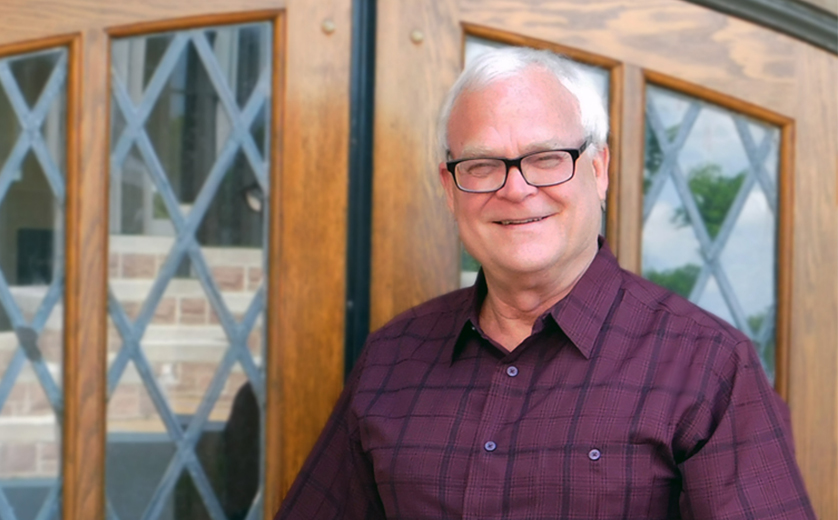
“In the field of early wealth-building, automatic enrollment is the gold standard for achieving full participation.”
The strongest U.S. evidence comes from the SEED for Oklahoma Kids (SEED OK) experiment conducted by Sherraden and the WashU Center for Social Development (CSD). Through the experiment, a group of newborns were automatically enrolled in accounts with a substantial deposit of $1,000 in 2007. Nineteen years later, 100% of those children still have accounts with assets for their education. Among children who were not automatically enrolled and whose parents had to opt in to the accounts, only about 6% have accounts today.
“Without automatic enrollment, millions of eligible children will likely be left out of Trump Accounts,” said Jin Huang, the Irving Louis Horowitz Professor in Social Policy at the Brown School and co-director of the CSD.
“The scale of that exclusion is both large and predictable,” he said. “One major source of exclusion is tax filing. Between 4 million and 7 million children live in households that do not file federal income taxes in a given year. If access to Trump Accounts depends on navigating the tax system, children in those families — often families with the lowest incomes — would face an immediate barrier to participation.”
Parents or guardians can now start the process to open a Trump Account by filing IRS Form 4547 electronically via TrumpAccounts.gov. They can also send the form with their 2025 tax returns. The $1,000 federal contribution is only for children born from 2025 through 2028.
“Even among families that do file taxes, participation is far from assured,” Huang said. “Evidence from Rhode Island shows that when enrollment requires parents simply to ‘check a box,’ only about half do so. Maine’s experience was similar. Before switching to automatic enrollment, its opt-in program reached only around 40% of eligible children — despite extensive outreach efforts. These gaps reflect well-documented challenges, including information barriers, time constraints, administrative complexity and mistrust of an offer for free money.”
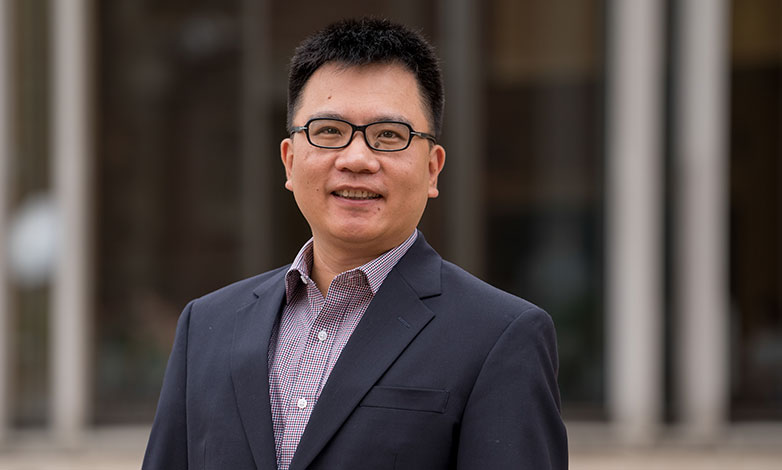
“Our research also shows that CDAs lead to numerous social and behavioral effects,” Huang said. “Better social-emotional development of children by age 4, higher parental expectations for child’s educational attainment, improved parenting practices, improved outlooks for mothers, greater parental engagement in the child’s educational preparation and improved household financial capability,” he said. “We do not want to overstate these effect sizes, but the overall pattern indicates better household functioning and improved child development.”
“SEED OK research results have informed universal asset building starting at birth in several U.S. states and in several other countries,” Sherraden said. “At last count, more than 30 million children worldwide have assets in CDAs, and the number grows with each new birth cohort.
“CSD has advised directly in all of these policy innovations. In our view, a useful goal is to have every newborn on the planet receive a CDA at birth. Financial technology now makes this very doable. Political, economic and financial challenges are always formidable, but we never know what can happen.”
For example, he said, a CSD-sponsored doctoral dissertation in 2018 led Kazakhstan to open an account for all 7 million children in 2024. Deposits now total over $1.5 billion in U.S. dollars.
“Perhaps the world can work together on a CDA project to develop all of our children,” Sherraden said. “That is our vision.”