Adolescence is tough for many teens, but it can be especially difficult for those who resettle to an unfamiliar country, where migration experiences and daily stressors often compound the challenges that can affect health and well-being into adulthood. A team of researchers at the Brown School has been studying those unique challenges in adolescents who have been resettled from the Middle East and North Africa, and the important role that schools can play in fostering their resilience and aiding their adjustment to a new homeland.
The study used surveys, focus groups, and other participatory methods with resettled teens to capture their experiences and solicit their feedback. While students born outside of the US generally reported similar outcomes of mental health compared to their U.S.-born peers, there were some notable exceptions, including a higher likelihood of suicide ideation. Hope and school belonging were identified as important factors, not only to protect students whose families are from the Middle East, but for all students.
Recent violence in the Middle East has added urgency to the study’s findings and underscored the importance of support during resettlement, according to Lindsay Stark, professor at the Brown School and principal investigator of the five-year Study of Adolescent Lives after Migration to America (SALaMA).
“Recognizing the cascading impact of the events unfolding in Israel and Gaza, along with the potential surge in anti-Arab, anti-Muslim, and anti-Semitic sentiment nationwide, the importance of actively cultivating a sense of belonging and community is particularly urgent,” said Stark.
The study, funded by the Qatar Foundation International (QFI), has been conducted in close partnership with school districts and local refugee resettlement agencies around the U.S. It assesses the mental health and psychosocial well-being of resettled high school students in Texas, Illinois, Michigan, and Virginia, with complementary research underway in Ireland. Identifying sources of daily stress in newcomer students’ lives — as well as corresponding support mechanisms — is producing best practices by schools, communities, and families to serve newcomer students and is being used by QFI and others to design future programming.
“This study has been a great example of meaningful partnership,” says Stark. Jeremy Aldrich, the director of enrichment programs at Harrisonburg City Public Schools, agreed. “Over the years of doing the study, the relationship with the researcher team was inclusive and participatory,” he told the Harrisonburg (VA) Daily News-Record. “The process was collaborative, with ongoing feedback and contextualization of the study result …It’s affirmed that hope and school belonging are really important factors to protect the mental health and well-being of not just students whose families are from the Middle East, but all students.”
In addition to the valuable partnerships with school partners and community-based organizations, the Washington University research team includes Ilana Seff, co-PI and Research Assistant Professor at the Brown School; Alli Gillespie, Senior Research Manager; Najat Qushua, Data Analyst; and Dani Sarraf, former Program Manager and current graduate student.
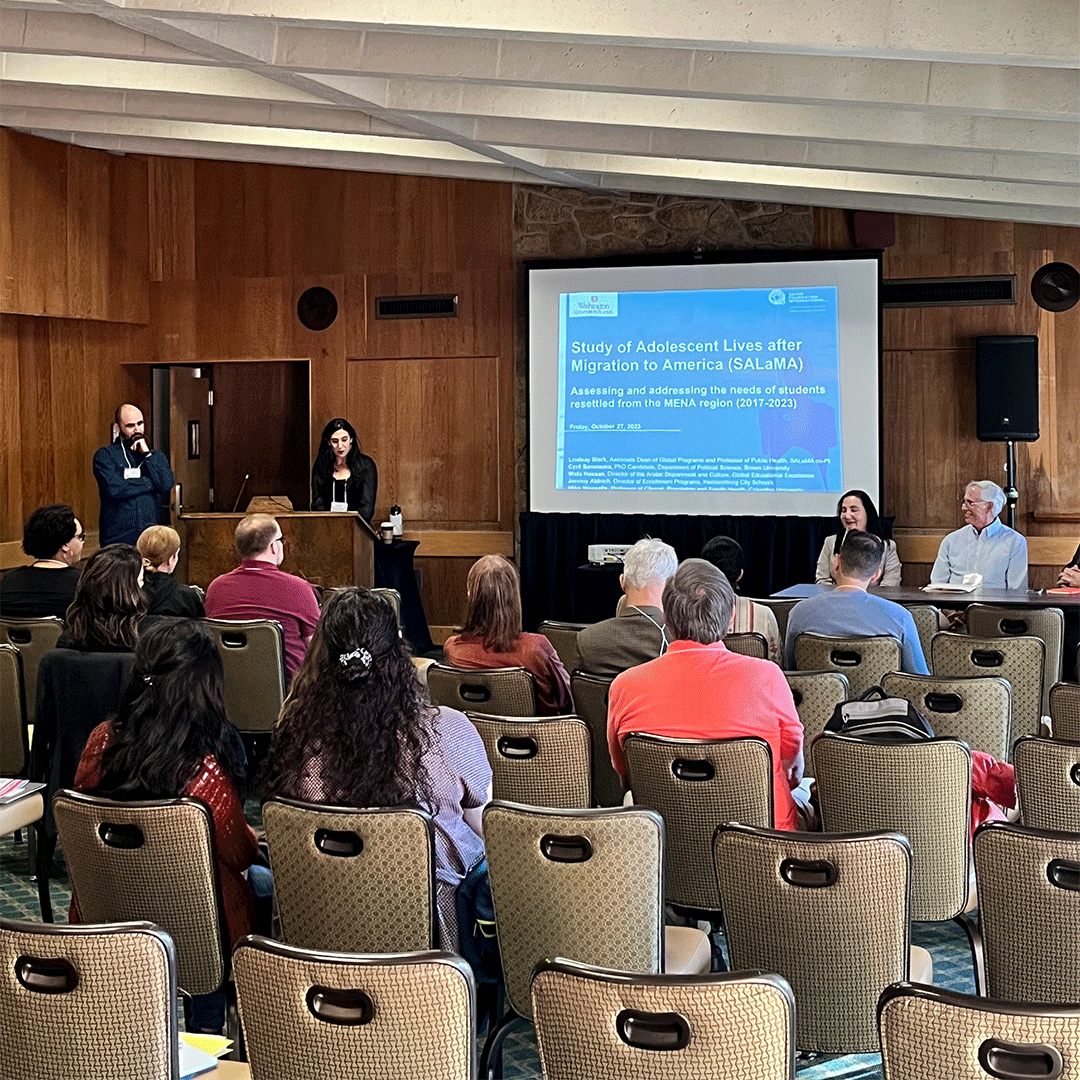
Despite challenges such as mental health stigma and resource constraints, Seff emphasizes the need to expand access to culturally responsive services and programming. Researchers are advocating for schools to show newcomers they’re valued by strengthening English language programming and peer support and implementing trauma-informed approaches, keeping in mind the challenges associated with displacement and acculturation that many of the teens’ experience. “We want to allow students to share their other identities with fellow students and let them be their whole selves,” she added.
Stark and other members of the research team presented their findings Oct. 27 at a conference of the Comparative and International Education Society in Monterey, CA. School partners also attended the conference, sharing the practical ways that SALaMA findings focused on belonging, hope, and resilience among students has impacted their approach to programming and policies.
Student feedback reflected several ways to better support resettled students, including:
- More English-language support.
- Clear communication of school rules and social norms.
- Peer support.
- Teacher patience.
- The recognition that resettled students bring assets to school communities, as well as challenges.
In addition to the study’s website, more information about the research can be found at the project’s virtual galleries and the Humans of SALaMA Instagram page, which shares perspectives of the study participants.
Lora Iannotti, a professor at the Brown School at Washington University in St. Louis, has been named recipient of the 2022 Board for International Food and Agricultural Development Award for Scientific Excellence in a Feed the Future Innovation Lab.
The award recognizes outstanding research contributions to the interdependent objectives of the U.S. government’s Global Food Security Strategy: inclusive and sustainable agriculture-led economic growth, strengthened resilience among people and systems and a well-nourished population.
Iannotti, founding director of the E3 Nutrition Lab at the Brown School, is an expert in maternal and young child nutrition and nutrient deficiencies related to poverty and infectious diseases. She serves as a nutrition specialist for the Feed the Future Innovation Lab for Fish, led by Mississippi State University.
Sarah Moreland-Russell and Dan Ferris, associate and assistant professors of practice at the Brown School, are collaborating as guest editors for a forthcoming special issue of Nutrients. The issue titled, “Nutrition Policy and Programs in Educational Settings: Equitable Approaches to Food Security,” aims to shed light on the pressing issue of food insecurity among students.
In their call for submissions, Moreland-Russell and Ferris highlight the stark reality that over 20% of U.S. children reside in households grappling with food insecurity, underscoring the crucial role of policies and programs within educational settings in shaping the health and educational outcomes of young populations, particularly those experiencing racial and economic inequities.
The duo’s call for submissions encourages research contributions that comprehensively capture the design, testing, evaluation, implementation, and dissemination of programs and policies aimed at addressing food insecurity in education settings. Whether the focus is on childcare, K-12 or college environments, the emphasis should be on strategies for achieving nutritional equity.
While Moreland-Russell and Ferris have focused their research on nutritional equity in the United States and Missouri, the call welcomes submissions from diverse global perspectives.
Nutrients, a semi-monthly online publication by MDPI, serves as an international, peer-reviewed, open-access journal of human nutrition.
Researchers are encouraged to reach out to Moreland-Russell and Ferris with questions and submit manuscripts for consideration before May 15, 2024.
Tescha Hawley, an alumna of the Brown School at Washington University, is among 10 finalists for CNN’s “Hero of the Year.”
Learn more about her work in her Native American community in this video. Hawley, a Buder Scholar, earned her Master of Social Work in 2002.
The winner will be selected based on daily online voting, and the finalists will be featured on a CNN special Dec. 10. Cast votes for Hawley on CNN’s website through Dec. 5.
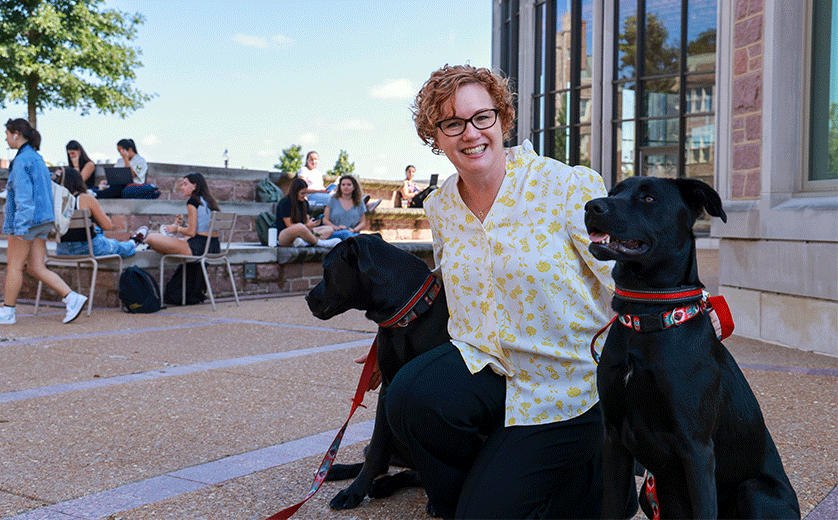
As of Thursday, Nov. 9, Dean Dorian Traube celebrates her 100th day as part of the Brown School community. Her initial 100 days have been dedicated to listening, learning and establishing priorities. Since her official start on August 1, Dean Traube has engaged with faculty, staff, students, and community partners to examine and understand the organizational landscape. Additionally, she’s had the pleasure of spending time with the WashU Police Comfort Dogs Brookie and Bear.
Here, Dean Traube reflects on her journey thus far and shares her insights into the road ahead:
What has life been since you assumed the role of dean on August 1st?
BUSY. But also fun! I have met so many people, learned so much about St. Louis, WashU, and the Brown School. I never have a dull moment because I know I will face a new challenge and a new opportunity everyday.
What drew you to the Brown School and this position?
The excellence of the Brown School students, faculty, and staff. This is a school of people willing to take on major societal challenges and they have the bold belief that they will solve these issues. They make me believe anything is possible on this team.
What do you see as the most significant opportunities for the Brown School in the coming years?
We have amazing opportunities to advance equity and impact in social work, social policy, and public health. The world has changed since COVID and we have the unique opportunity to continue to lead the field to respond to the most pressing needs impacting our communities.
What has been the most surprising aspect of your experience at the Brown School?
Meeting Bear and Brookie, the Wash U Police Department mascots. They are doing some amazing community organizing and emotional support. I never expected two puppies to have such a fan base.
From your perspective, what are the significant challenges confronting the Brown school? What keeps you up at night?
I worry about our students. I want to make sure they feel supported and able to do the important work facing society… and I want them to be paid a fair wage for doing this very important work.
If you weren’t in academics, what type of career would you pursue?
I would be a kindergarten teacher. I love early childhood and early childhood education. The smallest learning opportunities are magical.
Tell us about any unique items on your desk or in your office space.
I have a framed note that my best friend sent me when I was announced as the Dean of the Brown School. It says, “You rock and you deserve this!” I also have a small sign that says “@#$%^&*&” just because I think it is funny.
What things have you come to quickly love about St. Louis (food? places)?
I love Corner 17 and it is also my kids’ favorite restaurant. I think Forest Park is magical. I have not experienced a true autumn in 17 years so I am very excited about it.
What are three things people should know about you?
I am proud to be a social worker, supporting children and families is a deep passion of mine, and I believe kindness is one of the most important human qualities.
What’s your favorite way to de-stress after a taxing day?
Spending time with my children or taking a walk in Forest Park.
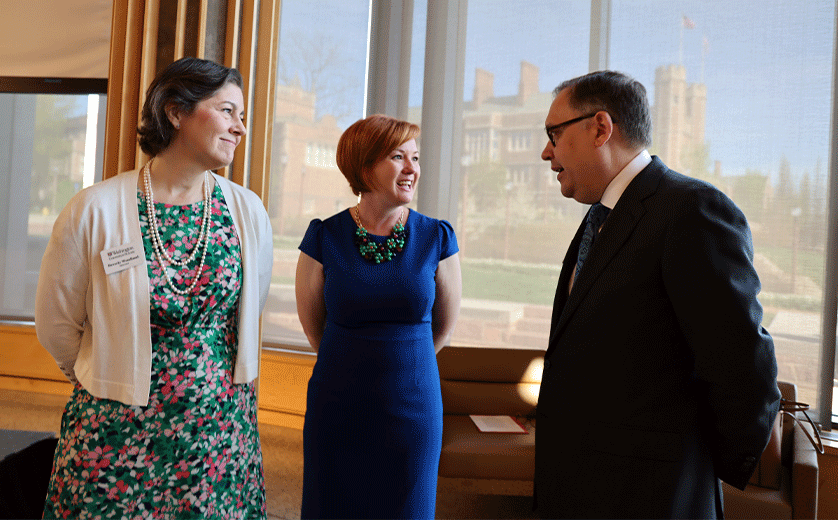
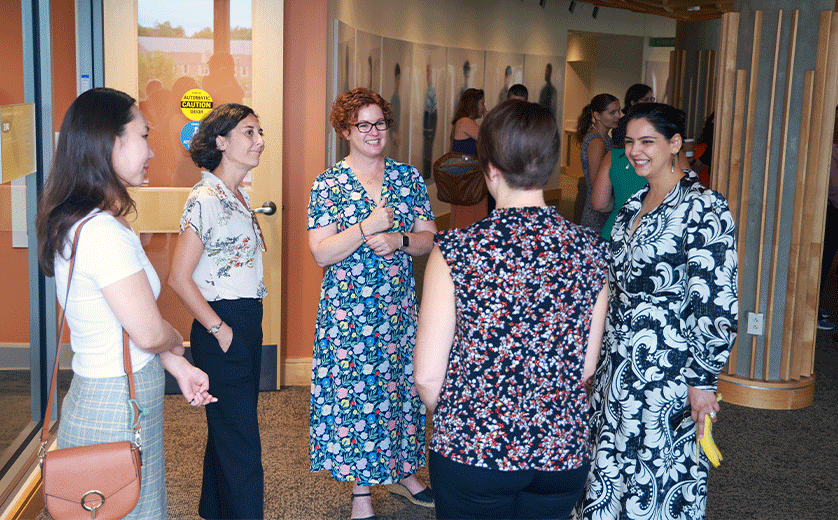
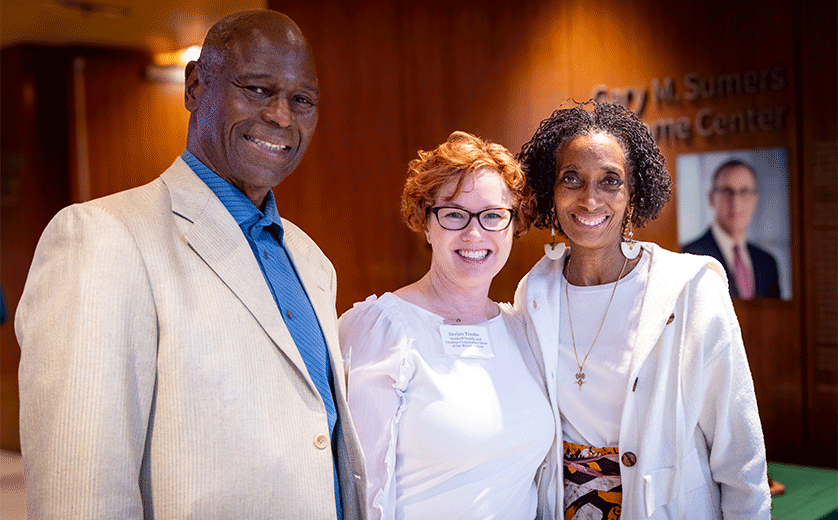
Samuel Kizito, a third-year PhD student in public health sciences at the Brown School at Washington University in St. Louis, co-authored a correspondence published in The Lancet addressing the current HIV epidemic among adolescents in Sierra Leone.
“Without prompt intervention, the country risks a surge in HIV cases and poorer outcomes that might lead to a broader HIV epidemic,” he wrote.
Kizito is a research associate at the Brown School’s International Center for Child Health and Development (ICHAD). Kizito’s research focuses on designing and evaluating interventions to improve outcomes among youths with HIV in low-income settings.
Sierra Leone, a west African country with a population of about 8.5 million people, is experiencing a steady increase in HIV prevalence.
“The HIV epidemic disproportionately affects children and adolescents,” Kizito wrote. “Although there are no disaggregated data available for adolescents, statistics show that of the 76,000 people living with HIV in Sierra Leone, 66,000 are people aged older than 15 years, and 10, 000 are children aged between 0 and 14 years.”