A new practicum at the Brown School offers students interested in management the opportunity to immerse themselves in hands-on work with the CEOs of leading non-profits in the St. Louis area. The CEO Fellowship program is pairing seven students with top executives in six agencies for a two-semester, side-by-side paid learning experience in key roles that contribute to the agencies’ needs.
One semester into the initiative, the fellowships are getting rave reviews from students and their executive partners.
“It’s been absolutely amazing,” said Kelsey Knoploh, MSW ’22, who is working at St. Louis Arc, a non-profit that provides services to adults with intellectual and developmental disabilities. “I’ve had wonderful mentors in the organization who made sure I took on assignments that challenged me and developed the skills I was looking for.” Those challenges include developing materials for strategic planning, a survey for parents and participants, assessment tools and a plan for race equity, using social media.
“It’s been a great opportunity for us and for her,” said Mark A. Keeley, MSW ’89, who is president and CEO of St. Louis Arc, which has hosted Brown School practicums before. “This is a much-elevated practicum from those for students whose studies are more service-related. Kelsey has been entrusted with tasks not usually assigned in a practicum, like strategic planning. She has contributed a lot to our weekly management discussions, taking an active role and very helpful in taking the burden off others. She also provides fresh eyes from outside the organization, and that’s been very helpful.”
The fellowships were developed by Barbara Levin, teaching professor in the Office of Field Education; and Barry Rosenberg, professor of practice, for students in the Social Impact Leadership concentration on the Leadership & Management track. “We really wanted students to have a high-level, intensely focused practicum experience, assigned to management tasks that normally students might not have access to,” Levin said. She and Rosenberg explained their idea to CEOs in the St. Louis area with whom they had worked on other practicums, gauged interest, and got feedback.
Participating CEOs presented their agencies in a panel for interested students. Students applied to their top three choices and the CEOs did the same, resulting in win-win matching fellowships. Students make a two-semester commitment to the agencies, which fund the fellowships. The fellowship choices are made in the spring of the students’ first year.
“The students develop a relationship with a CEO, learning what the job is, how a CEO manages a large, complex organization,” Levin said. “We’re very grateful to the CEOs; they’re among the busiest people around. They get a great, high-level motivated student to work in their agency.”
Grace Jalboot, MSW ’22, is one of two fellows who are working at PreventEd, a non-profit that works to reduce or prevent harms of alcohol and other drug use through education, early intervention and advocacy in the St. Louis area. She is working with Executive Director Nichole Dawsey on strategy, management and program delivery. Her projects have included facilitating a listening session with employees to get a sense of employee engagement, strategic planning, and helping departments write racial equity statements. In the future, she’ll try to strengthen PreventEd’s relationships with other nonprofits.
Jalboot majored in sociology as an undergraduate at WashU and came to the Brown School with the thought of working with children and families. “I realized I didn’t want as much direct practice,” she said, adding that the fellowship was an opportunity to maintain her interest in children while building her management skills. “This is an awesome way to support organizations that are already doing great work,” she said. “I’m getting to see the impact, taking what we learned in the classroom and putting theory into practice. Already I feel ingrained in the organization; I feel appreciated and it’s been great. Everyone there is still learning, no matter how long they’ve been there. It was really refreshing.”
Dawsey said continuing education for staff has been a longstanding principle of PreventEd. “The way we’re set up, we value learning and growth and coaching, it’s one of the things that we pride ourselves on,” she said.
Her experience so far with the fellows has been “awesome,” she said. “This has been big for us. They came on at a time when there’s a tremendous amount of change happening – COVID, racial equity, and our strategic plan, which is expiring at the end of the year. Grace has been instrumental in getting our next strategic plan underway. What I appreciate most is getting a fresh perspective, a breath of fresh air from the students. When they suggest something, they then follow through with suggestions on how to do it, and sometimes do it themselves.” “I can’t speak highly enough of the program. I feel sometimes like I’ve won the lottery.”
Other agencies and their CEOs who are hosting fellows are: Behavioral Health Response, Pat Coleman; Care and Counseling, Laurie Phillips; Family Forward, Karen Nolte; and Wyman Center, Claire Wyneken.
In Uganda, a sub-Saharan country that is home to more than 170,000 adolescents living with HIV (known as adolescent HIV for teens), HIV stigma continues to be a significant barrier to HIV treatment adherence among adolescents. This contributes to low rates of medication adherence and viral suppression as well high attrition from HIV treatment services. These issues are even more pronounced for ALHIV in boarding schools.
Researchers Fred Ssewamala, William E. Gordon Distinguished Professor, and Massy Mutumba, assistant professor from the University of Michigan, have teamed up to try to reverse these trends with their new study funded by the National Institute of Mental Health (NIMH). The five-year project is “M-Suubi: A Multi-Level Integrated Intervention to Reduce the Impact Of HIV Stigma on HIV Treatment Outcomes Among Adolescents Living with HIV in Uganda.”
Mutumba met Ssewamala last year while a trainee on the Global LEAD Training Program. LEAD recruits and trains predoctoral students and postdoctoral trainees from diverse backgrounds across the United States, including groups underrepresented in biomedical, behavioral, clinical and social sciences research, interested in global mental health disparities research. That program is co-directed by Ssewamala and Patricia Cavazos-Rehg, a professor in the department of psychiatry at the Washington University School of Medicine.
This new study examines the impact of a multilevel intervention combining group-based HIV stigma reduction. Training for education professionals – educators, school directors, teachers and school nurses – occurs concurrently with multiple family group interventions. The family sessions have a two-fold focus:
- HIV stigma reduction and a family economic empowerment intervention on HIV treatment adherence
- Engagement in care among ALHIV attending boarding schools in Uganda
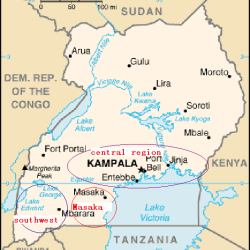
The study will recruit 840 girls and boys from 42 schools, along with their caregivers. The participants will come from 42 schools located in eight geographical districts heavily affected by HIV. In addition, the study will recruit at least 210 school educators. The intervention will be provided for 20 months, with assessments at baseline, 12-, 24- and 36 months.
“The boarding school social context, a form of institutional care, is very disadvantageous for adolescents living with HIV due to a variety of reasons including: the lack the family support that typically facilitates treatment adherence, lack of privacy, high levels of HIV stigma, and poverty-related food insecurity that results in a lack of food to accompany medication,” said Mutumba.
We hope that by providing evidence based interventions including group and family-based discussions to reduce HIV-associated stigma combined with economic incentives, adolescents will better adhere to their medications.”
This new study will add to Ssewamala’s growing research in this area as director of the International Center for Child Health and Development (ICHAD). “While some of our Center’s previous studies have examined treatment adherence among youth living with HIV, this approach is innovative as there are, to my knowledge, no studies of HIV stigma reduction interventions amongst boarding school populations. M-Suubi will generate knowledge to develop effective treatment strategies to reach ALHIV in these and similar institutional settings,” he noted.
In addition to measuring adherence to medication and HIV stigma, the study will also gather rich data on program implementation and costs. If results are promising, they can quickly and effectively be disseminated to inform practice and policy, and the intervention can be scaled to other boarding schools in the region.
A dynamic team of experts from around the globe will contribute to this study. Co-investigators on the team include:
- Brown School Research Assistant Professors Ozge Sensoy Bahar and Proscovia Nabunya
- Shenyang Guo, Frank J. Bruno Distinguished Professor of Social Work Research
- Yesim Tozan, New York University (cost effectiveness expertise)
- Torsten Neilands, University of California San Francisco (statistical support.)
In Uganda, the team will partner with Abel Mwebembezi from Reach the Youth, Barbara Mukasa from Mildmay Uganda and James Mugisha from Makerere University. For more information about this new study, please visit ICHAD’s M-Suubi website.
The intelligence may be artificial, but the enthusiasm for it is genuine.
Artificial Intelligence (AI), characterized by machine and deep learning, will be the subject of several Open Classroom programs beginning Oct. 14 — and taught for the first time at the Brown School in two courses next year. AI is already transforming large swaths of science and industry in fields such as engineering and computer technology, but has been less prominent in the social sciences.
“As policy analysts and quantitative modeling practitioners, we have applied a wide range of statistical methods to analyze patterns from structured data, but most data we encounter day-to-day is unstructured, such as images, texts, and video or audio recordings,” said Ruopeng An, associate professor at the Brown School who is leading the AI effort. “The traditional statistical methods are not well-equipped to process huge datasets in the magnitude of gigabytes and terabytes, and the challenge becomes even greater when these data are unstructured.”
In AI, new algorithms are created to analyze massive, unstructured data and suggest solutions to thorny problems in social work and public health. In California, for example, housing authorities are using AI to help assessors re-evaluate the value of real estate and plan strategies for affordable housing. Some government agencies can use AI to predict changes in the price of commodities and design policies to respond to higher food prices, particularly in lower-income communities.
“AI and social sciences need each other,” An said. “Social sciences need AI to revolutionize their methodologies to observe, interpret, and analyze phenomena better; AI needs social sciences to mitigate potential harms of real-world applications and to ignite positive social change.”
Open Classroom is a popular series of midday presentations that are free to the public and recorded for later viewing on the Brown School’s YouTube channel. The AI series, aimed at general audiences, will introduce AI-related technologies and applications for social sciences. No previous exposure to AI or computer programming is needed to be able to follow the presentations. Complementary references (e.g., tutorials, textbooks, software packages, APIs, data sources) will be provided for those interested.
An will lead the initial presentation on Oct. 14, introducing AI and its potential uses in the field of social sciences. Future classes will examine ethical issues surrounding AI (its potential misuse and biases), AI’s impacts in e-commerce and international trade, computer vision, and natural language processing. The series will conclude in May.
One of the biggest opportunities that AI offers to social scientists is to better understand data and translate it across culture. That’s what drew Niki Fang, a second-year PhD student at the Brown School, to a workshop An held this past summer to introduce students to AI. Forty students attended.
“I believe this area can be very beneficial in the future,” said Fang, whose research focuses on support for parents with autistic children. She said AI might help families to do the initial screening for autism or to establish a support system across cultures. “Currently, we have a lot of online tools to help with therapy, but they’re based on English and not appropriate to use in the Chinese context.” Fang will be a teaching assistant for one of the new courses An will teach, and eventually plans to return to her home in China to work.
“The most interesting part of AI is how powerful it is,” she said. “We’re able to use it to dig out much more information from non-numerical data.”
Danyi Li, MSP/MPH ’22, also attended the workshop, her interest piqued by a book on AI she had read as an undergraduate. “I was so amazed about how big data and AI may change our life, said Li, whose concentration is in epidemiology/biostatistics. “Social scientists spent thousands of years exploring the philosophy of causal relationships, but in an era of Big Data, we may be able to act based on correlations instead of causality. The new technologies may be a revolution to classic statistics and quantitative methods.”
Li has collected poverty-alleviation policies from Chinese central and local government websites and thinks AI can be useful in analyzing those texts. “AI methods can deepen our knowledge, especially the knowledge about human society,” she said.
The new courses will be offered in the spring and fall of 2022, and eventually, An plans to offer a post-master’s certificate on AI and a new public health specialization.
The spring course, Applied Machine Learning Using Health Data, will teach popular machine learning models using Python and their applications on health data. The course focuses on the practical applications in solving real-world questions using publicly available health data.
The fall course, Applied Deep Learning Using Health Data, is built upon the spring course and teaches popular deep learning models and their applications on health data. Their applications are rapidly expanding from outbreak prediction to medical imaging and from patient communication to behavioral modification. In this course, students will have the opportunity to work on real-world projects utilizing the AI models learned.
If you build it, will they come? When it comes to engaging scientists, a new study says that if you fund it, they will.
A team of researchers that has been evaluating the Washington University Institute for Clinical and Translational Sciences (ICTS) since 2010 has released new findings. They suggest that CTSA member researchers who engaged with dedicated ICTS infrastructure and resources increased their research productivity; members who took advantage of ICTS services were more likely to publish articles and submit and receive grants than those who did not.
The National Institutes of Health and its National Center for Advancing Translational Sciences (NCATS) launched the CTSA Program in 2007 to support creating program infrastructure to promote collaboration among scientists and improve translational research. NCATS currently funds about 60 CTSA hubs in the US, including the Washington University ICTS. Translational science is research that results in real-world change, for example, improvements in practice, professional guidelines, or delivery of health and social services.
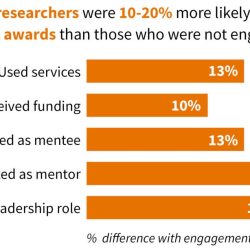
While most evaluations of these types of programs focus on increases in publications or grants, few examine how or why this happens, and how putting in place additional infrastructure can help researchers provide greater community benefit. Authors of the new study, published in the Journal of Clinical and Translational Science, looked at researcher engagement with the ICTS across four categories: using core services; receiving ICTS internal project funding; participating in mentor-mentee opportunities; and serving in leadership roles. The results were notable: engaged researchers were 10-20% more likely to receive grant awards than those who were not engaged.
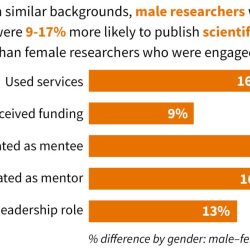
The study also explored differences in productivity by gender, finding that across all types of engagement, male researchers were more productive than female researchers with the same rank and experience. According to lead author, Todd Combs, PhD, assistant professor at the Brown School and associate director of the Center for Public Health Systems Science, “Even when women engage with available services and support, their productivity is less than that for men, illuminating the need for more efforts focused on understanding and overcoming barriers to academic success among women.”
Bradley Evanoff, MD, MPH, the Richard A. and Elizabeth Henby Sutter Chair in Occupational, Industrial, and Environmental Medicine, former director of the Washington University ICTS and co-author on this study, noted the importance of this study in unpacking the ‘black box’ of how new services, resources, and opportunities, can increase productivity. “Keeping decision-makers aware of the outcomes of these investments is crucial to secure future research funding, reduce disparities, and decrease the time-to-uptake of new translational science findings,” Evanoff said.
Read the study or view the one-page research brief.
The International Consortium for Social Development has given Michael Sherraden the 2021 James Billups International Social Development Leadership Award.
In presenting the award, Consortium President Manohar Pawar recognized Sherraden’s “distinguished contribution to social development theory and practice knowledge based on impactful action in strengthening the financial capacity and asset base for poor people and communities in several countries.”
“I am honored to receive this award in the name of Jim Billups,” said Sherraden, the George Warren Brown Distinguished University Professor at Washington University and the founding director of the Center for Social Development (CSD) in the university’s Brown School.
Working with the CSD team and many partners, Sherraden has made numerous contributions to international social development. These include research, public policy, and practice efforts in various countries in Asia, Africa, Europe, Latin America, and the Middle East. Throughout his career, Sherraden has helped to create and evaluate asset-building initiatives in national policies and in local programs.
The award comes as Sherraden, CSD, and a multinational group of partners launch FCAB Africa (Financial Capability and Asset Building in Africa), a new collaboration to broaden the financial stability and security of marginalized populations on the continent. The initiative is designed to equip frontline human-service practitioners with basic financial knowledge and tools for their clients and, through collaboration with financial service providers, to create a comprehensive financial-development program delivered through existing services, including fintech (financial technology).
With colleagues at the Center for Social Development, Peking University, Hong Kong Polytechnic University, and other institutions, Sherraden is already engaged in a similar initiative in mainland China, where the partners are improving the financial capability of social workers and other human-service professionals.
His work also has broadened the horizons international service. Pawar noted, “Professor Sherraden’s research on civic service, ‘National Service,’ in 1982, and ‘The Moral Equivalent of War,’ in 1990, contributed to the creation of AmeriCorps in 1993.”
Honoring James Billups
Renowned for his commitment to peace and social justice, James Billups served as president of the International Consortium for Social Development from 1990 through 1998. A professor in the Ohio State University College of Social Work, he authored numerous works, including the 2002 “Faithful Angels: Portraits of International Social Work Notables.” Billups was a 1970 graduate of the doctoral program in Washington University’s Brown School and won the school’s Distinguished Alumni Award in 1995.
The Billups Award is given annually by the consortium’s president and Executive Council. It recognizes recipients’ commitment to peace, social justice, and inclusiveness, as well as to “building social, economic, and political capacities of individuals, families, communities, nation-states, and international organizations whereby the goals of human realization, equality, human rights, peace and social and economic justice are reached through comprehensive, collective, remedial and developmental efforts.” Sherraden accepted the award during a session of the 22nd biennial conference of the International Consortium for Social Development.
“I remember Jim Billups very well, and remember his spirit and energy most of all. That spirit and energy continue with this award. I hope that I can be half as positive and forward looking as Professor Billups,” Sherraden said.
Debra Haire-Joshu, PhD, the Joyce and Chauncy Buchheit Professorship in Public Health, has been selected to serve on the National Research Advisory Council for the National Institute of Diabetes and Digestive and Kidney Diseases (NIDDK), one of the National Institutes of Health (NIH). She will serve a 4-year term.
The Council advises and assists both the Secretary of Health and Human Services and the Director of the National Institute of Diabetes and Digestive and Kidney Diseases.
Haire-Joshu is an internationally renowned scholar of health behavior who develops population-wide interventions to reduce obesity and prevent diabetes among underserved women and children. She holds a joint appointment in the Washington University School of Medicine, and directs the Center for Obesity Prevention and Policy Research (COPPR) and the Washington University Center for Diabetes Translation Research (WU-CDTR).