Researchers from the Brown School used tablet-based ultrasound technology to evaluate the bone age of young children in rural Ecuador. The research showed that delayed bone age was associated with stunted growth and diet.
Stunted growth and development is a serious global public health problem, and determining a child’s bone age and comparing it to their chronological age can help to determine whether a child has a growth problem. Lora Iannotti, associate professor at the Brown School, led a team that used a new technology – tablet-based ultrasound – to assess bone age in a community in Ecuador where stunting was prevalent.
The research was conducted in 2017, when 128 children were evaluated. They found that bone age was lower in children who had stunted growth and was associated with diet.
“We adapted field-based ultrasound technology for use in public health research, with application possibilities in other low-resource settings where access to MRI might be limited,” said Iannotti, an expert in nutrient deficiencies related to poverty and infectious diseases. “The imaging allowed us to examine connections between bone development and child nutrition.”
Results of the study were published in the journal Radiology.
The Brown School recently completed the first full year of a new program aimed at training students to examine racial equity in field placements. The Racial Equity Fellows program provided six fellows with skills, knowledge and support in working with field instructors, staff and community stakeholders to assess and implement strategies to promote equitable practices in community-based organizations in the St. Louis region.
“We are aiming to discover what racial equity means to each organization and then use data and interviews to identify blind spots and suggest evidence-based strategies to achieve their vision,” said Jewel Stafford, director of the program and associate director of the School’s Office of Field Education.
The fellows worked in three organizations, including the Brown School Dean’s Office.
“The Brown School fellows focused on the role of data in advancing racial equity and recommended several next steps, including a qualitative analysis of practices and decision-making processes as well as a quantitate dive into outcomes for students, faculty, and staff,” said Dean Mary McKay.
The program began with one semester in spring 2019, and was expanded to a full year beginning in the fall. Fellows received a stipend and academic credit for their work. The program faculty conducted bi-weekly seminars on the fellowship’s curriculum, which included why racial equity analysis is important and change-management theory. A community advisory board helped guide the program.
“We want to find out if everyone is on the same page when they say what they mean by racial equity, and then look at racial data, hiring practices, how leadership decisions are made and whether the people who are affected feel that their voices are heard,” Stafford said.
Aura Aguilar, MSW ’20, said she was drawn to the program by her interest in labor rights and immigrant rights, particularly in the Latinx community in her home state of California. “It’s important to do that work with a racial equity framework,” she said. She and Kyliah Thompson, MSW ’20, worked with the staff, steering committee and board of Alive & Well Communities, a St. Louis non-profit that focuses on trauma-informed work in schools and communities across Missouri, and bringing racial equity to that work.
“We did a racial equity audit of Alive and Well to make sure the work they were doing was aligned with a racial equity lens inside the organization,” she said. Racial equity was defined as “when people have access and opportunity regardless of race,” a definition that came from Forward Through Ferguson, an organization that was founded following the death of Michael Brown. After the audit, the fellows made a presentation to Alive and Well, McKay and Forward Through Ferguson.
“What we found is the organization needs to provide space to have these difficult discussions about racial equity,” she said. “Language on racial equity has to be the same by all staff. Questions about bias aren’t easy to have. Alive and Well was open, and able to have these conversations.”
Aguilar said her fellowship experience helped her better understand the challenges in addressing inequities. “My biggest takeaway is that racial equity tends to be very intellectualized,” she said. “Social workers use a lot of jargon, and we tend to talk around the issues a lot. This fellowship helped me realize when we are talking too much and need to start acting to change processes and promote racial equity.”
The fellows’ work was beneficial, according to Vontriece McDowell, MSW ’08, Director of Community-Based Interventions for Alive and Well. “It was very useful,” she said. “They did a great jog in suggesting next steps and recommendations. The audit let us know how equity needs to be advanced in different pieces of our work and to make sure we had a common understanding of what racial equity was.”
Alive and Well is putting together a workgroup to focus on equity, and gathering racialized data to help guide its efforts.
The audit of the Brown School Dean’s Office was completed by Cristian Vargas, MPH ’20, and Mikayla Branz, MSW/MPH ’21. They gathered information about the data sources and data collected by each department, with special attention to racialized data that could contribute to racial equity work. They also interviewed department personnel to understand how the data is used.
“It’s something that’s pretty unique to the Brown School,” Vargas said of the program. “There seems to be a focus in higher education and the business world on diversity, but equity gets lost. It’s harder to envision.” His interest in racial health disparities led him to apply for the fellowship.
His experience gave him an inside look into school administration and helped identify gaps in data that could be filled to improve equity. He cited as an example data collected by career services that detailed salaries for Brown School graduates immediately following graduation but without demographic information. Adding demographics could help identify racial disparities and implement ways to address them.
“It was definitely a useful experience,” he said. “There are not a lot of institutions that are trying to do this,” he said. “Being at the forefront is something that was very valuable to me.”
One of the biggest challenges faced by the fellows was at the City Garden Montessori school. Taylor Brown, MSW ’20, who worked on the audit with David Blount, MSW 21, said the part-private, part-public charter school was going through turmoil as some in the community believed wealthier white families were pushing out families of color.
“It was a tumultuous year for the City Garden community,” Brown said. “We did a comprehensive evaluation of the school, emphasizing racial equity.” They studied data from internal records, and those from the Missouri Department of Secondary Education along with interviews of teachers and administrators. “We had some alarming findings” about racial disparities at the school, he said. “We planned a ‘data walk’ to bring everyone from students to board members in the same room with our findings and help find a way for pockets of the community to heal and communicate.” But those plans were canceled after the coronavirus struck, and the event is now planned to occur online in the fall.
Despite the challenges, or maybe because of them, Brown said his fellowship was “a wonderful experience.”
“I’ve learned a great deal about racial equity in organizations, the process of change management and the pushback to change that can come from clients and staff, even at City Garden, which is a pioneer and leaps and bounds ahead of others in pursuing equity.”
A strong community of people in St. Louis, including Forward Through Ferguson, has been inspiring, said Brown, who grew up in a rural part of Arkansas that he said had a long history of racism. “I got plugged into this dedicated community that advocates for racial equity,” he said. “It’s what brought me to St. Louis.”
In the wake of national protests following the death of George Floyd, some activists are calling on cities to defund their police departments. But what does that mean exactly?
Robert Motley, a PhD candidate in the Brown School and manager of the Race & Opportunity Lab at Washington University in St. Louis, explained it’s more of a reallocation of funds for public safety and health.
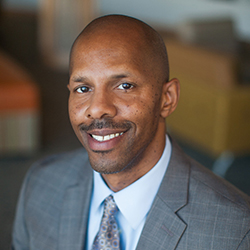
“Defunding the police does not equate with dismantling the entire police force,” Motley said. “What citizens, community leaders and some legislators are calling for is a thorough review of existing budgets and possible reallocation of funds to support community-based programs and services that would be of direct benefit to the overall well-being of predominantly black, under-resourced communities.
“For example, some of the recommendations proposed include a redistribution of funds to public health services, public schools, housing, small business owners, and also for the creation of job opportunities,” said Motley, whose research examines trauma and policing among black adults ages 18-29.
Could defunding the police improve policing?
“Many black communities are disproportionately impacted by mental illness, homelessness, drug addiction and poverty,” Motley said. “For some time now, police officers have been tasked with intervening in situations that are the byproduct of these conditions, which is often outside of the scope of their training and expertise.
“As a result, what we are seeing is the use of methods by police that are excessive, ineffective and detrimental to the health and well-being of the citizens they are paid to serve and protect.”
Creating black communities that are healthy, thriving
Investing some of the funds into existing programs and services that address these public health and economic issues “may create black communities that are healthy and thriving and enable police officers to solely focus on safeguarding the safety of these residents,” Motley said.
“An example of this type of policing can be seen in any predominantly white middle to upper-middle class community in America. So it’s not a question of can it be done, but do we want it done for marginalized and under-resourced black communities in America?”
Is the spread of COVID-19 increasing, or decreasing? The answer differs by location, and the numbers can be confusing –even to experts. Now, a new resource from the Center for Health Economics and Policy(CHEP) at the university’s Institute for Public Health aims to help people understand which numbers are important and how they reflect whether the virus is under control.
“Understanding, Measuring and Controlling COVID-19 Spread in Missouri” uses data from the Show-Me State as an example, but the principles can be used anywhere. It also explains how to determine if the virus spread has diminished enough to meet guidelines issued by the federal and state governments for reopening various portions of the economy.
“The idea is to help people connect policies and behaviors to how COVID-19 is spread, and then hone in on the data that are best able to capture whether the virus is under control,” said Abigail Barker, research assistant professor at the Brown School and the faculty lead for data and methods at the Center for Health Economics and Policy at the Institute for Public Health.
“The hope is that local and state policymakers, as well as business leaders and others in decision-making roles, can use this information to connect policies and behaviors to the data describing how the virus spreads,” she said. “The information can be especially useful in suggesting ways to best monitor the situation at a local level, so that responses can be deployed at the local level.”
“As the state begins to allow businesses to reopen, and as people resume moving around and interacting more with others, it will be imperative that decision makers continue to monitor the spread of the COVID-19 virus and adjust policies accordingly.”
Barker’s co-authors on the report were Leah Kemper and Karen E. Joynt Maddox.
Suppression of the spread of COVID-19 is an attainable goal, and it can be done through strategies that ease social distancing guidelines, suggests a new model developed by researchers at Washington University in St. Louis and the Brookings Institution.
“Suppression means not just ‘flattening the curve’ by spreading out infections over time, but ongoing containment that prevents sustained spread and a large number of new cases,” said Ross Hammond, the Betty Bofinger Brown Associate Professor at the Brown School and collaborator on the TRACE (Testing Responses through Agent-based Computational Epidemiology) model. TRACE is a sophisticated computational simulation to inform policy responses to the COVID-19 pandemic in the United States.
“Our analysis based on the TRACE model identifies promising intervention strategies to successfully suppress the spread of COVID-19 while allowing relaxation of many or all of the mass social distancing measures that have been in place across the country,” said Hammond, who is also a senior fellow in economic studies at the Brookings Institution.
“As states are reopening, many approaches involve widespread testing, coupled with contact tracing and selective quarantine,” Hammond added. “Yet key questions in designing such policies remain difficult to answer. How much testing capacity is really needed? How important is accuracy? How much capacity to trace contacts is needed? What is the most efficient way to use limited testing capacity? How might success depend on still-uncertain assumptions about the spread of the disease itself? What social distancing measures might still be needed to enhance containment?
“Getting the answers ‘right’ may be the difference between success or failure in containing COVID-19. The TRACE model was designed for this purpose.”
TRACE is not a forecasting model, Hammond pointed out.
It is intended instead as a policy laboratory to assist in the design of effective containment policies using testing and contact tracing, he said.
“By considering a very wide array of possible policy variations, capturing scenarios that encompass the extensive uncertainty still surrounding COVID-19, and providing specific quantitative inputs and outcomes, TRACE aims to be a practical tool to help decision-makers manage many of the implementation decisions they face in crafting a reopening strategy,” he said. “TRACE is an agent-based computational model, allowing it to include variations in age, activity pattern, infectivity and contact networks — all features that evidence so far suggests are important determinants of how COVID-19 spreads.”
One key strategy still includes limited social distancing.
However, Hammond said, the model shows that quarantining and self-isolation remain critical components that must stay uniformly consistent — possibly through strategies to entice and support such habits.
“All of the policies we simulated underscore the importance of sufficient adherence by individual citizens to quarantine, self-isolation or limited social distancing measures,” Hammond said. “This indicates that an important goal for policy may be to encourage adherence through consistent, widespread messaging and to make self-isolation financially and logistically feasible.
“The goal of reopening large parts of the country while suppressing COVID-19 and preventing a large second wave of infection may well be possible and not that far out of reach from our current capabilities,” he said. “But to do this, we will likely need to refocus and re-orient our current approach to make best use of limited resources, and we will need to tailor features of any specific policy implementation to local conditions to maximize chances of success.
“TRACE was designed to help facilitate this process, and we hope it will prove a valuable resource for decision-makers working to bring our country through this crisis.”
A $1.5 million grant will provide state-of-the-art training for 18 early-career researchers in Uganda to strengthen the capacity of research institutions in the country to address HIV/AIDS and its burden on child and adolescent mental health.
The five-year program is funded by the Fogarty International Center and the National Institute of Child Health and Human Development within the National Institutes of Health (NIH).
It will be led by Fred Ssewamala, the William E. Gordon Distinguished Professor at the Brown School, in partnership with Mary McKay, the Neidorff Family and Centene Corporation Dean of the Brown School; and Noeline Nakasujja, chair of the Department of Psychiatry in the School of Medicine at Makerere University in Uganda.
Due to COVID-19 restrictions, the training will begin online this summer for the first cohort of six fellows. Next summer, it will transition to in-person training at Washington University. Over the course of their three-year training period, fellows will receive:
- Multidisciplinary training to identify and treat children and adolescents in HIV-impacted, low-resource settings in developing countries. They will apply interventions adapted to sub-Saharan Africa.
- An intensive mentorship and training program that fosters long-term research collaboration with senior researchers and mentors from Africa.
- Hands-on learning, including site visits to NIH-funded research projects and centers focused on HIV prevention and mental health interventions in communities heavily impacted by HIV/AIDS.
- Funding opportunities for pilot studies.
- Technical support and peer review for pilot studies, manuscript preparation and grant applications for larger studies.
“Through our ongoing partnership with Makerere University, we are pleased to be able to offer high-level training to at least 18 early-career Ugandan researchers,” Ssewamala said. “We hope this program will provide them with the skills and tools necessary to continue their own independent research, attract funding and develop a truly local response to the HIV epidemic.”
Ssewamala is the founding director of the International Center for Child Health and Development, which contributes to the reduction of poverty and improvement of health outcome for youth and will manage this training program. He is also director of the SMART Africa Center, an African regional transdisciplinary collaborative center aimed at reducing gaps in child and adolescent mental health services and research in Ghana, Kenya and Uganda.