Across 30 major U.S. cities, an average of 63% of public schools are located within 1,000 feet — about two city blocks — of a store selling tobacco and e-cigarette products, according to a comprehensive new study mapping tobacco retailers.
The study was conducted by researchers at Stanford University School of Medicine, along with those from Washington University in St. Louis and the University of North Carolina, members of the ASPiRE Center.
Key findings of the study include:
- Tobacco retailers are located near schools. In eight of the cities surveyed, at least 80% of public schools are within 1,000 feet of a tobacco retailer: Baltimore (87%), Boston (87.5%), Miami (90%), New York City (94%), Philadelphia (90%), Providence (80%), San Francisco (81.5%) and Washington, D.C. (82%).
- Tobacco retailers are concentrated in low-income areas. On average, there are nearly five times more tobacco retailers per square mile in the lowest-income neighborhoods than in the highest-income neighborhoods, as defined by data from the U.S. Census.
- Tobacco retailers are ubiquitous. Across the 30 cities, there are 31 times more tobacco retailers than McDonald’s restaurants and 16 times more than Starbucks.
- Tobacco retailers are easy to access. On average, 70% of city residents live within a half mile, or about a 10-minute walk, of a tobacco retailer.
Funded by the National Cancer Institute, the research was conducted by the Advancing Science and Practice in the Retail Environment (ASPiRE) Center, a collaborative that investigates how tobacco retailer density and innovative retail tobacco interventions impact people and communities.
The center launched in 2018 with a five-year $11.6 million grant from the National Cancer Institute at the National Institutes of Health to a partnership made up of Washington University, the University of North Carolina at Chapel Hill and Stanford University.
The center’s goal is to build a strong base of scientific evidence for effective retail policies to reduce tobacco use, tobacco-related disparities and the public health burden of tobacco.
Using a wide range of data from state and local governments and other sources, the researchers mapped retailers that sell cigarettes, e-cigarettes and other tobacco products in 30 large cities across the United States, providing the most comprehensive study to date showing the ubiquity of tobacco retailers and their proximity to schools.
Douglas Luke, professor at Washington University’s Brown School, and his team help to translate, communicate and disseminate evidence from the ASPiRE research projects for tobacco control practitioners. The team translated the findings from this study into user-friendly, tailored fact sheets for the 30 cities. Washington University’s Ross Brownson, the Steven H. and Susan U. Lipstein Distinguished Professor, is co-lead on the dissemination effort.
Luke, who co-leads the Tobacco Town project, is director of the Center for Public Health Systems Science. He is a leading researcher in public health policy, systems science and tobacco control. He directs work focused primarily on the evaluation, dissemination and implementation of evidence-based public health policies.
Approximately 29 million adults and 8 million children (1 in 9 U.S. residents) live in these 30 cities, from Atlanta to Washington, D.C. St. Louis wasn’t included in the study, but Kansas City was.
This study adds to previous research showing that the tobacco industry has targeted low-income and minority neighborhoods. In particular, the industry has long targeted Blacks with marketing for menthol cigarettes, with a wealth of research showing that Black communities have more tobacco retailers and tobacco marketing. Blacks die at higher rates than other groups from tobacco-related diseases such as cancer, heart disease and stroke.
According to the researchers, “Living in neighborhoods with a higher concentration of tobacco retailers makes youth more likely to start using tobacco and makes quitting more difficult. In addition, higher concentrations of tobacco retailers in disadvantaged neighborhoods contribute to health disparities.”
Tobacco use is the leading cause of preventable death in the U.S., resulting in over 480,000 deaths and $170 billion in health care expenses each year.
While the U.S. has greatly reduced cigarette smoking, youth use of e-cigarettes has skyrocketed in recent years. According to the 2019 National Youth Tobacco Survey, e-cigarette use among high school students nationwide more than doubled between 2017 and 2019 (from 11.7% to 27.5%), and over 5.3 million U.S. kids now use e-cigarettes. Research shows that 97% of current youth e-cigarette users tried a flavored product in the past month, and 80% of youth who had ever used tobacco started with a flavored product.
Join Brown School presenters at this year’s virtual American Public Health Association virtual annual conference. This year’s theme is “Creating the Healthiest Nation: Preventing Violence.”
The event is online, but attendees can still stay connected by attending the APHA 2020 Virtual Expo, which includes a social scavenger hunt. Brown School presenters are listed below; please note that all presentations are listed in Mountain Time (MT).
Sunday, October 25
Monday, October 26
| 9:30 – 9:45 a.m. | Xian Wang | Association of health insurance coverage and racial/ethnic disparities in diagnosis stage among children with cancer |
| 10:00 – 10:15 a.m. | Alan Beck Natalicio Serrano Dixie Duncan Amanda Gilbert Ross C. Brownson | Environmental and sociodemographic correlates of meeting physical activity guidelines in rural residents |
| 11:45 a.m. – 12:00 p.m. | Paola Rijos Anne Trolard | A regional public health response to gun violence: Centering community-academic partnerships |
| 2:00 – 2:15 p.m. | Sicong Sung Ozge Sensoy Bahar William Byansi Proscovia Nabunya Fred Ssewamala | Effects and cost-effectiveness evaluation of a family economic empowerment intervention to increase ARV adherence among HIV+ adolescents in Uganda |
| 2:00 – 2:15 p.m. | Akilah Collins-Anderson Katherine Irani Angela Serwin Ryan Lindsay Darrell Hudson Demi Bajela | Developing a community health worker led approach to address depression and diabetes among African American men |
Tuesday, October 27
| 9:45 – 10:00 a.m. | Tyler Frank | Health disparities and opioid addiction in patients with spinal cord injury in saint louis |
| 9:45 – 10:00 a.m. | Emily Weno Peg Allen Louise Farah Saliba Ross C. Brownson Stephanie Mazzucca Margaret Padek Sarah Moreland-Russell | Approaches for ending ineffective programs: Advice from state public health practitioners |
| 7:00 – 7:15 p.m. | Ross Brownson | Longitudinal analysis of fittastic, a clinic-based healthy lifestyle program to address child obesity |
Wednesday, October 28
| 12:00 – 1:15 p.m. | Nicole Strombom | Racial equity in all policies: Local jurisdictions making racial equity central to decisions |
| 1:45 – 2:00 p.m. | Alexis Duncan | Political ideology and sexual behaviors: Does sex partner accumulation matter? |
| 1:45 – 2:00 p.m. | Sara Malone Virginia McKay Kim Prewitt Douglas Luke | Assessing clinical sustainability: A new, user-friendly tool for evaluating real-world practices |
Sherri Stichling, payroll and accounts specialist at the Brown School at Washington University in St. Louis, died of pancreatic cancer Wednesday, Sept. 30, 2020. She was 60.
Stichling recently was recognized for 40 years of service, having started working at the university in the spring of 1980.

“Sherri will be deeply missed by our community, and we are so grateful for all of her contributions during her years of service,” said Mary McKay, the Neidorff Family and Centene Corporation Dean of the Brown School. “Sherri was a longtime member of our community, and it is particularly difficult to process another death. The Brown School community is caring and compassionate and I am certain that even in this altered, remote way of being, we can find ways to support and comfort each other.”
The school is collecting stories and memories of Stichling. Those can be emailed to Danielle Bristow and will be passed along to the family.
Stichling is survived by her husband of 36 years, Terry Stichling; children Jacob, Derek and Natalie Stichling; grandchildren Sloan Elizabeth Stichling and Landon Lucas Stichling; brother, Glenn Duffey; sister, Linda Tucker; mother-in-law, Elizabeth “Betty” Stichling; brother-in-law, Gary Stichling; many nieces and nephews; and beloved friends.
A visitation and memorial were held Oct. 5 in St. Louis. Donations in her honor may be made to the Polycystic Kidney Foundation.
To read more about Stichling’s life, visit the family’s obituary online.
Washington University in St. Louis’ Social Innovation and Entrepreneurship Lab (SEI Lab), a joint initiative of the Brown School and Olin Business School, has been awarded a $200,000 grant from the Ewing Marion Kauffman Foundation to begin CAP STL, a project to explore how entrepreneurship affects equity and mobility.
“Capital Access Prosperity St Louis, or CAP STL, will document and explore the specific challenges and solutions of early-stage Black and Latinx entrepreneurs preparing their businesses to access capital through the WEPOWER Elevate/Elevar incubator,” said Heather Cameron, the Michael B. Kaufman Professor of Practice in Social Entrepreneurship at the Brown School and director of the SEI Lab.
“We will also work with the wider St. Louis and Midwestern entrepreneurial ecosystem to explore the feasibility and acceptance of alternative financing models to provide capital and mentorship to more Black and Latinx entrepreneurs.”
WEPOWER is a startup nonprofit that partners with Black and Latinx people, primarily in neighborhoods that have experienced disinvestment, to build political and economic power and advance equitable systems change.
CAP STL leaders will interview applicants and finalists from WEPOWER’s accelerator program to understand their path to entrepreneurship, barriers to and support for raising money, Cameron said.
For more information, visit capitalaccess.wustl.edu.
The Brown School welcomes 11 new faculty during an academic year like no other.
Dean Mary McKay expressed excitement that the scholars are part of the Brown School community. “We are deeply grateful that despite significant challenges presented by the current public health crisis, we continue to engage new faculty to strengthen our school and help us achieve our ambitious goals,” she said.
Many of our the faculty have already contributed to the School from a range of roles – alumni, field education staff, research and administrative leadership positions. Elevating and engaging this outstanding group of new faculty elevates our dedication to our students, particularly mutually influencing learning in our classes and as part of field placements. The new faculty also increase the School’s strength in key methods, particularly social systems design research and in critically important areas, policy, substance abuse and behavioral health. Learn more about them below.
New Brown School Faculty
Mari Acri, associate professor on the research faculty track, focuses on improving mental health access and outcomes among poverty-impacted children their families, while working to change provider behaviors to improve health outcomes. She is currently a co-investigator on three NIMH-funded R01 grants.
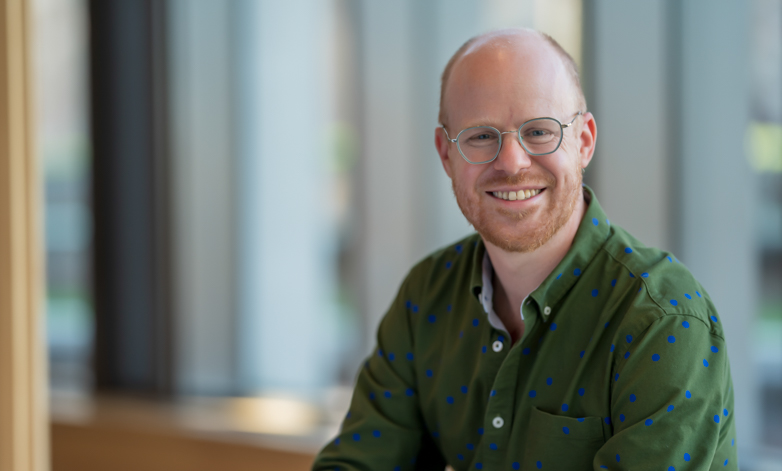
Ellis Ballard, assistant professor on the practice faculty track, is director of the Brown School’s Social System Design Lab. His research and teaching focus on advancing participatory approaches to system dynamics modeling with communities to advance health access and social justice.
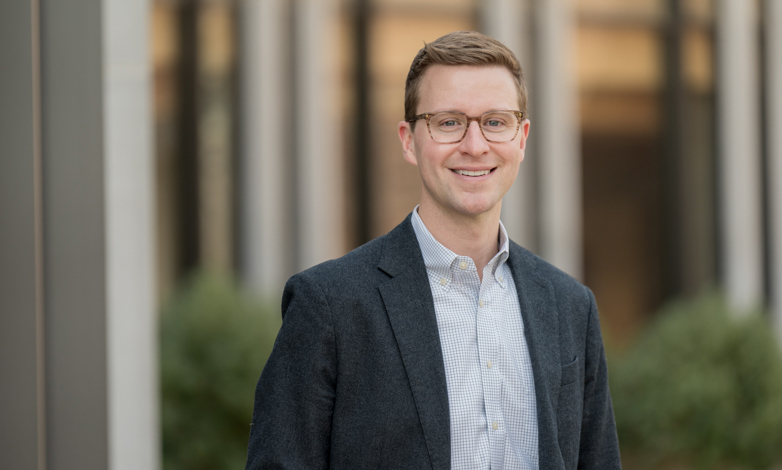
Dan Ferris, assistant professor on the practice faculty track, also serves as the Assistant Dean for Policy Initiatives. In that role, he works to expand the Master of Social Policy Dual-Degree program. He also leads policy and education training and initiatives for the Social Policy Institute.
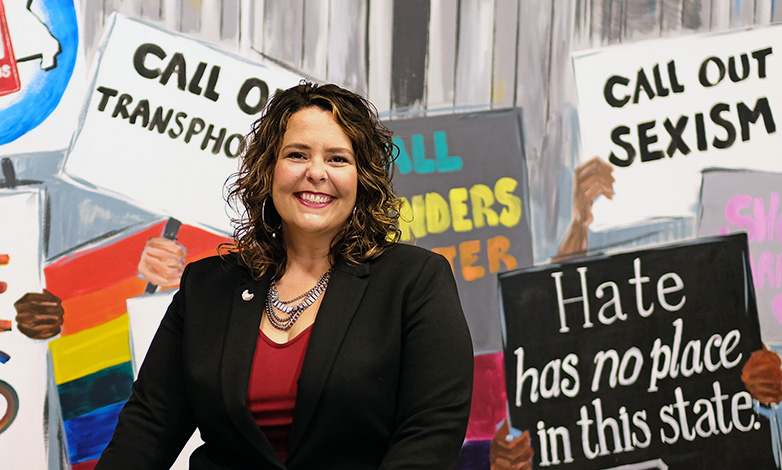
Elizabeth Fuchs, lecturer (equivalent to an Assistant Professor on the teaching faculty track), is the field advisor for the Master of Social Policy program. Prior to her time at the Brown School, she served as manager of public policy and lobbyist for PROMO, Missouri’s statewide LGBTQ advocacy organization.
Erika Gonzalez, lecturer (equivalent to an Assistant Professor on the teaching faculty track), has over ten years of experience working to advance access to high quality education for youth in the St. Louis region. At the Brown School, she has led the Urban Education Initiative, as well as expanded partnerships with non-profits supporting youth and schools.
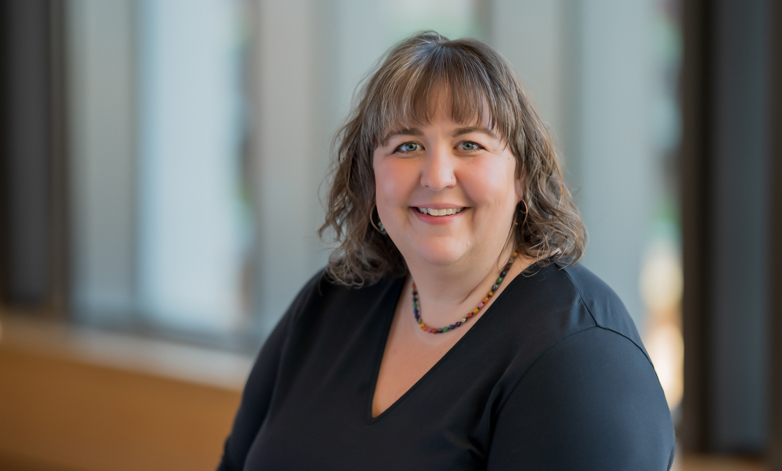
Jennifer Harpring, teaching professor and assistant dean of field education, focuses on community-engaged teaching, creating collaborative learning environments, advising, and higher education administration. She serves as the assistant director of the Beyond Boundaries program.
Barbara Levin, teaching professor, launched the MSW Social Entrepreneurship Specialization at the Brown School. She is focused on community development and engagement, social entrepreneurship, and helping organizations improve leadership and management skills.
Ragini Maddipati, lecturer (equivalent to an Assistant Professor on the teaching faculty track), has over ten years of experience working in clinical research, data management and analysis, program management and evaluation, sexual and reproductive health, and reproductive justice.
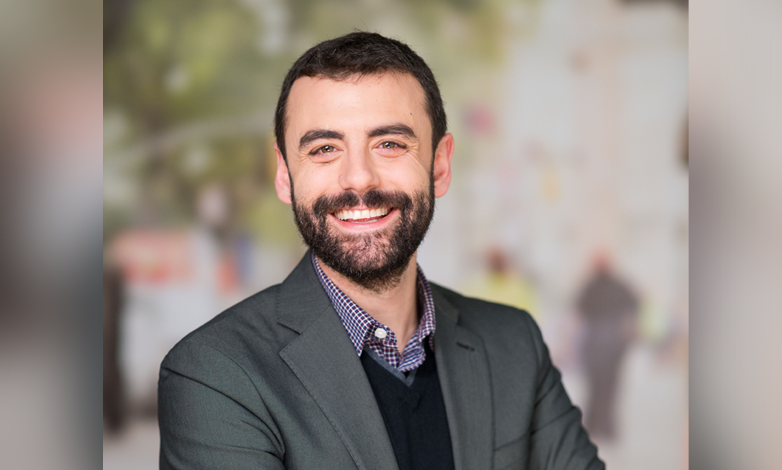
Phillip Marotta, assistant professor on the tenure track, researches the impact of the criminal justice system on disparities in public health, with an emphasis on substance use treatment interventions in justice-involved populations and the HIV care continuum for justice-involved persons with substance use disorders.
Alison Rico, lecturer (equivalent to an Assistant Professor on the teaching faculty track), has more than a decade of clinical experience and a specialized interest in the areas of mental health within the realms of law, healthcare and foster care. She currently serves as the manager for the Mental Health Concentration in the Office of Field Education.
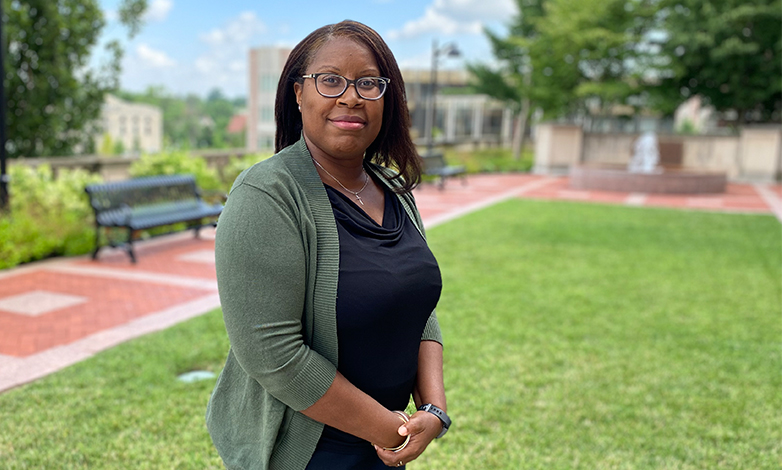
Jewel Stafford, teaching professor, serves as the director of the Racial Equity Fellowship Program in the Office of Field Education. Her research agenda focuses on examining racial/ethnic health disparities among medically underserved communities, specifically black populations.
The virtual learning necessitated by the novel coronavirus pandemic has been a benefit in some respects to non-traditionally aged students at the Brown School, who enter graduate studies later in life. Erik Strange, a second-year MSW student and the father of a newborn, said the flexibility that online learning offers is a boon to busy students trying to navigate classes, family and sometimes long commutes.
“This model works for us,” said Strange, 35, who leads Next Move, a support group for older students. “The sad thing is not being able to be part of a community on campus. We’re definitely missing that.” Next Move has been providing new students tips on everything from career services to local hiking trails.
The group now includes 27 students and is growing. It’s part of “Washington University for Life,” an initiative the Brown School began spearheading well before the pandemic hit. The group encourages teaching and learning for students older than the traditional ages at the university. Led by Nancy Morrow-Howell, Betty Bofinger Brown Distinguished Professor of Social Policy, it “aims to create a more age-diverse community across the university.”
While diversity is a priority at both the university and the Brown School, Morrow-Howell said age is too often left out of the calculus. “Age diversity is just not on our radar,” she said. “We’re still fundamentally ageist. Life expectancy has increased substantially; yet universities remain age-segregated and fail to educate people across the longer life course.”
“We created an infographic called How old is WashU? to demonstrate that the age distribution of undergraduate and graduate students is vastly out of step with the changing demographics of the country. 99% of undergrads are younger than 25 years; and although the age of the graduate student body varies across schools, most grad students are under age 30. University College has the largest percentage of students older than 30. There is certainly room to increase the range of student ages in many units of the university.”
In 2018, WU joined the Age-Friendly University Global Network, founded by the University of Dublin in 2012 as a vehicle for sharing strategies to increase age-diversity in academia. Morrow-Howell said Washington University was one of the few private research universities to enter into this large learning collaborative. She’s working to expand the effort throughout the U.S. as a member of a national advisory committee for the Gerontological Society of America that focuses on age-inclusivity in higher education.
Through the Harvey A. Friedman Center on Aging, she is launching the Washington University for Life initiative to increase age diversity, and the Center recently completed focus groups with admissions and career services staff across campus to help steer the effort.
“Staff elicited a number of challenges associated with increasing age diversity on campus, but they were quick to identify the assets that older students bring to the classroom – and to campus,” she said. “They found older students to be more intentional in their educational endeavors; and they valued the experience these students brought to the table. Focus group participants also acknowledge the benefits to younger students of having a multigenerational classroom.”
Erik Strange is one of those students. He came to the Brown School after eight years in the military – including two tours in Afghanistan – and two years living and working at a home for intellectually disabled people. “I wanted to enhance my knowledge and skills so that I can create community, connection and purpose for people with intellectual disabilities,” he said.
“Coming to the Brown School, I felt like I could make an impact,” he said. He felt some trepidation entering as an older student, but said his experience so far has been a good one.
Still, he has faced some hurdles as a newly married student with a new baby boy, managing the challenges of school while embarking on a new life course outside the classroom. That’s where the on-line classes come in.
“I have this time in school to step away from my professional life, to focus on what I want to do. I welcome the opportunity to sit in class for three hours but it’s hard not to think of all the other things I could be doing at my house, like calling the carpet guy.”
Strange is continuing the legacy of Lynne Johnson, MSW ’18 and co-founder of Next Move. Johnson currently lives in Dallas and works for The Senior Source, a non-profit that provides services for older adults. She was 50 when she got her undergraduate degree. Due to her mother’s declining health, Johnson simultaneously became her full-time caregiver. After her mother passed away, Johnson began her Master of Social Work studies at the Brown School at age 52. “Social work really called to me, especially after my experience as a caregiver,” she said, and the school’s opportunities helped her change careers with a focus on an aging population.
Like Strange, she faced challenges as an older student.
“The Brown School is part of a very traditional university that caters to students who have followed the traditional path,” she said. “I found it to be frustrating in the beginning; I didn’t feel the staff validated people going back to school in midlife. We had to advocate for ourselves, and there wasn’t a lot of support.” She found ageism in the classroom from both students and faculty who appeared to discount the experiences she offered to provide real-world context to the subject matter at hand.
“If you’re willing to listen to your non-traditional students and their needs, there can be so much richness developed within the classroom through the validation of previous experiences and knowledge,” she said.
With time, Johnson was able to build positive rapport with faculty, staff and students. In her last year, Morrow-Howell approached her to start a group to provide support for non-traditional students and the result was Next Move.
“It was really exciting,” Johnson said. “We had strong support from faculty and staff and an amazing turnout from students. “I felt positive about my overall experience at the Brown School; I received an excellent education and now I get to use a combination of direct practice, programs, and policy skills that I learned at the Brown School.”
In addition to benefiting students, serving students of all ages will strengthen the health of Washington University and society as a whole, Morrow-Howell said, as she argued in a paper recently published in The Gerontologist. She also stated that bolstering the human capital of people mid-life and beyond can ensure the capacity of the labor force, and educate people of all ages to succeed in age-diverse settings, and produce innovation in an aging society. It can also help ensure the supply of students as birth rates decline.
“The transformation of our universities must be done for the sake of society, for younger and older people, and for the self-interest of institutions themselves.”