New research from the Race and Opportunity Lab in the Brown School’s Center for Social Development at Washington University in St. Louis sheds light on youths’ reactions to social media videos showing violence in their communities.
Published in the journal Social Work Research, the study presents findings from a survey of black male youths incarcerated in the St. Louis city jail. The U.S. Department of Justice’s Office of Juvenile Justice and Delinquency Prevention funded the work, which is part of a larger study assessing the effects of the Fathers Make a Difference Project.
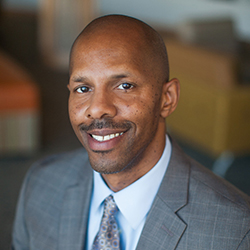
“Measuring exposure to videos of community-based violence, particularly police violence, could improve understanding of how violence affects the well-being of these youth,” said Robert Motley, the study’s lead author. Motley is the manager of the Race and Opportunity Lab and a doctoral candidate in the Brown School.
The researchers found that, in the six months before responding to the survey, participants frequently used social media and witnessed violence in their communities, including violence in social media videos. They also found that the identity of the perpetrator shaped reactions to such videos.
Seeing a video involving police violence was significantly associated with negative emotional outcomes. Seeing a video of civilian violence was not.
“Exposure to police violence may be more impactful for individuals who perceive police as a threat to their personal safety,” Motley said.
All study participants were fathers between the ages of 18 and 25 and all were scheduled for release within 60 days.
For more on the study, visit csd.wustl.edu/violent-videos.
The childhood obesity rate in the United States may increase by 2.4% if school closures continue into December, finds a new study from the Brown School at Washington University in St. Louis.
“Having schools closed nationwide, children in the U.S. have missed their opportunity to participate in physical education classes and other school-based physical activities, such as recess and after-school sports programs. They are also less likely to make up for it under the stay-at-home orders, as parks and outdoor recreation areas across the states are closed that limit physical activity opportunities outside,” said Ruopeng An, assistant professor and author of “Projecting the Impact of COVID-19 Pandemic on Childhood Obesity in the U.S.: A Microsimulation Model,” published May 23 in the Journal of Sport and Health Science.
Currently, all 50 states and Washington, D.C., have issued executive orders on school closures, and most states issued these orders March 13-23.
To date, no state has lifted school closure orders, and it is likely for the school closures in most places to continue for the rest of the 2019-2020 academic year, An said.
“It remains unclear whether and on what scale schools would reopen after the summer break, as such decisions are contingent upon how the COVID-19 pandemic evolves in the coming months,” he said.
In the U.S., childhood obesity prevalence increased by three-fold over the past few decades. In 2017-2018, 18.5% or 13.7 million children aged 2-19 years had obesity, An said.
“Lacking physical activity is one of the major behavioral risk factors for childhood obesity,” he said. “The Physical Activity Guidelines for Americans recommends 60 minutes or more of moderate-to-vigorous physical activity daily among children. Over three-quarters of children in the U.S. do not meet the guidelines’ recommended daily physical activity level. In the meantime, nearly half of U.S. children exceed two hours per day in sedentary behavior.”
In his study, An used a microsimulation model to project the change in U.S. children’s BMI (body mass index) and childhood obesity under the COVID-19-induced uncertainties.
The study simulated different future scenarios regarding the duration of school closure and change in social norms and their possible impact on children’s daily physical activity level.
“The model predicts that even a two-month school closure alone could result in an increase in the childhood obesity rate by 0.64%,” he said. “If school closures continue to the end of 2020 due to unsubdued community transmission of COVID-19, the childhood obesity rate in the U.S. might further increase by 2.4%. In such a case, by March 2021, about 1.27 million new childhood obesity cases will develop under the COVID-19 pandemic than otherwise.”
Compared with girls and non-Hispanic whites, the estimated impact of COVID-19 on childhood obesity could be modestly larger among boys and non-Hispanic blacks and Hispanics, respectively.
“We need to address the increasing health disparities caused by the COVID-19 pandemic,” An said. “Customized policy interventions are warranted to prevent further deterioration of weight-related health outcomes among these two socioeconomically disadvantaged racial/ethnic minority groups.
“The harsh reality is, for the coming months or longer, the majority of children in the U.S. may not fully resume their daily physical activity routines due to the nationwide closure of schools, gyms, recreation centers and parks and cancellation of sports activities,” An said. “Public health interventions are urgently called on to promote an active lifestyle and engagement in physical activity among children to mitigate the adverse impact of COVID-19 on unhealthy weight gains and childhood obesity.”
We asked a few students from China to explain what it has been like to live through this global pandemic while so far from home, and so worried about their own family and home country.
Reflections from Zizi Xu, MSW
Since the COVID-19 broke out in China, I have followed the associated news closely as I have seen many people in my country were suffering. This massive outbreak has now happened in other places, and more countries, communities, and those people are adversely struck by this virus as well.
I have felt deeply concerned about this pandemic, because of its fast contagion and many uncertainties, and I felt powerless because I cannot go back home and help due to the travel restrictions. In late January, as one of the co-chairs of the International Student Association (ISA) at Brown School, I helped run a workshop to try to raise awareness of this new virus. We realized the importance of sanitation to prevent the spread of COVID-19, and we provided the masks and sanitizers for the participants, but it was hard to get those products at that time almost everywhere.
As an increasing number of COVID-19 cases have been confirmed in the U.S., I feel obligated to do my best to serve the local community because I feel heartbroken to see more people and their families are suffering from this disease, even losing their lives.
When the COVID-19 outbreak was contained in March in China, many essential medical resources were available. I noticed that many families or friends mailed essential Personal Protective Equipment (PPE), such as masks, to Chinese communities in other countries. Along with my experiences working for International Alumni Development Programs and running ISA, I thought it would a good idea to connect these essential resources to people in need. I tried to connect my family and friends in China who could provide masks with some of my friends working or serving in hospitals, schools and churches. Because of the customs, lack of funding and different standards for imported medical supplies, etc., it was difficult to make it happen, but I didn’t want to quit. I reached out to Linyun Fu, manager of the Global Program at Brown School, and Assistant Professor Ruopeng An, and we worked together to develop the ongoing Brown School Community Mask Program. (Read the full story about this program.)
My Jefferson City practicum was ended, and I started working on a COVID-19 response project. From a legislative perspective, we have done the research to try to build a tracking system for how each state has responded to the crisis according to various factors, such as the majority party of the House and Senate, governors’ genders, COVID-19 associated bills, etc. We have also built a tracking system to see the associations between those factors and COVID-19 health outcomes, such as confirmed cases, testing cases, fatality rate, and so on. We hope this project would bring some insights and perhaps influence future decisions of administrators and legislators.
From this pandemic, I have learned to be more socially responsible and ethical as a member of our global community. Additionally, I realize how significant and essential it is to strengthen our solidarity and cooperation to overcome this global challenge together, regardless of different ideologies, nationalities. There are many uncertainties out of my control, and possibly, there are misconceptions, hatred and even discrimination due to this unprecedented pandemic, but there are always positive things that we can do to make positive change as individuals and to benefit communities in profound ways.
I have never expected that my last year at the Brown School would be ending this way, but I cherish this incredible journey that allows me to learn not just from class, but also from the realities of life.
Reflections from Grace Ruqing Cao, MSW/MPH
Back in January, when the COVID-19 pandemic broke out in China, I was really anxious about my family back in China because many of them are in the high-risk population. I tried to send some face masks back because it was really hard to get masks in China back then. I contacted them everyday and become hypervigilant of my phone notifications. Even during class, I would open the notifications as soon as possible, because I was so afraid that there would be some bad news.
Now it is my parents’ turn to worry about me because the situation in the U.S. is worse. For a while, I was not able to get any masks in St. Louis, and they sent me back some masks they had left. The masks my mom sent me were far more than what I expected. She said she wanted to share these masks with my classmates who were in need. So I donated them to the Brown School Community Mask Program. (Read the full story about this program.) Not only does my family worry about the virus itself, but they are also frightened by all the news of hate crimes and racism towards Asian people. I check in with them everyday to let them know I am still safe and healthy.
Reflecting back to the past four months, as a Chinese international student, I feel I am continuously living in fear and anxiety about the well-being of my family, friends, peers and myself. At the same time, I am still very lucky because I am able to share resources with my loved ones both here in St. Louis and across the sea. I am also able to receive love and care from both communities.
If there were only one thing I learned from this pandemic, it would be that hatred, division, and blaming each other will never save people’s lives. Instead, they only put underprivileged people under risk. As social workers, it is our responsibility to fight for social equity, which is already threatened by broken systems that are exacerbated under the current situation. To make it through this hard time, we need to hold each other accountable, diminish our distance while social distancing, and help each other as much as possible when we can.
Preventing diabetes and managing asthma are the goals of two Brown School-led teams selected as winners in the 2020 Big Ideas Competition, sponsored by the Healthcare Innovation Lab (The Lab) and Washington University Institute for Informatics (I2). The transdisciplinary teams were among seven selected from 38 applications and judged by BJC HealthCare and Washington University School of Medicine leaders.
Now in its second year, the Big Ideas Competition was created to identify and support high-priority, novel projects from collaborative clinical, operational and research teams developing innovations in informatics and health care delivery. The competition was judged again this year by BJC HealthCare and Washington University School of Medicine leadership. Drs. Thomas Maddox, Executive Director of the Lab and Philip Payne, Director of I2, will award each winning team with a grant of $50,000 in research funds.
Leaders of the winning teams from the Brown School represent two major research centers at the school: The Health Communication Research Laboratory (HCRL) and the Prevention Research Center (PRC).
Predictive Methods and Alerts to Prevent Asthma
Led by Joseph Steensma, professor of practice at the HCRL, and Dr. Maya Jerath, of the School of Medicine, this team also includes Pratim Biswas, of the McKelvey School of Engineering, and Tarisa Mantia, of the School of Medicine. It will study 10 patients with mild to moderate intermittent or persistent asthma for a 6-month pilot study. The patients will wear monitors that measure particulate matter in the air, and log in periods when they experience shortness of breath or wheezing through a time-stamped system. Data from the monitors will be compared with asthma symptoms to determine the correlation between exposure to particulate matter and the symptoms.
“This technology has the potential to fundamentally change the way we manage one of the most costly and debilitating diseases in America,” Steensma said. “Our guiding principle at the HCRL has always been to eliminate health disparities, and asthma is an example of a disease the disproportionately impacts the poor. This project is a prime example of how we can leverage the innovative capacity of the Brown School, the McElvey School of Engineering and the School of Medicine to improve the well-being of the most vulnerable among us.”
Using Interventional Informatics to Address Social Determinants of Health During Clinical Care Visits to Promote Behavior Change and Prevent Type 2 Diabetes
Led by Maura Kepper, research assistant professor at the Prevention Research Center (PRC); and Randi Foraker, associate professor at the School of Medicine, the team also includes Drs. Cynthia Herrick and Neil White, of BJC; and Ross Brownson, Director of the PRC. They will study the use of PREVENT, a computer app that will be integrated into electronic medical records and used by providers during clinic visits to prevent Type 2 diabetes among at-risk adolescents. Providers and patients will view the patients’ risk for developing Type 2 diabetes, evidence-based physical activity and nutrition prescriptions that are tailored to the patients’ risk, and an interactive map of community resources to help them achieve their physical activity and nutrition goals. PREVENT will then send patients an email with the prescriptions, community resources, and educational information to promote behavior change, along with automatic follow-up.
“Our PREVENT tool will harness clinical and community data to deliver behavior change recommendations tailored to the individual and their community to address pediatric obesity and generate equitable change,” Kepper said. “This tool has the ability to reshape the way we care for patients and promote population health in our region and beyond. This study leverages a transdisciplinary team that combines the areas of geospatial and behavioral health, informatics, and implementation science with clinical expertise across Washington University in St. Louis and BJC.”
The Navajo Nation now has the highest rates of coronavirus infection per capita in the U.S. The people need assistance, says Wynette Whitegoat, assistant director of the Kathryn M. Buder Center for American Indian Studies at Washington University’s Brown School and a member of the Navajo Nation.
“There are many factors that have led to the Navajo Nation’s current struggle and fight for well-being, including colonialism, federal government relations, poverty and lack of resources,” she said.
According to the Navajo Department of Health, as of May 16 there have been 3,912 cases of COVID-19 and 140 confirmed deaths — among roughly 175,000 people. That’s an incidence rate almost three times higher than the total of U.S. deaths, or the equivalent of nearly 239,000 fatalities across America, when there were nearly 84,000.
The Navajo Nation is an American Indian territory covering about 17,544,500 acres occupying portions of northeastern Arizona, southeastern Utah and northwestern New Mexico. This is the largest land area retained by an indigenous tribe in the United States. The Nation’s median household income is around $20,000 per year.
Despite the underlying factors that make the Navajo Nation and other tribal communities most vulnerable to this pandemic, Whitegoat said, measures have been put into place by the Navajo Nation leaders, including 57-hour-long curfews reservation-wide, increased screening locations, and a surge in grassroots efforts operated by tribal members.
“While the Navajo people continue to be resilient and strong as their ancestors have done when faced with adversity, support is still needed to ensure high-risk individuals, especially elders, are protected,” she said.
“I hope people will consider donating to the Navajo Nation by visiting Go Fund Me or the Navajo Nation Relief Fund,” Whitegoat said.
Trish Kohl and Lora Iannotti, associate professors at the Brown School at Washington University in St. Louis, have received a five-year $3.2 million grant from the Eunice Kennedy Shriver National Institute of Child Health and Human Development of the National Institutes of Health to study stunted growth and development in children in Haiti.
“Recent estimates show 250 million children less than five years of age are not reaching their developmental potential, and 151 million have stunted growth,” Iannotti said. “Determinants of stunted growth include interactions between biological, behavioral, social and environmental conditions, yet the evidence base is minimal for integrated approaches to tackle the interwoven factors.”
“The effects on important psychosocial indicators of child development, however, were not assessed,” she said “Building on these findings and those of our pilot study of a group-based intervention, we will use this grant in a larger study to both replicate the egg intervention and test it with a parenting intervention to target other biological, social and environmental factors.”Iannotti and her team recently found significant impacts from an egg intervention on young child growth and biomarkers of nutrition and brain development.
The team will conduct a three-pronged, longitudinal, randomized control trial to compare the following groups for effectiveness in reducing young child stunted growth and enhancing overall development: “Cap-Haïtien, Haiti, offers an ideal site for this trial,” Kohl said. “Our team has nine years of experience in the region with established partnerships and a strong research infrastructure. Similar to urban communities in the U.S. and around the world, poverty is a crucial determinant of impaired growth and development in Cap-Haïtien.”
- standard well-baby care
- nutrition intervention (one egg per day for 6 months)
- multicomponent Grandi Byen — Haitian Creole for “grow well” — intervention (responsive parenting, nutrition, hygiene plus one egg per day for 6 months).
Infants will be enrolled between 6 and 8 months of age and followed longitudinally for one year.
“We hope to determine if an egg-based intervention will impact social-emotional development,” Kohl said. “We also hope to find out if children of mothers receiving Grandi Byen will have higher scores on child cognition, language, motor and socio-emotional development compared to standard care.”