Tim McBride, the Bernard Becker Professor at the Brown School at Washington University in St. Louis, will begin a part-time contract appointment within the U.S. Department of Health and Human Services (HHS), Assistant Secretary for Planning and Evaluation (ASPE) office.
McBride will assist colleagues in the Office of Health Policy within ASPE.
In a data-driven world, organizations who can meticulously assess their programs and share that information with stakeholders have an edge when it comes to survival. However, the process can feel daunting without the right tools. Professionals can hone this valuable skill set with the launch of the Program Evaluation post-master’s certificate at the Brown School.
The course is ideal for anyone wanting the right mix of the fundamentals and practical skills to develop an appropriate design, cultivate stakeholder support, and identify needed resources. Applicants must have a master’s degree from any accredited institution, and are encouraged to apply by March 8, 2019.
“Building a culture of strategic learning is critical to the success of any organization. Evaluation provides the mechanism to strengthen programs and services and produce better outcomes,” explained Nancy Mueller, assistant dean of Planning and Evaluation and director of the Brown School Evaluation Center. “I am excited to share not only the fundamentals of evaluation but also the real-world application of how to successfully conduct evaluations in dynamic, resource-limited settings.”
Over the course of six full-day meetings during late Spring 2019, participants will learn how to develop a comprehensive evaluation plan and communicate the findings in a visually compelling way.
“Increasing the capacity of organizations to better understand, document, and communicate impact is a win for them and the communities they serve”, explained Nikole Lobb Dougherty, associate director of the Evaluation Center and co-instructor of the course. “This program will focus on preparing participants to develop and implement well considered, high quality program evaluations.”
This offering is one in a series of post-master’s certificate programs at the Brown School. Certificates offer instruction on a wide variety of topics. Other cohorts are forming now to increase skills in addressing depression in adults, mediation and conflict resolution, and family strengthening to improve child well-being. Learn more and apply to the Program Evaluation course and additional certificate programs.
The Brown School at Washington University—which offers graduate degrees in social work, public health and social policy—has forged robust relationships with Chinese universities, students and alumni over the past decade.
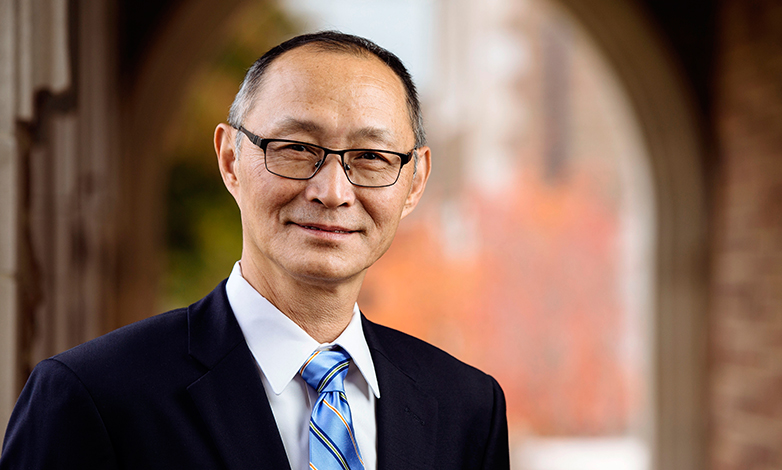
Shenyang Guo, who serves as Washington University’s assistant vice chancellor for international affairs – Greater China and a professor at the Brown School, has led the development of partnerships and outreach in the country, in particular the expansion of the master of social policy (MSP) program.
“The Brown School is dedicated to social change on a global scale and transdisciplinary thinking to solve complex problems around the world,” said Guo, who was recently named a Yangtze River Scholar by China’s Ministry of Education and Yangtze River Chaired Professor at Xi’an Jiaotong University.
“Our partnerships in China allow us to enroll top-tier, international students, expand our research capabilities and engage in diverse and innovative thinking.”
Policy Program and Partnerships
In 2015, the Brown School launched a unique master of social policy (MSP) dual degree partnership program with premier Chinese universities. Partners include East China University for Sciences and Technology, Fudan University, Nankai University, Peking University, Renmin University of China’s School of Public Administration and Policy and School of Sociology and Population Studies, Xi’an Jiaotong University and Hong Kong Polytechnic University.
Students enrolled in graduate degrees from partner institutions come to the Brown School for a year of intense social policy study and gain advanced knowledge and skills in social policy analysis, evaluation, management and leadership. This international scholarship is powerful when paired with the studies at their home university, such as social work, public health, public administration, sociology, gerontology or social medicine.
“The unique curriculum is designed to help students develop the skills and experience necessary to advance social welfare, through the development and implementation of innovative policy approaches,” said Linyun Fu, MSP program coordinator.
A short course, which takes place in China prior to the arrival at the Brown School, features the opportunity for MSP students to take an in-depth look into a few aspects of policy. Courses this past summer were taught at Fudan University by Senior Lecturer Linda Raclin and Professor of Practice Barry Rosenberg. Topics focused on disability policy in the United States, as well as non-governmental organizations’ roles in human service delivery and policy.
The MSP program now has 22 Chinese alumni, who have gone on to top PhD programs, policy research positions, and global and community-level policy work with organizations such as UNICEF. This year, 15 more are set to graduate.
MSP Alumna: Lei Chen
A native of Changzhou, China, Lei Chen came to Washington University while earning her master’s in demography at Fudan University.
She had a special interest in comparative social policy. Working with Bernard Becker Professor Tim McBride, Chen assisted with research that focused on a comparative analysis of health reform in her home country and the United States.
A Brown School trip to Washington D.C. during spring break allowed Chen to meet with social policy experts at the national level, including staff at the Brookings Institution and Department of Health and Human Services.
“This gave me a direct and deep understanding of how social policy is processed in the U.S., which was a really unforgettable experience in my life,” Chen said. After graduating in the first MSP class in 2015, she is now studying towards her PhD in social welfare with a focus on aging and health policy at the University of California in Los Angeles.
“Lei is one of the best young researchers I have ever worked with in my career,” Professor McBride said. She was easily accepted into one of the best doctoral programs in the U.S. after completing the MSP degree at the Brown School, and together, we have started work on the significant changes in the retirement system in China. She is a brilliant research scholar to watch.”
MSP Alumna: Shuqin Yu
During her time at the Brown School, Shuqin Yu, also of Fudan University, was especially dedicated to policy issues impacting international populations and advancing human rights. She was a member of the pioneering cohort of Graduate Policy Scholars with the Clark-Fox Policy Institute. This selective learning opportunity offered immersive training and mentoring to understand social policy as a high-impact tool for positive social change.
Following graduation in May 2018, Yu was offered a summer field placement in Washington, D.C., with House Representative Debbie Wasserman Shultz. She is now working for Deloitte Consulting in Shanghai on various strategic projects.
“Shuqin was dedicated to advancing social policy and exploring every avenue the Brown School offers for building capacity to do this work,” said Gary Parker, Brown School associate dean of external affairs and director of the Clark-Fox Policy Institute. “She brought unique and valued contributions and an international perspective to the Brown School and the inaugural cohort of the Graduate Policy Scholars.” Of her courses at the Brown School, she remarked: “The equal dialogue between faculty and students and sharing of unique viewpoints in class discussions was so helpful to learning.”
Yu also feels the supportive community at the Brown School was key in her success as an international student.
“I appreciated the environment of caring, humanity, kindness and empathy shared by all the faculty members, professors and classmates at the Brown School,” she said. “In those moments when I thought I wasn’t doing my best, professors and classmates were encouraging me and guiding me.”
Continuing Our Connection
“We are so proud of the growth of this program, our strong ties to highly respected universities in China, and our connection to these dedicated students and alumni,” said Mary McKay, Neidorff Family and Centene Corporation Dean of the Brown School. “We look forward to many more opportunities to engage, educate and support students in the achievement of the career goals.”
Epidemiology is the study of how often diseases occur in different groups of people and why. Biostatistics involves the design, analysis and interpretation of data for studies in public health and medicine. At the Brown School, a specialization combines the two, resulting in a multifaceted approach for improving health and changing lives.
Lora Iannotti, associate professor and the associate dean for public health, said the Brown School’s Epidemiology/Biostatistics specialization blends these two areas of study to better prepare students for real-world use.
“It strengthens methodologies and approaches resulting in greater scientific rigor and problem-solving in public health practice,” she said. “These tools go hand in hand. By combining them, our students receive deep training for analytical thinking around complex public health challenges.”
The specialization also differs from those at other institutions in its emphasis on applying those skills across the public health field while prioritizing equitable outcomes. The school focuses on work across disciplines to achieve change, and epi-bio training is in demand in a variety of applications.
“Our diverse faculty use cutting-edge epidemiology and biostatistics research and teaching methods,” Iannotti said. “We blend the best, hard science and data with a focus on how we can use that data to increase health equity and work toward eliminating disparities using transdisciplinary tools and perspectives.
Epidemiology/Biostatistics is the most popular of five available specializations in the Masters of Public Health (MPH) program, selected by about 30 percent of MPH students. Topics within the specialization include nutrition epidemiology, chronic disease prevention, cancer epidemiology, psychiatric epidemiology, dissemination and implementation science, social epidemiology, environmental epidemiology and research reproducibility.
“We’re the disease detectives,” said Kimberly Johnson, the associate professor who chairs the specialization. “We find out where and why diseases occur to help inform practices that will prevent disease from happening,” such as a recent Washington University discovery of the virus that caused a polio-like paralysis in children. “We also try to figure out why some people die from their disease and why others do not.”
The Brown School places a particular importance on using epi-bio in innovative ways to advance health equity across race and class in local communities and around the world. An example is the work of Deborah Salvo, an assistant professor who focuses on using spatial and place-based epidemiological methods to understand the relationship between the built environment and health. That information is used to identify and resolve disparities in access to places for physical activity and healthy eating, which are partially responsible for the disproportionately high levels of obesity and chronic disease among disadvantaged groups both local and globally.
“We’re extremely focused on impactful research at the Brown School,” Johnson said. “We really want to solve the most pressing problems in health, like health disparities, with research policymakers will pay attention to.” A paper Johnson recently published on the effects of insurance on childhood cancer survival was an important way to be able to understand the impact that policy can have on children’s mortality.
Expert Instruction and Student-Centered Support
At the Brown School, students receive personal instruction and mentoring from top-tier, full-time faculty who are dedicated to student success.
“The instructors at Brown are great,” said, Ruth Katumba, a second-year epi-bio student from Uganda. “They’re experts in their field and passionate about what they do.”
Through their course work, epi-bio students develop portfolios with highly marketable data management and analytic skills.
Joe Steensma, a professor of practice, teaches biostatistics and applied linear models. He said some students approach statistics with trepidation, fearing being overwhelmed by the numbers.
“We don’t teach that way,” Steensma said. “We teach how to apply these tools to real-world situations we run into every day.” He encourages students to think of statistics as a language. “We have incredible students here who want to solve big problems. We want to show them how to translate numbers into usable information that has an impact on people’s lives.”
A series of hands-on, intensive, one-credit hour Skill Labs include topics like statistical analysis platforms, GIS and spatial mapping, data visualization and grant writing. Another key support resource at the Brown School is the StatLab, a peer-tutor service that assists students with biostatistics and epidemiology related coursework.
“The tutors go the extra mile to make sure you understand,” said Katumba.
School of Medicine and Key Partners
The Public Health program has strong ties to the top-ranked Washington University School of Medicine. Many faculty members at Brown also hold appointments at the Med School, and many research centers, such as the Prevention Research Center and the Center for Diabetes Translation Research, span both institutions.
There are rich practicum opportunities for Brown students at the School of Medicine as well.
In her practicum last summer, Katumba used her epi-bio skills in working with a School of Medicine researcher finding ways to improve the treatments for brain cancer. The experience was inspiring. “I enjoyed working with a team of people with different specialties including oncology, neuro-oncology, public health, social work, information technology, data analytics, and drug trials and development all working towards the same goal: to improve survival of brain cancer patients,” she said.
“I love the fact that making transdisciplinary connections like those is a skill I’m constantly making use of. It’s important. That’s what keeps me going.”
Students can also venture outside of the Brown School for a number of courses offered at the School of Medicine including: Randomized Controlled Trials, Systematic Reviews and Meta-Analysis; Development, Validation, and Application of Risk Prediction Models; Multilevel Models in Quantitative Research; and Using Administrative Data for Health Services Research.
Epi-bio skills are in demand at the school, leading to jobs such as study coordinators and data analysts in research. “The medical faculty appreciate that our students and graduates bring that training and research design rigor to their research,” Johnson said. Many epi-bio students have gone on to top medical schools and PhD programs, and played leading roles in state and local health department.
Pratica for epi-bio students is also available through other top-tier public and private organizations: The National Institutes of Health, Centene, the Los Angeles Health Department, Siteman Cancer Center, Washington University Medical School Bioinformatics Research Core, the St. Louis Zoo, and many others.
“Our rich relationships with these organizations result in a wide job market for epi-bio students, whose skills address a range of needs in collaborative research,” Iannotti said. “They’re interested in our students.”
Epi-Bio Faculty
A full list of full-time faculty with an epidemiology/biostatistics focus is below, with links to their bio pages:
- Ross Brownson: chronic disease prevention, evidence-based public health implementation science
- Alexis Duncan: psychiatric epidemiology and behavioral genetic epidemiology
- Christine Ekenga: environmental epidemiology, breast cancer
- Shenyang Guo: quantitative research methodology child welfare, child mental health
- Jenine Harris: reproducible research, employing new media for public health surveillance
- Angela Hobson: environmental epidemiology, occupational health, exposure assessment, environmental justice, epidemiology of Parkinsonism
- Darrell Hudson: social determinant of health, racial/ethnic disparities, mental health)
- Lora Iannotti (nutrition epidemiology, global health
- Kim Johnson: cancer epidemiology, human genetics, and cancer policy, childhood cancer
- Doug Luke: social network analysis, systems science methodology, tobacco control and prevention policy
- Deborah Salvo: spatial epidemiology, physical activity and capacity building, chronic disease prevention, global health disparities, Latin American populations and U.S.-based minorities
- Joe Steensma: biostatistics, environmental health, occupational health and safety
The overabundance of fast fashion — readily available, inexpensively made clothing — has created an environmental and social justice crisis, claims a new paper from an expert on environmental health at Washington University in St. Louis.
“From the growth of water-intensive cotton, to the release of untreated dyes into local water sources, to worker’s low wages and poor working conditions, the environmental and social costs involved in textile manufacturing are widespread,” said Christine Ekenga, assistant professor at the Brown School and co-author of the paper “The Global Environmental Injustice of Fast Fashion,” published in the journal Environmental Health.
“This is a massive problem,” Ekenga said. “The disproportionate environmental and social impacts of fast fashion warrant its classification as an issue of global environmental injustice.”
In the paper, Ekenga and her co-authors — Rachel Bick, MPH ’18, and Erika Halsey, MPH ’18 — assert that negative consequences at each step of the fast-fashion supply chain have created a global environmental justice dilemma.
“While fast fashion offers consumers an opportunity to buy more clothes for less, those who work in or live near textile manufacturing facilities bear a disproportionate burden of environmental health hazards,” the authors wrote.
“Furthermore, increased consumption patterns have created millions of tons of textile waste in landfills and unregulated settings. This is particularly applicable to low- and middle-income countries (LMICs) as much of this waste ends up in second-hand clothing markets. These LMICs often lack the supports and resources necessary to develop and enforce environmental and occupational safeguards to protect human health.”
In the paper, the researchers discuss the environmental and occupational hazards during textile production, particularly for those in LMICs, and the issue of textile waste.
They also address a number of potential solutions, including sustainable fibers, corporate sustainability, trade policy and the role of the consumer.
Globally, 80 billion pieces of new clothing are purchased each year, translating to $1.2 trillion annually for the global fashion industry. The majority of these products are assembled in China and Bangladesh, while the United States consumes more clothing and textiles than any other nation in the world.
Approximately 85 percent of the clothing Americans consume, nearly 3.8 billion pounds annually, is sent to landfills as solid waste, amounting to nearly 80 pounds per American per year.
Childhood maltreatment was found to be associated across categories of gambling outcomes, according to research from the Brown School at Washington University in St. Louis.
Analysts examined data from 13,291 young adults ages 18–26 self-identifying as European American or African American who participated in Wave III of the restricted-use National Longitudinal Study of Adolescent to Adult Health.
They found associations between gambling and childhood maltreatment, physical discipline and alcohol use. Childhood neglect was also associated with gambling, with African Americans at higher risk, as was cannabis use.
“Clinicians and treatment providers should query about maltreatment history as part of their assessment, as problem gamblers are more likely to have a history of childhood maltreatment,” wrote co-authors Renee Cunningham-Williams, associate professor at the Brown School and Manik Ahuja, a post-doctoral researcher.
“Our results revealed that African Americans who were current users of cannabis were significantly more likely to gamble across multiple gambling types than European Americans,” they wrote. “We recommend tailored cannabis use prevention programs that address the needs of African American adolescents and young adults.”
The paper was published Oct. 16 in the Journal of Substance Abuse and Alcoholism.
Ahuja will be presenting the work at the annual conference of the Society for Social Work and Research January 16-20 in San Francisco.