After Hurricane Matthew, women and children in Haiti experienced an increase in interpersonal violence. Daily stressors combined with a loss of power and control likely fueled the escalation, according to a study from the Brown School at Washington University in St. Louis.
Researchers conducted the study in Coteaux, Haiti, where they enlisted 36 adults and adolescents. Participants received cameras to capture images related to family relationships, family safety and changes to family dynamics due to the 2016 hurricane and its aftermath. The photos were used as prompts for qualitative interviews.
In addition to stress and powerlessness, researchers found that intergenerational cycles of abuse and gender inequity drove violence. All these factors were adversely influenced by the humanitarian crisis after the hurricane. Some women were reluctant to report abuse because they feared the loss of an income-earner during hard times.
“Our findings suggest multiple and converging drivers of violence may be exacerbated in times of crisis, requiring interdisciplinary responses,” wrote co-author Lindsay Stark, associate professor at the Brown School.
“In order to comprehensively address the drivers of violence, practitioners and policy makers should consider the needs of individuals and their families holistically, integrating community-led, gender-transformative efforts and positive parenting with basic needs provision, where feasible.”
The study was published in the January issue of Child Abuse & Neglect.
The latest post-master’s certificate from the Brown School combines the school’s expertise in social work and public health to offer participants immersive and holistic training in recognizing depression and applying effective interventions.
Evidence-Based Assessment & Treatment of Depression in Adults will prepare mental health professionals and other providers with evidence-based skills, using a case-based teaching approach. The program, which takes place over seven days from May to July , will give participants tools to address a range of scenarios while approaching clients with sensitivity to their context and environment.
The course will be led by an instructional team that includes Darrell Hudson, an associate professor at the Brown School who has studied health disparities and depression among African Americans; and Ryan Lindsay, an associate professor of practice whose career has focused on training new and experienced providers in evidence-based treatments.
Students will develop strong knowledge and skills around evidenced-based assessment of depression and three interventions, including Interpersonal Pychotherapy, Cognitive Behavioral Therapy and Acceptance and Commitment Therapy. The training will also include information on how social factors, like race, poverty and culture relate to mental health and can affect the onset of depression.
“We’re going to look at how the social determinants of health influence people’s experiences with depression, as well as what protects us against depression or maintains it,” Lindsay said.
“Clinicians sometimes have a difficult time recognizing depression,” Hudson added. “Just because people don’t complain about being sad doesn’t mean they don’t have it; their culture may not view giving voice to those feelings as appropriate.”
Hudson believes that stress in the context of a client’s life is critically important to understand.
“We’re asking people to make health-behavior changes in their life when they’re already stressed to the max,” he said. “It helps to know the context people are embedded in, and the natural resiliency factors embedded with people and their networks that can help.”
About the Program and How to Apply
This program is intended for individuals who already hold a master’s degree in a mental health-related field and have a demonstrated interest in increasing their effectiveness treating adults experiencing symptoms of depression. Geared to health-care providers, it would also be appropriate for community health workers, supervisors, or professional clergy.
The program begins on May 11; applications will be accepted through April 12, 2019. Apply now or learn more.
Tobacco control experts Douglas Luke and Todd Combs of Washington University in St. Louis would welcome regulation of e-cigarette commercials on television and radio. But an advertising ban, as recently suggested by a member of the Federal Communications Commission (FCC), should be part of a broader plan to curb the vaping epidemic among America’s youth, they said.
“Historically, tobacco control has worked when all three levels of government — local, state and federal — take action,” said Luke, professor at the Brown School and director of the Center for Public Health Systems Science. “Excise taxes on the state level and smoke-free policies that happen at the community level are also important.”In addition to potential federal action, Luke and Combs would like municipalities and states to exercise their considerable power to regulate e-cigarettes through excise taxes, restrictions of flavored tobacco products and public smoking bans.
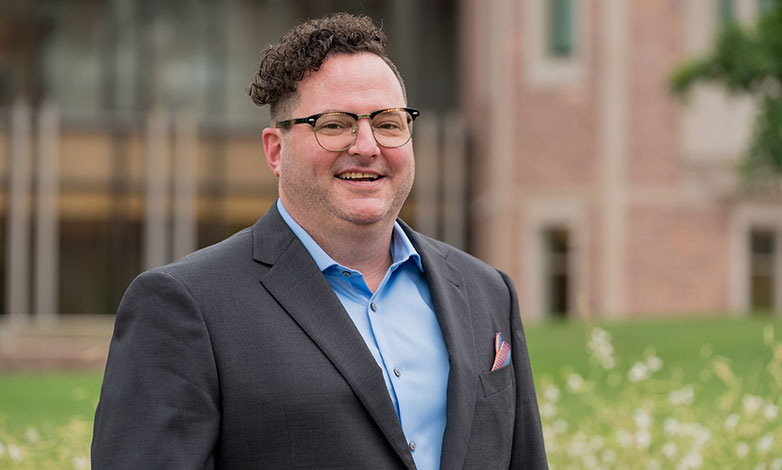
“Communities will be the laboratories that discover new ways to protect kids from these emerging products,” added Combs, research assistant professor at the Brown School and assistant director of the center.
Earlier this month, FCC commissioner Jessica Rosenworcel called for the FCC to study whether e-cigarette advertising should be banned on radio and television like combustible cigarettes. Given she is a member of the Democratic minority, it’s unlikely that her proposal will advance. And opponents argue the First Amendment protects the industry’s right to advertise.
Luke believes Rosenworcel’s argument is solid. The FCC has the power to regulate broadcast advertising that impacts the public interest, and “public health is in the public interest,” he said.
Still, a ban would not shield young people from so-called point-of-sale marketing in retail outlets. When federal law banned cigarette commercials, the industry invested heavily in on-site marketing. Manufacturers of e-cigarettes, which are not covered by existing federal regulation, likely would do the same.
“The vast majority of marketing dollars is not television or radio; it’s direct marketing to consumers,” Luke said. “Marketing at point of sale, whether it’s discounts or displays or promotional items, is a million-dollar-an-hour business for the industry.”
Vetta Sanders Thompson, the E. Desmond Lee Professor of Racial and Ethnic Diversity at the Brown School at Washington University in St. Louis, has been appointed to the Missouri Foundation for Health, which works with communities and nonprofits to improve the health of Missourians.
Sanders Thompson, a licensed clinical psychologist, serves as a co-director of the Institute for Public Health’s Center for Community Health, Partnership and Research. She also is an associate member of Siteman Cancer Center, where she works closely with the Program for the Elimination of Cancer Disparities. She is a noted researcher in racial identity; experiences of discrimination; psychosocial implications of race and ethnicity in health promotion and the social determinants of health; and mental health services utilization.
Vetta Sanders Thompson, the E. Desmond Lee Professor of Racial and Ethnic Diversity at the Brown School at Washington University in St. Louis, will serve as the keynote speaker at the Building Vibrant Partnerships: Community and University Engagement Summit on Friday, March 1.
The summit, a joint project between local universities and nonprofit and civic organizations, will explore how to work with communities in ways that are respectful and sustainable. The university’s Gephardt Institute of Civic and Community Engagement is among the sponsors for the event, which will take place in Cortex Innovation Hall, 4220 Duncan Ave.
If we believe in diversity, why are we not more diverse?
That question vexes Adrienne Davis, vice provost and William M. Van Cleve Professor of Law at Washington University in St. Louis.
“It’s counterintuitive, but universities lag behind the military, corporate America and the government in diversity,” Davis said. “We conceive of ourselves as the most progressive of those institutions. And, indeed, almost everyone on this campus would say that they value diversity, that they despise historical injustice and they value equality and inclusion. And yet when you look at research universities and liberal arts colleges, we are the least diverse. There is a mismatch between our values and our reality.”
During the Day of Discovery, Dialogue & Action dialogue session “Field Notes: Reflections from WashU’s Diversity Practitioners,” Davis, Emelyn dela Peña, associate vice chancellor and dean of the Center for Diversity and Inclusion, and Nicole Hudson, assistant vice chancellor of the Academy for Diversity, Equity and Inclusion, will discuss their efforts to better align who we are with who we want to be. They will be joined by LaShawnda Fields, a PhD student at the Brown School; Joseph Pangelinan, director of cultural awareness and diversity at the School of Medicine, and Toni Aguilar Rosenthal, a sophomore in Arts & Sciences. The session is scheduled for 11:15 a.m. Wednesday, Feb. 20, in Hillman Hall.
Davis, dela Peña and Hudson, along with Sherree Wilson, associate vice chancellor and associate dean for diversity and inclusion at the School of Medicine, have joined forces to align and strengthen diversity and inclusion initiatives across campuses and populations. It’s a new effort — both Wilson and Hudson joined Washington University in 2018 — and one that is unusual among universities, which typically appoint a single chief diversity officer.
“That model may work in business, but not necessarily at a university, which is decentralized and has shared governance,” dela Peña said. “I’ve been on campuses with a chief diversity officer, and inevitably either the staff, the students or the faculty will feel that they are not served. The strength of our model lies in the fact that each of us is on the ground, working closely with our respective populations. But as senior leaders, we also have the power to implement real change that will benefit the entire university community.”
Dela Peña offers this example. Say an international student reports being discriminated against by a service worker but, in the process of making that complaint, says racist things.
“I have a team I can work with where I can say, ‘How do we resolve this in a way that’s about healing the community and not just making this an HR adjudication process?’ And how do we help our students better understand the community that they are now part of here in St. Louis,” said dela Peña, who helped conceive the team approach with Davis.
Davis, who led the search committees for both dela Peña and Hudson, has been working on diversity issues at Washington University for a decade. In 2008, Chancellor Mark S. Wrighton and then-Provost Ed Macias charged her with building a more diverse faculty. And she has succeeded. The number of black faculty have increased by 113 percent and the percentage of women on the University Council skyrocketed from 23 to 56 percent.
During that period, the university accelerated efforts to recruit and support a more diverse student body. Launched in 2014, the Center for Diversity and Inclusion was central to that work. In 2016, dela Peña joined the CDI, which has emerged as a place where students could seek support during upsetting events such as the Jason Stockley verdict; learn to communicate with students from different backgrounds and perspectives; and study diversity scholarship.
Then, in the fall of 2018, the university established the Academy for Diversity, Equity and Inclusion, a recommendation of the Commission on Diversity and Inclusion. Hudson, who most recently served as deputy mayor for racial equity and priority initiatives for the City of St. Louis, was hired to launch the academy and develop strategies to improve climate and culture at all university campuses.
Last summer, Wilson joined the School of Medicine after serving at the University of Iowa Carver College of Medicine, where she designed a plan to help faculty and health-care workers provide culturally sensitive care and incorporated implicit bias training for faculty, staff and trainees. She currently is meeting with faculty, staff, students and trainees to assess needs on the Medical Campus. Wilson will lead a conversation with Day of Discovery, Dialogue & Action keynote speaker Irshad Manji at 5 p.m. Tuesday, Feb. 19, at the Eric P. Newman Education Center on the Medical Campus.
By assembling a group with different but deep expertise, Washington University is poised the become a national leader in diversity and inclusion, Davis said. She’s excited by the opportunity and thrilled to do it with four senior women of color. Davis said that as a black female leader, she often feels the need to manage her emotions and the expectations of others in the rooms. But not with this group.
“It’s a safe place where we can reflect, share stumbles and think through risks,” Davis said. “It’s nice to have the opportunity to be completely open and share frustrations. Humor is a great antidote to frustration. A lot of what happens with diversity is truly injurious, but there is a lot of stuff that happens that is just absurd. Sometimes it’s good to have people who understand the absurdities and can laugh with you.”
Day of Discovery runs Tuesday and Wednesday, Feb. 19 and 20, with events and dialogue sessions on the Danforth and Medical campuses.