Inequities and inequalities are ever-evolving and surfacing in our society, presenting a shifting landscape of challenges and problems. Gaps in our social, economic, education and health systems all pose specific challenges on regional, national and global scales.
To address these challenges, Washington University in St. Louis will bring together the best research evidence from disciplines across the university to solve real-world challenges — which sums up both the mission and the vision of the new Social Policy Institute. The institute will serve as a hub for policy-focused efforts university-wide, partnering and collaborating with key university faculty and centers, including the Brown School’s Clark-Fox Policy Institute.
The Social Policy Institute will also partner with corporate leaders and government officials, private foundations and think tanks to develop strong research partnerships at the local, state, federal and global levels. The institute’s work extends across a wide range of areas, delving into business, social work, engineering, design and liberal arts. Its multidisciplined, holistic and innovative approach is grounded in its ultimate goal of translating research findings into actionable policy to benefit communities in St. Louis, the nation and across the globe.
“Over the past decades, research has well documented the range of disparities in financial opportunities, housing, education and health that adversely affect the well-being of individuals and communities. What is needed now is to move from documenting disparities to finding and implementing solutions to the inequalities at the root of those disparities,” said Michal Grinstein-Weiss, the Shanti K. Khinduka Distinguished Professor at the Brown School, who will serve as director of the Social Policy Institute.
“It is our responsibility, as part of a leading research institution and as world citizens, to leverage our findings and effectively apply what we learn from research so we can discover and implement innovative ways to eliminate or reduce inequities,” she said.
“The Social Policy Institute will enable us to continue strengthening Washington University’s capacity and capability to engage in empirical research and cross-sector collaborations,” Chancellor Andrew D. Martin said. “With nonprofit and industry partners, we’re investing in evidence-based policy ideas for people in the St. Louis region, the United States and beyond.”
“Frequently, research findings haven’t had the expected impact on policy because the evidence has not been given to the right people, at the right time, in the right way — that is, translated into accessible information and delivered to those who can influence policy design and decision-making,” Grinstein-Weiss said.
“The institute is eagerly looking forward to serving as a hub for the work that faculty, students and the various university centers are already doing to address social policy,” she said. “We see one part of our mission as supporting and facilitating these ongoing efforts as well as using our network of contacts and resources to help broker future multidiscipline, cross-sector partnerships that will help to ensure research evidence is transformed into policy and programs that benefit our campus, communities and world. We know we will be stronger in this effort together.”
A new pilot study by the Brown School at Washington University in St. Louis will investigate ways to reduce air pollution caused by cooking fuel in rural India.
“Household air pollution presents one of the most pressing public health issues currently facing society,” said Peter Hovmand, professor of practice and the study’s leader. About 3 billion people around the world rely on the combustion of solid fuel, like wood, for their main cooking and energy, and women and children are disproportionately affected.
Simply giving household cookstoves that burn only clean fuel, such as liquefied petroleum gas, has proven ineffective and even counterproductive in some areas. Researchers think a “real options” approach will more effectively increase the use of clean fuels by providing policymakers and other decision makers flexibility to deal with uncertain and fluctuating conditions affecting households.
To test that theory, researchers will conduct group model building exercises in India to uncover cultural and other responses to using clean cookstoves, and then use computer modeling to develop real-option strategies to implement large-scale use of clean-fuels.
Research partners are Boston College and the Foundation for Ecological Security in India. The study is being funded by the Clean Cooking Implementation Science Network at the National Institutes of Health Fogarty International Center.
The National Cancer Institute, part of the National Institutes of Health (NIH), has awarded $7.6 million to Washington University in St. Louis to create a research center that will develop ways to implement proven cancer-control interventions among disadvantaged rural and urban populations in 82 counties in Missouri and southern Illinois.
The Washington University Implementation Science Center for Cancer Control (WU-ISCCC) seeks to eliminate cancer disparities with rapid-cycle studies that put findings into practice quickly.
It will be co-led by Ross Brownson, the Steven H. and Susan U. Lipstein Professor of Public Health at the Brown School and the School of Medicine. He leads the Prevention Research Center in St. Louis and is a co-director for Prevention and Control at the Siteman Cancer Center.
Brownson will be joined in leadership by Graham Colditz, the Niess-Gain Professor and chief of the Division of Public Health Sciences in the Department of Surgery at the School of Medicine. He is associate director for prevention and control at the Siteman Cancer Center and has led the Program for the Elimination of Cancer Disparities since 2006.
“This new Center will strengthen collaborations between the Brown School, the School of Medicine and Siteman Cancer Center,” said Mary McKay, Neidorff Family and Centene Corporation Dean of the Brown School. “It will be a model for transdisciplinary, team science. Most importantly, we think the center will make a real difference in reducing the risk of cancer and improve health equity for disadvantaged populations in an 82-county area of Missouri and Illinois.”
The aims of the center are to:
- Advance the field of implementation science in cancer control by conducting innovative and impactful research
- Expand an exceptional, diverse team of implementation science investigators and stakeholders, including clinical and public health leaders
- Organize and integrate center components to facilitate transdisciplinary team science
- Develop an implementation laboratory (known as the Innovation Incubator) to engage community partners, thus serving as a conduit for rapid and impactful research
- Address cancer disparities by making it as easy as possible for disadvantaged populations to access, use, and benefit from evidence-based interventions
Rural Missouri and Illinois residents are a particular focus of the center because they have cancer mortality rates that are siginificantly higher for rural than for urban populations. Risk factors such as smoking and obesity are consistently higher for rural than for urban populations. Cancer mortality disparities also extend across racial, ethnic and socioeconomic groups. Among both Black and White men with 12 or fewer years of education, cancer mortality rates are almost three times higher than those of college graduates for all cancers combined.
The region includes highly impoverished areas, all within a three-hour drive of St. Louis. In southeastern Missouri, five counties have the highest poverty rates and some of the highest cancer rates in the country. Several Illinois counties are at the bottom of the county health rankings in Illinois and nationally. Many are areas where more regular screening for breast and colon cancer, for example, could have profound impact.
The center will also mentor and advance the work of junior scholars engaged in two pilot studies focused on implementation science. One will identify the extent to which evidence-based interventions are put into practice in rural settings and the roles of local health departments and other potential partners. The second pilot project will provide financial screening for cancer patients, helping them to discuss the costs of care, select health insurance, and reduce financial distress.
“The Siteman Cancer Center serves some of the most disadvantaged populations of patients in the United States,” said Dr. Timothy Eberlein, MD, the Spencer T. and Ann W. Olin Distinguished Professor, head of the Department of Surgery at Washington University School of Medicine and director of Siteman. “This grant will allow us to further engage with our communities that we serve, with the goal of implementing effective interventions to reduce cancer disparities. This is a huge opportunity, it is very exciting, and it is unique that Siteman will be able to have such a tremendous impact on our current and future patients throughout the region.”’
The new center is aligned with Washington University’s commitement to the St. Louis region as emphasized by Chancellor Andrew D. Martin at his inaugural address on October 3. The center’s scientific and administratiove elements are also aligned with the NIH Cancer Moonshot.
Whether a patient has a safe place to live or healthy food to eat has an important influence on their health, but routine health care visits have not traditionally addressed these non-medical, social needs.
A new report from the National Academies of Sciences, Engineering, and Medicine (NASEM), Integrating Social Care into the Delivery of Health Care: Moving Upstream to Improve the Nation’s Health, contains overarching goals and associated recommendations that health care systems, government agencies, and others should implement to better integrate patients’ social needs into health care delivery.
Sean Joe, Benjamin E. Youngdahl Professor of Social Development and associate dean for faculty and research at the Brown School, was one of 17 committee members from around the nation who helped to inform and develop the report. A nationally recognized expert on mental health, suicidal behaviors and social mobility in African-Americans, he worked among a team that included other social work scientists; physicians; nurses; gerontologists; and insurance, policy and technology leaders.
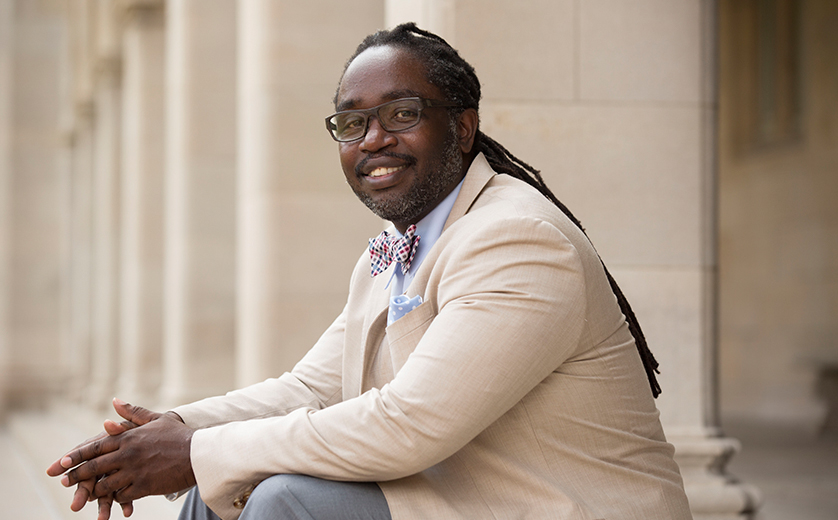
“There is recognition that factors such as housing, education, neighborhood safety, and employment have a very profound impact on one’s physical and mental health, and yet our health care system is not equipped to address these needs,” Joe said. “This report offers a comprehensive review of the evidence and practices related to this issue, and provides ways to move forward.”
Industrialized nations that devote more resources to social services than health care tend to have better health outcomes, the report states. In the United States, for every $1 spent on health care, about 90 cents is spent on social services, while other industrialized countries spend $2 on social services for every $1 spent on health care.
The report identifies key workforce, technological and policy priorities, Joe said. For example, social workers and other social care workers—community health workers, peer specialists—should be considered providers who are eligible for reimbursement. Public and private payers should create standards for the reimbursement of social care, including assessment and such treatment as chronic care management, behavioral health integration, and transitional care management.
“It is clear that the Brown School, with programs in social work, public health and social policy, along with Washington University, is uniquely positioned to influence a national conversation regarding the integration of social needs into the health care agenda,” Joe said. “The report is a solid roadmap to follow, and we need to continue this momentum.”
The report’s recommendations include the following:
Better integrate social care into health care delivery. In order to implement social care more systematically throughout the U.S., health care organizations should:
- Make an organizational commitment to addressing health-related social needs and disparities in individual and population health
- Identify the most effective ways to assess and document social needs, recognizing that evidence for these practices is evolving
- Include social care providers — such as social workers, community health workers, home health aides, and gerontologists — as an integral part of health care teams
- Establish more formal linkages, communication, and financial referral relationships between the health care and social care sectors
Support and train an engaged, integrated care workforce. Social care professionals work in a variety of settings, including health facilities, schools, homes, and community-based organizations. However, certain federal, state, and institutional barriers limit adequate payment of social care workers and their ability to work to the full extent of their education and training, says the report. Social care workforce development efforts should aim to:
- Develop, expand, and standardize the scopes of practice of social care workers
- Create standards for the reimbursement of social care by public and private payers
- Test for knowledge of social determinants of health in licensure exams, continuing education courses, and in other credentialing capacities for health professions such as medicine and nursing
- Adopt curricula that prepare students of social work to use technology, data collection methods, and payment models that facilitate social and medical care integration
Develop an infrastructure for data sharing between health and social care. The report calls for a national vision and defined technology standards for integrating health care and social care data, similar to the standards underpinning the adoption of electronic health records. It recommends:
- The Office of the National Coordinator for Health Information Technology should help states and regions determine the best way to share data necessary for care coordination
- The Federal Health Information Technology Coordinating Committee should facilitate data sharing across sectors including health care, housing, and education
- The U.S. Department of Health and Human Services (HHS) should work with the private sector to disseminate educational tools and guidance on data security and privacy when collecting and sharing personally identifiable information
Finance the integration of health care and social care. The report recommends that the Centers for Medicare & Medicaid Services:
- Define which aspects of social care Medicaid can cover, and make the opportunities and limitations clear to health plans and health care and social care service providers
- Incentivize health care organizations and the managed care programs that contract with Medicaid and Medicare to collaborate with community-based social services, such as Area Agencies on Aging
- Coordinate the coverage and benefits of dually eligible and high-need Medicare and Medicaid populations